
TechnoEdge

Free Master Class

How to Plan Your AI Training Budget for FY26? (For CHROs & L&Ds)

blogs

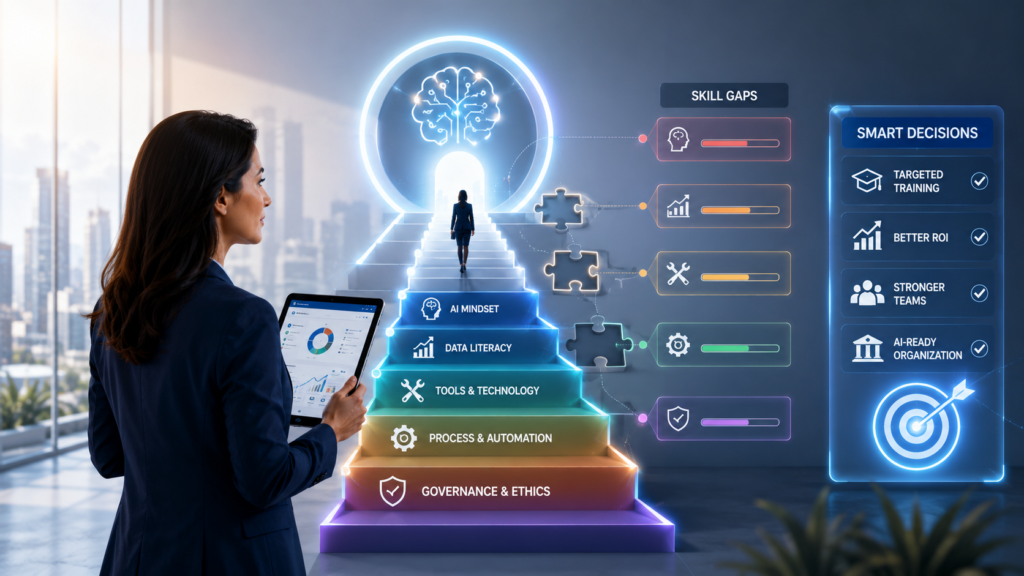
Data professionals analyzing AI-powered dashboards while discussing future data jobs, automation, and evolving career roles in a modern technology workplace.
blogs

Future of Data Jobs 2030: Which Roles Will Survive AI and Which Ones Will Disappear?

Introduction: The Data Industry Is Facing Its Biggest Disruption Ever Over the last 10 years, data became one of the most important assets in the business world. Companies around the world invested billions of dollars into: This created huge demand for professionals such as: For years, these careers were considered:👉 stable👉 high-paying👉 future-proof👉 globally in demand But in 2026 and beyond, a major transformation has started changing the entire analytics industry. Artificial Intelligence is now capable of: Tasks that previously required hours of manual work can now be completed within minutes using AI-powered systems. This has created a major fear among professionals across the world. People are asking:👉 “Will AI replace Data Analysts?”👉 “Are reporting jobs disappearing?”👉 “Should freshers still learn analytics?”👉 “Which data careers will still exist in 2030?” And honestly, these fears are not completely wrong. The data industry is definitely changing. But the real transformation is deeper than simple job replacement. AI is not just removing jobs. Instead:👉 it is changing the entire structure of analytics careers. Some traditional roles may shrink dramatically. Some repetitive jobs may disappear. But at the same time:👉 completely new opportunities are emerging faster than ever before. The professionals who adapt early will become extremely valuable. The professionals who continue following outdated workflows may struggle in the future. This blog will help you understand: Why AI Is Transforming the Data Industry Faster Than Most Other Industries The data industry is one of the sectors most heavily affected by AI because analytics work naturally involves: These are exactly the areas where AI performs extremely well. Modern AI systems can already: This dramatically changes how organizations operate. Earlier, companies required large analytics teams for: Now, AI can automate a large portion of these workflows. This creates a massive shift in how businesses think about analytics teams. Organizations are increasingly moving away from:👉 large manual reporting departments toward:👉 smaller but highly skilled AI-powered analytics teams. This is one of the biggest workforce transformations happening globally. The Biggest Misconception About AI and Data Careers One of the biggest misconceptions today is:👉 “AI will completely eliminate all data jobs.” This statement is only partially true. AI is extremely effective at: But AI still struggles heavily with: This means the future does not belong to:👉 traditional operational reporting specialists. Instead, the future belongs to:👉 AI-augmented analytics professionals. Businesses still need humans who can: The analytics industry is not disappearing. It is evolving from:👉 manual analyticsto:👉 intelligent business intelligence ecosystems. Which Data Roles Are Most Likely to Decline by 2030? Not every data role has the same future risk. The more repetitive and operational a role is, the higher the automation risk becomes. Traditional Reporting Analyst Roles May Shrink Dramatically Traditional reporting analysts often spend most of their time: Modern AI-powered analytics platforms can already automate much of this work. Companies now increasingly use: This reduces dependency on large reporting teams. Businesses no longer want professionals who only:👉 generate static reports. Instead, companies want professionals who can: This changes the role significantly. Manual Data Processing Jobs Face Major Automation Risk Many operational analytics roles involve repetitive work such as: AI systems are becoming extremely efficient at handling these repetitive tasks. As organizations modernize: This means purely operational data-processing roles may decline significantly over time. Basic Dashboard Building Alone Will No Longer Be Enough Earlier, dashboard creation itself was considered a highly valuable technical skill. But modern AI systems can now: This means professionals who only know:👉 basic dashboard building may struggle to remain competitive. The industry increasingly values professionals who understand: Which Data Careers Will Grow Aggressively by 2030? While some repetitive roles may shrink, entirely new categories of analytics careers are growing rapidly. The future belongs to professionals who combine: This combination is becoming extremely valuable across industries. AI Analytics Engineers Will Become One of the Most Valuable Roles One of the fastest-growing future roles is:👉 AI Analytics Engineer. These professionals combine: Organizations increasingly need professionals who can build: This role is growing rapidly because businesses no longer want simple reporting. They want:👉 intelligent analytics infrastructure. Data Engineers Will Continue to Remain Highly Valuable Many people believe AI will completely replace Data Engineers. But modern AI systems still depend heavily on: Organizations still require professionals who understand: AI may improve productivity for engineers, but skilled Data Engineers will remain highly valuable. Business Intelligence Consultants Will Become More Important As companies modernize analytics systems, organizations increasingly require experts who can: This creates strong demand for professionals who combine: Companies increasingly value professionals who can:👉 connect analytics with business outcomes. Power BI + AI Specialists Will Continue Growing Rapidly Modern enterprises increasingly use:Microsoft Power BI with AI-powered business intelligence systems. Companies want professionals who understand: Power BI itself is evolving rapidly through: This means Power BI professionals who learn AI workflows will remain highly valuable for the future. Why Business Understanding Will Become More Important Than Pure Technical Skills One of the biggest future workforce trends is:👉 technical skills alone will not guarantee career safety. AI can automate many technical operations. But businesses still require professionals who understand: The most valuable professionals will combine: This hybrid skill set becomes much harder for AI systems to replace. The Future Workplace Will Be Human + AI Collaboration One of the most important realities professionals must understand is:👉 the future is not humans vs AI. The future workplace will be:👉 humans working alongside AI systems. AI will increasingly handle: Humans will focus on: The future belongs to professionals who understand:👉 how to combine human intelligence with AI productivity. Why Companies Are Building Smaller but Smarter Analytics Teams Earlier, enterprises often required large analytics teams for operational reporting. Modern organizations increasingly prefer: Companies no longer want:👉 large manual reporting operations. Instead, businesses want:👉 highly skilled AI-powered analytics professionals. This dramatically changes hiring strategies across industries. What Skills Professionals Must Learn to Stay Relevant by 2030 The future workforce rewards:👉 adaptability👉 continuous learning👉 AI-powered productivity Professionals who want long-term career growth should focus on:

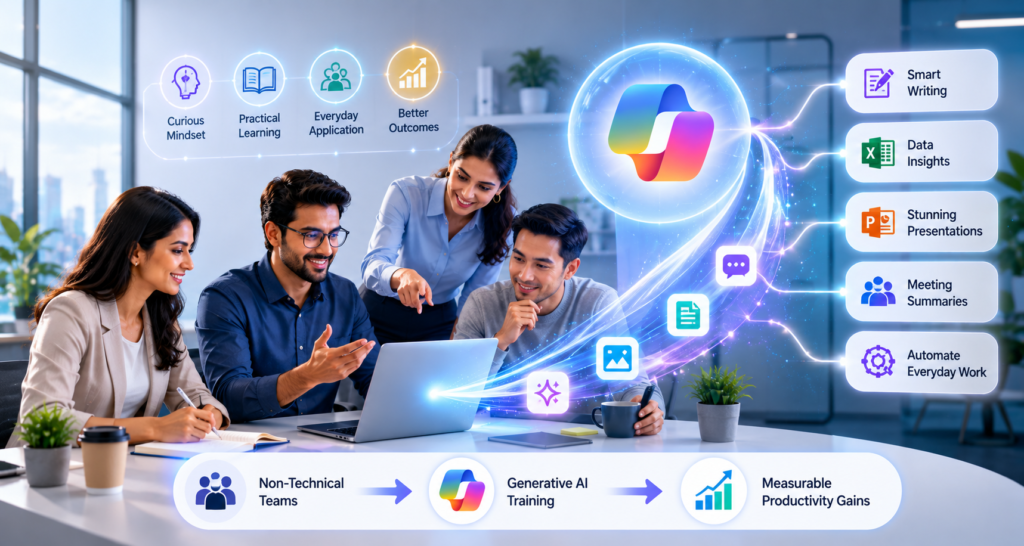
Corporate employees learning AI skills, data analytics, and automation tools during modern workplace training instead of traditional MBA-style programs.
blogs

Why Companies Are Investing More in AI Skills Than MBA Programs

Introduction: Corporate Learning Is Undergoing Its Biggest Transformation in Decades For many years, MBA programs were considered one of the most valuable investments for professionals and organizations. Companies regularly sponsored employees for executive MBA programs because leadership teams believed traditional management education was the key to building future business leaders. An MBA was often associated with: And for a long time, this model worked effectively. But in 2026, the corporate world is changing at an extraordinary pace. Businesses are no longer competing only through: Modern companies now compete through: This has fundamentally changed how companies think about employee training and workforce development. Today, organizations increasingly realize:👉 traditional business education alone is no longer enough. A company may have highly educated managers, but if employees do not understand: the business can still struggle to compete in modern markets. This is why corporate training priorities are shifting dramatically toward:👉 AI skills👉 analytics capabilities👉 Power BI expertise👉 automation systems👉 cloud technologies👉 digital transformation skills The modern workplace is no longer asking:👉 “Who has the best degree?” Instead, companies increasingly ask:👉 “Who can improve productivity, automate workflows, and help us scale faster?” This shift is changing: And businesses that fail to modernize their workforce capabilities may struggle to survive in the coming years. Why Traditional MBA-Focused Workforce Development Is Losing Strategic Importance MBA programs still provide valuable knowledge about: But the modern corporate environment is evolving much faster than traditional education systems. Today’s business challenges increasingly involve: These areas require practical and continuously evolving technical understanding. Traditional MBA programs often focus heavily on: But modern enterprises now need employees who can: This creates a major shift in corporate learning priorities. Modern Businesses Need Execution, Not Just Management Theory In earlier business environments, organizations could operate successfully with slower decision-making and traditional operational structures. But in 2026: Businesses now require employees who can: Organizations increasingly prioritize:👉 practical execution capabilities over theoretical credentials alone. The Digital Economy Rewards Technical Productivity Modern companies generate enormous amounts of data every day. Businesses now depend heavily on: Employees who understand these systems help organizations: This directly impacts profitability and competitiveness. Traditional Degrees Cannot Evolve Fast Enough Technology changes every few months. AI systems, automation tools, analytics platforms, and cloud ecosystems evolve continuously. Traditional academic structures often take years to adapt curriculum changes. Corporate upskilling programs, however, can evolve much faster. This is why businesses increasingly prefer: over relying only on long-term theoretical education systems. Why AI Skills Have Become One of the Most Valuable Corporate Assets Artificial Intelligence is now deeply integrated into modern business operations. Companies are using AI for: As AI adoption increases, organizations are discovering something important:👉 employees who understand AI significantly improve business performance. This is why AI skills are now considered strategic workforce assets. The Rise of the AI-Augmented Employee One of the biggest workforce transformations happening in 2026 is the rise of:👉 AI-augmented professionals. These are employees who use AI tools to: The productivity difference between AI-powered employees and traditional employees is becoming extremely noticeable. Example: Marketing Teams Traditional marketing workflows often involve: AI-powered marketers can now: This dramatically improves execution speed. Example: Analytics Teams Traditional analysts often spend large amounts of time on: AI-powered analytics professionals use: to generate insights much faster. This allows businesses to make better decisions in real time. Example: HR & Operations Teams AI systems now help HR teams: Operations teams use AI for: This increases organizational efficiency significantly. Why Companies Are Investing Aggressively in AI Workforce Upskilling Modern organizations now understand:👉 buying AI tools alone is not enough. Employees must also understand: This is why corporate AI training budgets are increasing rapidly worldwide. AI Skills Create Competitive Advantage Companies with AI-skilled employees often: This creates major competitive advantages. Organizations increasingly view AI upskilling as:👉 a strategic business investment rather than a training expense. Hiring Alone Cannot Solve Workforce Gaps Recruiting new talent constantly is expensive and difficult. Many businesses now prefer: This approach is: AI Productivity Directly Impacts Revenue Growth AI-powered employees often: This directly impacts: which is why organizations aggressively invest in workforce transformation. Why Power BI + AI Training Is Becoming Extremely Popular in Enterprises One of the fastest-growing areas in corporate training today is:👉 AI-powered analytics and business intelligence. Modern organizations rely heavily on: This makes:Microsoft Power BI + AI integration extremely valuable. Companies increasingly want employees who can: This is why Power BI + AI corporate training programs are growing rapidly worldwide. How Corporate Learning Is Changing in 2026 Corporate education itself is evolving dramatically. Earlier, learning programs focused mainly on: Modern corporate learning now focuses on: Learning is becoming:👉 faster👉 practical👉 technology-focused👉 business-driven because companies need measurable outcomes from workforce training. The Most Valuable Skills Companies Want Employees to Learn in 2026 Organizations increasingly prioritize hybrid skill sets that combine: 1. AI Productivity Skills Employees should understand: These capabilities improve operational efficiency significantly. 2. Analytics & Data Literacy Modern businesses increasingly depend on: Employees who understand data-driven operations become much more valuable. 3. Automation Thinking Companies want professionals who can: This mindset is becoming critical. 4. Cloud & Modern Data Platforms Knowledge of: is becoming highly valuable across industries. 5. Business + Technology Combination The future belongs to professionals who combine: This hybrid skill set creates enormous career and business advantages. How TechnoEdgels Helps Companies Build Future-Ready Workforce Capabilities TechnoEdgels helps organizations and professionals prepare for the future AI-driven business environment. Instead of focusing only on theoretical education, TechnoEdgels focuses on: For companies: For professionals: The goal is not simply learning technology. The goal is:👉 building intelligent, scalable, and future-ready organizations. Frequently Asked Questions 1. Why are companies investing more in AI skills than MBA programs in 2026? Companies are prioritizing AI skills because modern business success increasingly depends on digital productivity, automation, analytics, and operational intelligence. While MBA programs still provide valuable leadership and business understanding, organizations now need employees who can directly contribute to AI-driven transformation initiatives. AI skills improve efficiency, scalability, and competitiveness much faster in modern business

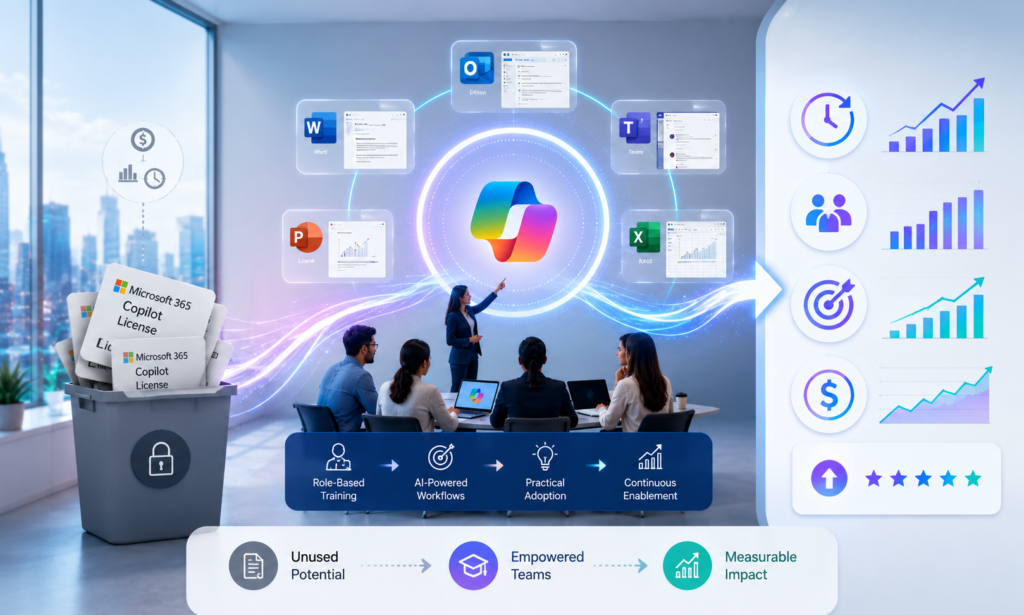
Startup team using AI and Power BI dashboards for real-time analytics, automation, and business growth in a modern office environment.
blogs

How Startups Use AI + Power BI to Scale Faster Than Traditional Businesses

Introduction: Why Modern Startups Are Growing Faster Than Traditional Companies In 2026, the business world is experiencing one of the biggest transformations in history. Earlier, large traditional businesses had a major advantage because they had: Startups often struggled to compete because they lacked these resources. But today, the situation is changing rapidly. Modern startups are now scaling faster than many traditional businesses, even with: The biggest reason behind this shift is:👉 technology-driven scalability. More specifically:👉 AI + Power BI + modern analytics systems. Today’s startups are not trying to grow through manpower alone. Instead, they use: to operate faster and smarter than traditional organizations. This creates a major competitive advantage. Startups can now: This blog explains: Why Traditional Businesses Often Scale Slower To understand why startups are scaling rapidly, we first need to understand why many traditional businesses struggle with speed and innovation. Most traditional organizations were built for: While this structure worked effectively in earlier business environments, modern digital markets now move much faster. Traditional businesses often face challenges such as: This creates major limitations. 1. Slow Reporting and Decision-Making Systems Many traditional companies still depend on: As a result: In fast-moving markets, slow decisions can directly impact growth. 2. Heavy Dependence on Manual Operations Traditional businesses often require: This increases: Modern startups avoid this by automating large portions of their operations. 3. Difficulty Adapting to Rapid Market Changes Customer behavior changes extremely quickly today. Businesses must constantly adapt to: Traditional systems often struggle to respond rapidly. Startups, however, are designed for agility. How AI Is Changing the Startup Growth Model Artificial Intelligence is now one of the biggest growth accelerators for startups. Earlier, many business tasks required: Today, AI allows startups to perform many of these functions automatically. This dramatically increases scalability. AI Helps Startups Operate Like Much Larger Companies A small startup team can now: using AI-powered systems. This allows startups to compete with much larger organizations. AI Reduces Operational Costs Significantly One of the biggest advantages of AI is cost optimization. AI helps startups reduce dependency on: This allows startups to: AI Improves Speed of Execution Modern startups win because they execute faster. AI helps startups: This creates enormous operational speed advantages. Why Power BI Has Become Extremely Important for Startups While AI helps automate processes, startups also need:👉 visibility into business performance. This is where:Microsoft Power BI becomes extremely valuable. Power BI helps startups transform raw data into: This allows founders and teams to make data-driven decisions quickly. How Startups Use Power BI in Real Business Scenarios Power BI is not just used for dashboards. Modern startups use it as a strategic business intelligence system. 1. Real-Time Business Monitoring Startups use Power BI dashboards to track: in real time. This allows leadership teams to react immediately to changes. 2. Customer Behavior Analysis Understanding customer behavior is critical for startup growth. Power BI helps startups analyze: This helps improve customer experience and retention strategies. 3. Financial and Operational Visibility Startups often operate with limited budgets. Power BI helps them monitor: This improves business sustainability. 4. Investor Reporting and Growth Tracking Investors increasingly expect data-driven reporting. Power BI helps startups present: professionally and efficiently. How AI + Power BI Together Create a Powerful Startup Growth Engine The real transformation happens when AI and Power BI work together. AI generates: Power BI provides: Together, they create:👉 intelligent business operations. Example: AI + Power BI in Startup Marketing AI can: Power BI can: This combination improves marketing efficiency dramatically. Example: AI + Power BI in Operations AI automates: Power BI tracks: This creates scalable operational systems. Why Startups Adopt AI Faster Than Traditional Enterprises Startups often adopt AI faster because they have: Traditional businesses often struggle because: Startups can move much faster because they are built around digital-first thinking. The Future Belongs to Data-Driven and AI-Powered Businesses One of the biggest business trends in 2026 is the rise of:👉 intelligent companies. Future businesses will increasingly depend on: Companies that fail to modernize may struggle to compete. This is why startups focusing on: are growing aggressively worldwide. Career Opportunities Growing Because of AI + Power BI Adoption As businesses modernize, demand for professionals with AI + analytics skills is growing rapidly. Companies are increasingly hiring: These roles are becoming highly valuable because businesses need professionals who can: How TechnoEdgels Helps Professionals and Businesses Become Future-Ready TechnoEdgels helps professionals, startups, and organizations build future-ready analytics and AI capabilities. Instead of focusing only on traditional reporting, TechnoEdgels focuses on: For professionals: For businesses: The focus is not just learning technology. The focus is:👉 building scalable and intelligent businesses. Frequently Asked Questions 1. Why are startups able to scale faster than traditional businesses using AI and Power BI? Startups scale faster because AI and Power BI allow them to automate repetitive operations, make faster decisions, and monitor business performance in real time. Traditional businesses often rely on manual systems and slower decision-making structures, which creates operational delays. Startups use modern digital tools to remain agile, efficient, and data-driven. 2. How does AI help startups reduce operational costs? AI automates tasks such as customer support, reporting, workflow management, and analytics processing. This reduces dependency on large operational teams and repetitive manual work. As a result, startups can operate with leaner teams while maintaining high productivity and scalability. 3. Why is Power BI important for startup growth? Power BI helps startups visualize business data through dashboards and reports. This provides real-time visibility into sales, marketing, customer behavior, financial performance, and operational efficiency. Better visibility leads to faster and smarter business decisions. 4. Can small startups use AI and Power BI effectively with limited budgets? Yes, modern cloud-based tools make AI and Power BI accessible even for small startups. Many startups begin with lightweight implementations and gradually expand their analytics systems as they grow. The key advantage is that these tools help startups scale efficiently without requiring massive infrastructure investments. 5. What industries are using AI + Power BI the most? Industries such as SaaS,

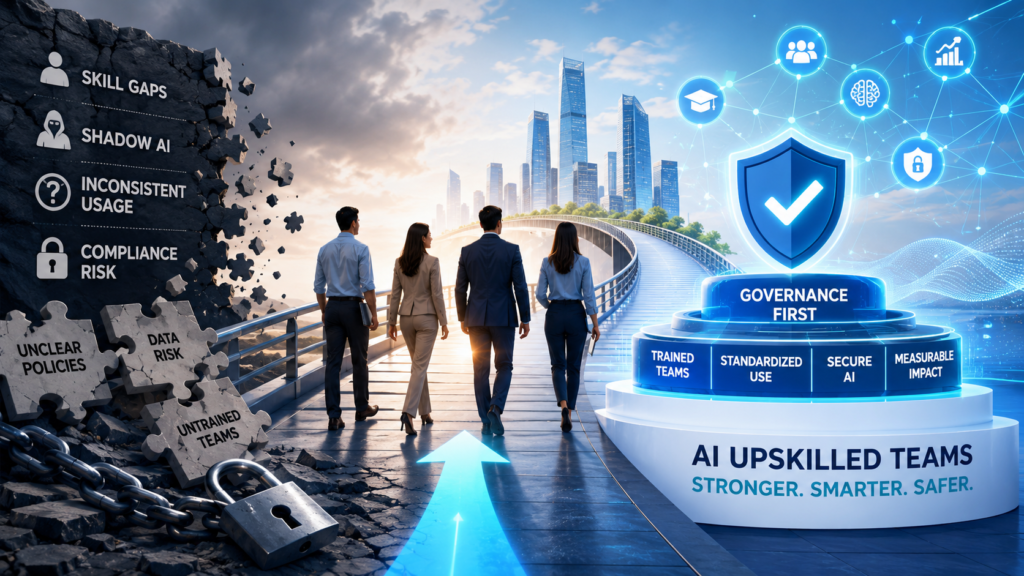
Comparison of Microsoft Fabric, Power BI, and traditional data tools displayed on modern business analytics dashboards in a corporate technology environment.
blogs

Microsoft Fabric vs Power BI vs Traditional Data Tools: What Companies Are Actually Using in 2026

Introduction: The Analytics Industry Is Going Through a Massive Transformation For many years, businesses relied on traditional reporting tools, spreadsheets, disconnected databases, and manual dashboards to manage their analytics workflows. These systems helped organizations generate reports and track business performance, but they were built for a very different era. In 2026, the business world has changed dramatically. Companies now generate massive amounts of data every second from: This explosion of data has created a major challenge for organizations:👉 Traditional analytics systems can no longer handle modern business complexity efficiently. As a result, companies are rapidly shifting toward: This is where platforms like: have become central to enterprise transformation strategies. But many professionals and organizations still feel confused about: This blog will give you a complete, practical, and business-focused understanding of the modern analytics landscape. Understanding Traditional Data Tools (How Companies Worked Before Modern Analytics Platforms) Before cloud analytics and AI-driven systems became mainstream, companies relied heavily on traditional data tools and manual reporting environments. These typically included: For many years, these tools worked effectively because business operations were simpler and data volumes were manageable. Traditional reporting workflows often looked like this: Although this process worked in earlier years, modern businesses now face several major challenges with traditional systems. 1. Data Silos Create Operational Problems One of the biggest issues with traditional tools is fragmentation. Different departments often use separate systems for: This creates isolated data silos. As a result: Modern businesses need connected ecosystems rather than disconnected tools. 2. Traditional Systems Struggle with Real-Time Analytics Today’s businesses require: Traditional systems often rely on scheduled updates and manual refresh cycles, which creates delays. This slows business responsiveness significantly. 3. Scaling Traditional Analytics Infrastructure Is Expensive As organizations grow, their data infrastructure becomes increasingly complex. Traditional systems often require: This increases operational costs and reduces flexibility. What Is Power BI and Why It Became So Popular Worldwide Microsoft Power BI became extremely popular because it simplified business intelligence and data visualization for organizations of all sizes. Power BI allows companies to: without requiring extremely complex infrastructure. One of the biggest reasons Power BI gained massive adoption is:👉 accessibility. It allowed businesses to move away from static reporting toward interactive analytics. How Power BI Changed Business Intelligence Earlier, dashboards often required: Power BI simplified this process dramatically. Organizations could now: This made analytics more accessible to: rather than limiting it only to technical teams. Why Companies Still Use Power BI in 2026 Even with the rise of modern analytics ecosystems, Power BI remains highly relevant because: Many companies still use Power BI extensively for: However, modern business complexity is creating demand for something even larger:👉 unified analytics ecosystems. This is where Microsoft Fabric enters the picture. What Is Microsoft Fabric? (The Biggest Analytics Shift in the Microsoft Ecosystem) Microsoft Fabric is Microsoft’s next-generation unified analytics platform designed to combine: inside a single ecosystem. Instead of using multiple disconnected tools, organizations can manage everything in one platform. This is one of the biggest reasons Microsoft Fabric is gaining rapid enterprise adoption. Why Microsoft Fabric Is Different from Traditional BI Platforms Traditional analytics environments often require multiple separate systems for: Fabric combines these capabilities into a unified environment. This reduces: It creates a much more scalable and AI-ready architecture. Fabric Is Designed for the AI Era One of the biggest advantages of Fabric is its AI-first approach. Modern businesses increasingly require: Fabric is designed to support: This makes it highly attractive for future-focused enterprises. Microsoft Fabric vs Power BI: What Is the Real Difference? This is one of the most common questions professionals ask. The confusion happens because Power BI is actually part of the Fabric ecosystem. However, their roles are different. Power BI Focuses Mainly on Visualization and Reporting Power BI is primarily used for: It is extremely powerful for presenting and analyzing data visually. Microsoft Fabric Focuses on the Entire Data Ecosystem Fabric goes much further. It handles: This means Fabric is not replacing Power BI. Instead:👉 Power BI becomes part of a larger intelligent ecosystem inside Fabric. What Companies Are Actually Using in 2026 The answer depends on: Small and Mid-Sized Businesses Many SMBs still heavily rely on: because they need: Large Enterprises Large enterprises are increasingly moving toward: because they manage: Traditional Tools Are Not Fully Disappearing Traditional systems still exist in many organizations. However:👉 they are rapidly losing strategic importance. Most enterprise modernization roadmaps now focus on: Why AI Is Accelerating the Shift Toward Fabric and Modern Analytics Platforms AI is one of the biggest reasons companies are modernizing analytics infrastructure. Traditional systems struggle to support: Modern platforms like Fabric are built specifically for:👉 AI-powered business operations. This makes them future-ready. Career Opportunities in Microsoft Fabric and Power BI Are Growing Rapidly As companies modernize their analytics infrastructure, demand for skilled professionals is increasing rapidly. Modern roles include: These roles are becoming highly valuable because organizations need professionals who understand: Why Professionals Should Learn Both Power BI and Microsoft Fabric One of the biggest mistakes professionals make is treating these technologies as competitors. In reality:👉 they complement each other. Power BI remains critical for: Fabric expands capabilities into: Professionals who understand both will have stronger long-term career opportunities. How TechnoEdgels Helps Professionals Become Future-Ready Analytics Experts TechnoEdgels helps professionals and organizations prepare for the future of analytics and AI-driven business intelligence. Instead of teaching outdated reporting-only approaches, TechnoEdgels focuses on: The goal is not just certification. The goal is:👉 building future-ready analytics professionals. Frequently Asked Questions 1. Is Microsoft Fabric replacing Power BI completely? No, Microsoft Fabric is not replacing Power BI completely. In fact, Power BI is becoming part of the broader Microsoft Fabric ecosystem. Power BI continues to play a major role in visualization, dashboards, and reporting, while Fabric expands capabilities into data engineering, AI integration, cloud analytics, and enterprise-scale data management. Organizations will continue using Power BI extensively, but increasingly within larger unified analytics environments. 2. Are traditional data tools becoming outdated in 2026? Traditional tools

Professional employee using AI tools and automation software on a laptop while outperforming traditional workers in a modern corporate workplace environment.
blogs

AI Will Not Replace Employees But Employees Who Use AI Will Replace Those Who Don’t

Introduction: The Real Workplace Revolution Has Already Started Over the last few years, Artificial Intelligence has moved from being a futuristic technology to becoming a part of everyday work life. Earlier, AI was seen as something only used by large technology companies or advanced research teams. But in 2026, AI is now integrated into almost every industry and department. Today: As AI adoption increases, one fear has become extremely common among professionals across the world: 👉 “Will AI replace employees completely?” This fear is understandable because social media, news platforms, and online discussions constantly talk about automation replacing jobs. However, the real transformation happening inside companies is very different from what most people imagine. Businesses are not simply replacing all humans with machines. Instead:👉 They are replacing outdated working styles with AI-powered productivity. This means the biggest advantage no longer belongs only to the most experienced employees. It increasingly belongs to:👉 employees who know how to use AI effectively. The modern workplace is now evolving into a system where: This creates a new reality:👉 Employees who understand AI are becoming significantly more valuable than those who ignore it. And this transformation is only accelerating. Why Companies Are Investing Aggressively in AI Adoption Companies are not adopting AI simply because it is trending. They are adopting AI because modern business environments have become extremely competitive. Organizations today face enormous pressure to: Traditional workflows often struggle to handle this pressure because they depend heavily on manual effort. AI helps businesses solve these problems by: This is why businesses across industries are heavily investing in AI transformation. AI Adoption Is Happening Across Every Industry Earlier, many people believed AI would mainly affect technical industries. But today AI is transforming: This shows that AI is no longer just a technology trend. It has become:👉 a workplace transformation movement. AI Is Not Replacing Humans It Is Replacing Repetitive Work One of the biggest misconceptions about AI is the belief that AI can fully replace human employees. In reality, AI is extremely powerful at handling: But AI still struggles with: This means AI is not replacing complete human roles. Instead, it is replacing repetitive components inside those roles. For example: A traditional analyst may spend hours: AI can automate much of this process. But companies still need humans to: This changes the nature of work rather than eliminating humans entirely. The Rise of AI-Augmented Employees (The Biggest Workforce Shift of the Decade) One of the most important workplace trends in 2026 is the rise of:👉 AI-augmented professionals These are employees who use AI tools to: The difference between traditional employees and AI-augmented employees is becoming extremely noticeable inside organizations. Example: Marketing Professionals A traditional marketer may spend: An AI-powered marketer can: This creates a massive productivity advantage. Example: Data Analysts Traditional analysts often spend large amounts of time on: AI-powered analysts can: This allows them to focus on:👉 business strategy rather than repetitive reporting. Example: Business Operations Teams AI-powered professionals can automate: This significantly improves efficiency across departments. Why Employees Who Ignore AI May Struggle in the Future Workplace The workplace is changing rapidly. Employees who completely avoid AI adoption may face several long-term challenges. 1. Productivity Gap Will Continue to Increase Companies constantly measure: Employees using AI tools often complete work much faster than employees using traditional workflows. This creates a widening productivity gap. Over time, organizations naturally prioritize employees who generate better results efficiently. 2. Modern Workflows Will Depend Heavily on AI Systems Businesses are increasingly integrating: Employees who refuse to adapt may struggle to operate effectively inside these systems. 3. Career Growth Will Increasingly Depend on AI Familiarity Future leadership roles will increasingly require understanding: Employees without AI knowledge may face slower career progression. The Future Workplace Will Be Human + AI Collaboration One of the most important future trends is that businesses are not trying to eliminate humans completely. Instead, they are building:👉 collaborative human + AI systems In this model: This collaboration improves: The most valuable professionals in the future will be those who know:👉 how to combine human intelligence with AI capabilities. The Most Important AI Skills Employees Should Learn in 2026 To remain valuable in the future workforce, employees need to build practical AI-related skills. 1. AI Tool Usage Understanding tools such as: is becoming increasingly important across industries. 2. Prompt Engineering Employees who know how to communicate effectively with AI systems produce significantly better results. This skill is becoming highly valuable. 3. Data Literacy and Analytics Understanding Modern companies increasingly expect employees to understand: This is becoming a core workplace skill. 4. Automation Thinking Professionals should learn: This mindset is critical for future roles. 5. AI + Business Strategy The highest-value professionals will combine: This combination creates enormous career advantages. Why Companies Are Investing Heavily in AI Upskilling Programs Organizations now understand that AI adoption alone is not enough. Their employees must also know:👉 how to use AI effectively. This is why companies worldwide are investing heavily in: Businesses now realize:👉 AI-powered employees create competitive advantage. This is creating massive opportunities for: How TechnoEdgels Helps Professionals and Companies Become AI-Ready TechnoEdgels helps both individuals and organizations prepare for the future AI-powered workplace. Instead of focusing only on theoretical knowledge, TechnoEdgels focuses on: For professionals, this helps build: For companies, TechnoEdgels helps: The goal is not simply learning AI tools. The goal is:👉 becoming future-ready in a rapidly evolving business world. Frequently Asked Questions 1. Will AI completely replace employees in the future workplace? No, AI is highly unlikely to completely replace employees across most industries. What AI is mainly doing is automating repetitive and operational tasks that consume time and reduce efficiency. Businesses still require human professionals for strategic thinking, leadership, emotional intelligence, relationship management, creativity, and complex decision-making. The future workplace is more about collaboration between humans and AI rather than total human replacement. 2. Why are employees who use AI becoming more valuable to companies? Employees who use AI effectively can complete tasks faster, automate

AI-powered Power BI expert analyzing automated business dashboards and real-time analytics while replacing traditional reporting teams in a modern corporate office environment.
blogs

Why Companies Are Replacing Traditional Reporting Teams with AI-Powered Power BI Experts in 2026

Introduction: The End of Traditional Reporting Teams Has Already Started For years, companies relied heavily on traditional reporting teams to collect data, create Excel reports, prepare dashboards, and present business insights to management. These teams played a crucial role in helping businesses understand performance, sales, customer trends, and operational metrics. But in 2026, the business intelligence landscape is changing dramatically. Companies are no longer satisfied with slow reporting cycles, manual dashboard creation, and static reports that become outdated within hours. Modern businesses operate in a fast-moving digital environment where decisions must be made instantly, accurately, and based on real-time insights. This shift has created a major transformation inside organizations: 👉 Companies are moving away from traditional reporting teams👉 And moving toward AI-powered Power BI experts This does not mean reporting is disappearing. It means the way reporting is done is evolving rapidly. Today, businesses want professionals who can: This evolution is not just a technology trend—it is a business survival strategy. Companies that fail to modernize their reporting systems are struggling with slower decision-making, operational inefficiencies, and missed opportunities. This blog explains: Why Traditional Reporting Teams Are Becoming Less Effective in Modern Businesses Traditional reporting systems were designed for a different business era. Earlier, companies could afford to wait days or even weeks for reports because business environments moved more slowly. Data volumes were smaller, competition was lower, and decision-making cycles were longer. But modern businesses generate enormous amounts of data every second. This includes: Traditional reporting teams often struggle with this scale because their workflows are heavily manual. Many reporting teams still spend large amounts of time on: These processes create several business problems. 1. Slow Decision-Making Hurts Business Growth In competitive industries, delays in decision-making can directly impact revenue and customer satisfaction. If leadership teams receive reports days later, they are making decisions based on outdated information. Modern businesses need: Traditional reporting models cannot support this speed effectively. 2. Manual Reporting Creates High Operational Costs Large reporting teams require significant operational investment. Companies spend money on: AI-powered systems reduce much of this manual dependency. This allows companies to: 3. Static Reports Are No Longer Enough Traditional dashboards mostly explain:👉 “What already happened” But modern companies also want to know: This requires predictive analytics and AI-driven intelligence. Static reports cannot provide this level of insight. Why AI-Powered Power BI Experts Are Becoming Extremely Valuable The rise of AI-powered Power BI professionals is directly connected to the changing needs of businesses. Companies no longer want professionals who only create dashboards. They want experts who can: This changes the role completely. An AI-powered Power BI expert is not just a dashboard creator. They become:👉 a business intelligence strategist What Makes AI-Powered Power BI Experts Different? Traditional reporting professionals focus mostly on data presentation. AI-powered Power BI experts focus on: They use: to create smarter business ecosystems. Example: Traditional Reporting vs AI-Powered Reporting Traditional Workflow: AI-Powered Workflow: The difference in speed and efficiency is massive. How AI Is Transforming Power BI in 2026 Power BI itself is evolving rapidly because of AI integration. Microsoft is heavily investing in: This means users can now: The role of reporting professionals is changing from:👉 report buildersto:👉 insight interpreters and business advisors Real Business Impact: Why Companies Prefer AI-Powered Analytics Teams Businesses are not adopting AI-powered analytics just because it is trendy. They are doing it because it creates measurable business impact. 1. Faster Business Decisions AI-powered dashboards provide real-time visibility into operations. This allows leadership teams to respond quickly to: Speed becomes a competitive advantage. 2. Better Forecasting and Planning AI helps businesses predict: This improves strategic planning significantly. 3. Reduced Reporting Dependency Companies no longer need large teams handling repetitive reporting operations. Instead, smaller highly skilled analytics teams can manage intelligent systems efficiently. 4. Stronger Executive-Level Insights AI-powered analytics systems provide: This helps executives make smarter strategic decisions. Will Traditional Reporting Jobs Disappear Completely? This is one of the biggest questions professionals ask. The honest answer is:👉 No, reporting jobs will not disappear completely But they will evolve dramatically. Professionals who only know: may struggle in the future. However, professionals who adapt to: will become highly valuable. The future belongs to:👉 AI-augmented analytics professionals Skills Companies Are Hiring for in 2026 Modern companies are increasingly hiring professionals with hybrid skill sets. The most in-demand skills include: 1. Power BI Expertise Companies still heavily rely on Power BI for: But advanced Power BI skills are now more valuable than basic reporting. 2. AI Integration Knowledge Professionals who understand: have a significant advantage. 3. Microsoft Fabric Knowledge Microsoft Fabric is becoming a major enterprise analytics platform. Companies want professionals who understand: 4. Business Understanding Technical skills alone are no longer enough. Companies value professionals who understand: This combination creates true business intelligence experts. Career Opportunities and Salary Growth for AI-Powered Power BI Experts The demand for AI-powered analytics professionals is increasing rapidly worldwide. Roles include: These roles often offer: because businesses see them as strategic assets. How TechnoEdgels Helps Professionals Become Future-Ready Analytics Experts Most learners still follow outdated reporting-focused learning paths. But modern companies need: TechnoEdgels focuses on preparing learners for this new market reality. Instead of teaching only traditional reporting, TechnoEdgels helps learners build: The focus is not just certification. The focus is:👉 becoming job-ready and future-ready Frequently Asked Questions 1. Why are companies replacing traditional reporting teams in 2026? Companies are replacing traditional reporting teams because modern businesses require faster, smarter, and more automated analytics systems. Traditional reporting methods often rely on manual work, static dashboards, and delayed reporting cycles. This slows down decision-making and increases operational costs. AI-powered Power BI experts help businesses automate reporting, generate real-time insights, and improve forecasting. This creates higher efficiency and better business outcomes. 2. Will AI completely replace reporting analysts and BI professionals? AI will not completely replace reporting analysts, but it will significantly change their responsibilities. Repetitive tasks such as manual report creation and basic dashboard generation will become automated. However, businesses still need

AI Career Roadmap 2026
blogs

The Complete AI Career Roadmap for Freshers in 2026

Why Starting an AI Career Feels Overwhelming In 2026, Artificial Intelligence is no longer a future trend it has become a core part of how businesses operate. Companies are using AI to automate tasks, analyze data, improve customer experience, and make faster decisions. This rapid growth has created one of the biggest job opportunities in the modern tech world. However, for freshers, this opportunity often feels confusing instead of exciting. When someone decides to start a career in AI, they are immediately exposed to terms like machine learning, deep learning, data science, prompt engineering, automation, and many more. Without a clear structure, it becomes difficult to understand where to begin. This confusion leads to common problems: The reality is:  AI is not impossible to learnBut it requires a clear roadmap and proper strategy This blog will give you exactly that a complete, step-by-step career roadmap that takes you from zero knowledge to getting your first job in AI. Understanding What Companies Actually Expect from Freshers in AI Roles Before starting your learning journey, it is very important to understand what companies are actually looking for when they hire freshers. Most beginners believe that companies expect deep technical expertise or advanced AI knowledge. But in reality, companies are looking for candidates who can solve problems using AI tools and data. In 2026, hiring trends show that companies prefer candidates who: This means that you do not need to be an expert in machine learning from day one. Instead, companies value: 👉 Practical skills over theoretical knowledge👉 Real projects over certificates This is an important mindset shift. Your goal is not just to learn AI it is to become job-ready. Step-by-Step AI Career Roadmap for Freshers (From Zero to Job-Ready Level) This roadmap is designed for beginners with no technical background. Step 1: Build a Strong Foundation in AI, Data, and Logical Thinking The first step is not coding. It is understanding how AI works at a basic level. You need to learn: This step builds your thinking ability. Without understanding these basics, learning advanced concepts becomes difficult. You should focus on developing logical thinking and problem-solving skills. This stage prepares your mind for everything that comes next. Step 2: Start Using AI Tools to Understand Real-World Applications Once you understand the basics, the next step is to start using AI tools. This is important because it helps you connect theory with real-world use. You should explore tools that are widely used in industries, such as: At this stage, you learn how AI behaves, how it responds to instructions, and how it can be applied in real scenarios. This builds practical confidence. Step 3: Learn Python and Data Handling (Core Skill Development) After getting comfortable with AI tools, you should move into Python. Python is important because it allows you to: You should also learn how to handle data using tools and libraries. This stage is where you move from being a user of AI to someone who can build with AI. It is important to take this step slowly and focus on understanding rather than rushing. Step 4: Understand Machine Learning Concepts in a Practical Way Once your Python and data basics are clear, you can move into machine learning. This stage involves understanding: You do not need to go deep into mathematics at the beginning. Instead, focus on understanding how these concepts are applied in real-world scenarios. This step helps you understand the “brain” behind AI systems. Step 5: Build Real Projects That Show Your Skills This is the most important stage of your journey. Projects are what make you job-ready. Without projects, your learning remains incomplete because you are not applying what you have learned. You should build projects such as: These projects help you: A strong portfolio can make a huge difference in getting your first job. Step 6: Learn Industry Tools (Power BI, Microsoft Fabric, AI Tools) To become job-ready, you need to align your skills with industry demand. Companies use tools such as Power BI for data visualization and Microsoft Fabric for data engineering and analytics. Learning these tools helps you: This step connects your learning with real-world job roles. Step 7: Prepare for Jobs (Resume, Portfolio, Interviews) The final step is preparing for job applications. Many candidates focus only on learning and ignore this stage, which leads to delays in getting hired. You need to: You should also start applying for jobs early instead of waiting for perfection. This step converts your learning into real opportunities. Common Mistakes That Stop Freshers from Getting Hired Many freshers struggle not because they lack ability, but because they follow the wrong approach. One common mistake is trying to learn everything at once. AI is a vast field, and learning everything together leads to confusion. Another mistake is focusing only on theory. Without practical experience, it becomes difficult to demonstrate skills. Some candidates also delay applying for jobs because they feel they are not ready. This slows down their progress. The correct approach is: 👉 Learn step by step👉 Build projects👉 Start applying early How TechnoEdgels Helps You Go from Beginner to Hired (Real Career Support) Most learners fail because they do not have a structured path. TechnoEdgels provides a complete system that takes you from beginner level to job-ready stage. It focuses on: Instead of teaching isolated topics, it connects AI with data and cloud technologies, which are highly in demand. This ensures that you are not just learning you are preparing for real jobs. 👉 Start your journey here:https://technoedgels.com/ Frequently Asked Questions 1. Can I really start an AI career with zero background? Yes, you can start an AI career with zero background. Many professionals today have transitioned into AI from non-technical fields. The key is to follow a structured roadmap and build skills step by step. Initially, you can start with AI tools and basic concepts, and gradually move into programming and advanced topics. Consistency and practice are more important than prior knowledge. 2. How

Python for AI 2026
blogs

Python for AI: Complete Beginner to Job-Ready Roadmap for 2026

Why Python Has Become the Entry Point for Every AI Career In today’s technology-driven world, Artificial Intelligence is no longer limited to research labs or large tech companies. It has become a part of everyday business operations, from recommendation systems and chatbots to data analytics and automation. At the center of this transformation is one programming language Python. If you explore job roles such as Data Analyst, AI Engineer, Machine Learning Engineer, or even Automation Specialist, you will notice that Python is a common requirement across all of them. This is not just a trend; it reflects how deeply Python is integrated into the AI ecosystem. However, for beginners, especially those without a technical background, the idea of learning Python can feel intimidating. Many people assume that coding is complex, requires a strong technical foundation, and takes years to master. The truth is quite different. Python is specifically designed to be simple, readable, and beginner-friendly. More importantly, it allows learners to quickly move from understanding basic concepts to building real-world applications. The real challenge is not the difficulty of Python, but the lack of a clear roadmap. Without proper guidance, beginners often: This blog will provide a complete, structured, and practical roadmap that takes you from absolute beginner to job-ready level in Python for AI. What Makes Python the Most Powerful Language for AI? Python’s dominance in AI is not accidental. It is the result of a combination of simplicity, flexibility, and a strong ecosystem. First, Python is designed with readability in mind. Its syntax is simple and closely resembles natural language, which makes it easier for beginners to understand and write code. This reduces the initial learning barrier and allows learners to focus on logic rather than struggling with complex syntax. Second, Python has a rich ecosystem of libraries specifically built for AI and data-related tasks. For example, libraries like NumPy and Pandas allow efficient data manipulation, while libraries like Scikit-learn, TensorFlow, and PyTorch enable machine learning and deep learning. These libraries eliminate the need to build everything from scratch, allowing developers to focus on solving real problems. Third, Python integrates seamlessly with modern technologies such as cloud platforms, APIs, and data visualization tools. This makes it highly versatile and suitable for end-to-end AI solutions. Another important advantage is the strong community support. Since Python is widely used, learners have access to a large number of tutorials, forums, and resources, which makes learning easier and faster. In simple terms: Python reduces complexity and increases productivity That is why it is the backbone of AI development Can You Learn Python for AI Without Any Coding Background? One of the most common concerns beginners have is whether they can learn Python without any prior coding experience. The answer is yes, but it requires the right approach and mindset. Python is beginner-friendly, but AI is not just about coding. It also involves understanding data, logic, and problem-solving. Without these, even simple programming concepts can feel challenging. For non-technical learners, the key is to start slowly and build confidence step by step. Instead of focusing on becoming an expert programmer immediately, you should aim to: Over time, coding becomes more intuitive. It is also important to understand that you do not need to learn everything at once. Learning Python for AI is a gradual process, and progress comes with consistency. Complete Python for AI Roadmap (Step-by-Step Detailed Learning Path for 2026) A structured roadmap is essential to avoid confusion and ensure steady progress. Step 1: Build Strong Programming Fundamentals The first step is to understand the basics of programming. This includes learning how to write simple programs and understanding how logic works in coding. You should focus on concepts such as variables, data types, conditional statements, loops, and functions. These concepts form the foundation of all programming tasks. At this stage, the goal is not to memorize syntax but to understand how problems are solved using code. You should practice simple exercises that involve calculations, decision-making, and repetition. This step builds confidence and prepares you for more advanced topics. Step 2: Learn Data Handling and Data Structures Once you are comfortable with basic programming, the next step is to learn how to work with data. AI systems rely heavily on data, so understanding how to store, manipulate, and analyze data is essential. You will learn about data structures such as lists, dictionaries, and arrays. You will also start using libraries like Pandas to handle real-world datasets. This stage helps you understand how data is organized and processed in practical scenarios. Step 3: Learn Data Visualization and Interpretation Data visualization is an important skill because it helps you understand patterns and communicate insights. Using libraries like Matplotlib and Seaborn, you can create graphs and charts that represent data visually. This step is not just about creating visuals. It is about interpreting data and making sense of it. For example, identifying trends, anomalies, and patterns in data is a critical skill for AI and analytics roles. Step 4: Understand Machine Learning Concepts After building a strong foundation in Python and data, you can move into machine learning. Machine learning involves training models to learn from data and make predictions. At this stage, you should focus on understanding: Using libraries like Scikit-learn, you can build simple models and understand how they work. The emphasis should be on conceptual clarity rather than complex mathematics. Step 5: Build Real-World AI Projects This is the most important stage in your learning journey. Projects help you apply your knowledge and demonstrate your skills. You can build projects such as chatbots, recommendation systems, data dashboards, and automation tools. Working on projects helps you understand real-world challenges and prepares you for job roles. It also strengthens your portfolio, which is important for getting hired. Step 6: Learn Integration with AI Tools and Cloud Platforms In 2026, AI is not used in isolation. It is integrated with other technologies such as cloud platforms and business tools. At this stage, you should learn

Prompt Engineering in 2026
blogs

Prompt Engineering in 2026: Is It a Real Career or Just Another Hype?

The Sudden Rise of Prompt Engineering and the Confusion Around It Over the past few years, Artificial Intelligence has moved from being a niche technology to becoming a mainstream tool used across industries. With this shift, a new term has gained massive attention  Prompt Engineering. You may have seen people claiming that prompt engineers are earning high salaries, working with tools like ChatGPT, and building careers without needing deep technical skills. This has created a wave of excitement, especially among beginners who are looking for quick entry into the AI field. However, along with this excitement, there is also a significant amount of confusion. Many people are asking: The reality is more nuanced than what social media suggests. Prompt engineering is neither a magic shortcut to high-paying jobs nor a useless trend. It is something in between a valuable skill that plays an important role inside larger AI-driven job roles. To understand this properly, we need to go deeper into what prompt engineering actually is and how it is being used in real companies. What Is Prompt Engineering? (Deep and Practical Explanation) Prompt engineering is the practice of designing and structuring inputs given to AI systems in a way that produces accurate, relevant, and high-quality outputs. At a surface level, it may seem like simply asking questions to an AI tool. But in reality, it involves much more than that. A well-designed prompt includes: For example, asking an AI tool “Explain AI” will give a generic answer. But asking: “Explain AI in simple terms for beginners with real-life examples and use cases in business” will produce a much more useful result. This difference is the result of prompt engineering. In professional environments, prompt engineering is used to: This makes it an important skill in AI workflows. However, prompt engineering is not just about writing better sentences. It also involves understanding how AI models interpret language, how context affects output, and how to design structured interactions. Why Prompt Engineering Became So Popular So Quickly The rapid growth of prompt engineering is directly linked to the rise of generative AI tools. When tools like ChatGPT, Claude, and Gemini became widely available, millions of users started interacting with AI systems without formal training. This created a noticeable gap in results. Some users were getting average outputs, while others were achieving highly accurate and useful results. The difference was not the tool  it was the way they were using it. Companies quickly realized that: The effectiveness of AI depends heavily on how it is used. This realization made prompt engineering an important skill in areas such as: As businesses started integrating AI into their workflows, they needed people who could interact with these systems effectively. This is why prompt engineering gained attention so rapidly. Is Prompt Engineering a Real Career in 2026? This is the most important question, and it requires a clear and honest answer. Prompt engineering is not a standalone long-term career for most people. But it is also not just hype. To understand this properly, we need to look at how companies are actually hiring. Organizations are not typically creating roles where the only responsibility is writing prompts. Instead, they are hiring professionals for roles such as: In all these roles, prompt engineering is used as a supporting skill. For example, a data analyst may use prompts to analyze data faster. A marketer may use prompts to generate campaigns. A developer may use prompts to generate code. This means: Prompt engineering is embedded within real jobs, not separate from them. The Real Industry Insight But by itself, it is usually not enough to define a full career. Where Prompt Engineering Is Actually Used in Real Work Environments To understand its true value, it is important to see where it is applied in real-world scenarios. In content and marketing, prompt engineering helps professionals generate high-quality content quickly while maintaining consistency and relevance. In data analysis, it allows analysts to extract insights, summarize reports, and automate repetitive tasks using AI tools. In customer support, it is used to design chatbot responses that are accurate and helpful. In software development, developers use prompts to generate code, debug issues, and accelerate development processes. In business operations, prompt engineering is used to automate workflows and improve decision-making processes. This shows that prompt engineering is not a separate job role but a core capability used across multiple professions. Skills Required to Master Prompt Engineering To become effective in prompt engineering, you need a combination of skills. Understanding AI behavior is essential because you need to know how AI interprets instructions and generates responses. Logical thinking is important because prompt design requires structured and step-by-step reasoning. Communication skills play a critical role because clarity in language directly affects output quality. Domain knowledge is also important because prompts must be aligned with the specific problem you are trying to solve. Finally, familiarity with AI tools such as ChatGPT, Claude, and Gemini is necessary to apply your knowledge in real scenarios. These skills together make prompt engineering effective and valuable. Salary and Demand: What You Should Realistically Expect in 2026 One of the biggest misconceptions is that prompt engineering alone leads to high salaries. In reality, salaries are determined by your overall role and skill set. For example: Prompt engineering contributes to these roles but does not define them entirely. This means: Your earning potential depends on how you combine prompt engineering with other skills. Future of Prompt Engineering: What Will Change in the Next Few Years As AI tools become more advanced, prompt engineering will evolve. It will likely become a basic skill, similar to how using search engines or spreadsheets became essential skills over time. In the future: However, advanced prompt design and AI workflow integration will remain valuable for professionals who want to stand out. How TechnoEdgels Helps You Build a Real AI Career Many learners get trapped in trends and hype, focusing only on surface-level skills. TechnoEdgels takes a different approach. Instead of teaching only

How to Start Learning AI in 2026
blogs

Want to Learn AI But Don’t Know Where to Start: A Brutally Honest Beginner’s Guide for 2026

Why Learning AI Feels So Confusing for Beginners In 2026, Artificial Intelligence is everywhere. You see it in social media, jobs, business tools, and even daily life applications. Naturally, many people feel excited and want to start learning AI. But instead of clarity, most beginners feel overwhelmed. This happens because AI is not a single subject. It is a combination of multiple domains such as data, programming, logic, machine learning, and tools. When beginners search for “how to learn AI,” they are exposed to advanced topics immediately without understanding the foundation. As a result, they feel lost, confused, and often give up before even starting properly. The real problem is not difficulty. The real problem is lack of direction. This guide will remove that confusion and give you a clear, structured, and practical path to start learning AI step by step. What Is AI Actually? (Clear and Practical Understanding) Artificial Intelligence is often misunderstood as something extremely complex or only for experts. But in reality, AI simply refers to systems that can perform tasks that normally require human intelligence. These tasks include understanding language, recognizing patterns, making decisions, and learning from data. However, AI is not one single technology. It is made up of multiple components that work together. Machine Learning allows systems to learn from data. Deep Learning takes this further using advanced neural networks. Natural Language Processing helps machines understand human language. Generative AI enables systems to create content such as text, images, and code. In 2026, the biggest change is that AI has become more accessible. You can now use AI tools without writing complex code. But to build a career, you must understand how AI works behind the scenes, not just how to use tools. Why Most Beginners Fail in AI (Detailed Reality Check) Before you start learning, it is important to understand why many people fail. This will help you avoid common mistakes. The first major mistake is starting without a roadmap. Beginners often jump between videos, courses, and tools without any structured plan. This creates confusion instead of progress. The second mistake is focusing only on tools. Many people use tools like ChatGPT or image generators and believe they are learning AI. But tool usage without understanding concepts leads to shallow knowledge. The third mistake is trying to learn everything at once. AI includes coding, data science, and machine learning. Trying to learn all of these simultaneously overwhelms beginners. The fourth mistake is not practicing. Watching tutorials gives a false sense of learning, but real understanding comes only when you build projects and apply concepts. The key takeaway is simple: 👉 AI is not difficult👉 The wrong approach makes it difficult The Complete AI Learning Roadmap for 2026 (Step-by-Step Detailed Explanation) Now let’s understand the correct way to learn AI in a structured manner. Step 1: Build Strong Thinking and Data Understanding Before touching any AI tool or programming language, you must develop your thinking ability. AI is based on data and logic, so understanding how data works is essential. You need to learn how data is collected, structured, and used to make decisions. This stage helps you build analytical thinking, which is the foundation of AI. Without this step, you may learn tools, but you will not understand their output. Step 2: Start with AI Tools to Understand Practical Usage At this stage, you begin using AI tools such as ChatGPT, Canva AI, or Notion AI. The goal here is not mastery but understanding. You learn how AI behaves, how prompts work, and how outputs are generated. This step is important because it connects theory with real-world application. It helps you understand how AI is actually used in business and daily tasks. Step 3: Learn Basic Programming (Python) Once you understand how AI works at a basic level, you should start learning Python. Python is the most commonly used language in AI because it is simple and powerful. You do not need advanced programming knowledge. Basic concepts such as variables, loops, functions, and data handling are enough to get started. This step allows you to move from using AI tools to building AI-based solutions. Step 4: Understand Machine Learning Concepts After learning basic programming, you move into machine learning. Here, you learn how models are trained using data, how predictions are made, and how different algorithms work. The focus should be on understanding concepts rather than memorizing formulas. You should understand why a model works, not just how to use it. Step 5: Apply AI in Real Scenarios At this stage, you start combining everything you have learned. You use AI to solve real problems such as automating tasks, analyzing data, or improving workflows. This is where your learning becomes practical and valuable. Step 6: Build Projects to Become Job-Ready Projects are the most important part of your learning journey. They help you: Examples include building chatbots, dashboards, or automation systems. Without projects, it is difficult to prove your skills. AI Career Paths (Detailed Explanation for Clarity) AI offers multiple career options, and choosing the right path is important. If you are a beginner, you can start as an AI tools specialist where you use AI tools for productivity and automation. If you are interested in data, you can become a data analyst using AI tools along with platforms like Power BI. If you prefer technical roles, you can become an AI engineer or machine learning engineer, which require coding and deeper understanding. Each path requires different skills, so your choice should depend on your interest and background. How TechnoEdgels Helps You Learn AI Properly Most learners struggle because they lack direction. TechnoEdgels provides a structured learning approach that solves this problem. Instead of random tutorials, you get a clear roadmap from beginner to advanced level. You learn through real-world projects, which helps you gain practical experience. The platform focuses on industry-relevant skills such as AI, data analytics, and cloud computing. This ensures that what you learn is aligned with current job

Trust Us, One Call Can Make a Difference
Please enable JavaScript in your browser to complete this form.
Join As Trainer
Join As Trainer
Please enable JavaScript in your browser to complete this form.
Download Course Content
Please enable JavaScript in your browser to complete this form.
More than 5 People are attending Get On a Call with Us
Please enable JavaScript in your browser to complete this form.
More than 5 People are attending Get On a Call with Us
Scroll to Top