
TechnoEdge

Free Master Class

How to Plan Your AI Training Budget for FY26? (For CHROs & L&Ds)

blogs

AI-powered Power BI expert analyzing automated business dashboards and real-time analytics while replacing traditional reporting teams in a modern corporate office environment.
blogs

Why Companies Are Replacing Traditional Reporting Teams with AI-Powered Power BI Experts in 2026

Introduction: The End of Traditional Reporting Teams Has Already Started For years, companies relied heavily on traditional reporting teams to collect data, create Excel reports, prepare dashboards, and present business insights to management. These teams played a crucial role in helping businesses understand performance, sales, customer trends, and operational metrics. But in 2026, the business intelligence landscape is changing dramatically. Companies are no longer satisfied with slow reporting cycles, manual dashboard creation, and static reports that become outdated within hours. Modern businesses operate in a fast-moving digital environment where decisions must be made instantly, accurately, and based on real-time insights. This shift has created a major transformation inside organizations: 👉 Companies are moving away from traditional reporting teams👉 And moving toward AI-powered Power BI experts This does not mean reporting is disappearing. It means the way reporting is done is evolving rapidly. Today, businesses want professionals who can: This evolution is not just a technology trend—it is a business survival strategy. Companies that fail to modernize their reporting systems are struggling with slower decision-making, operational inefficiencies, and missed opportunities. This blog explains: Why Traditional Reporting Teams Are Becoming Less Effective in Modern Businesses Traditional reporting systems were designed for a different business era. Earlier, companies could afford to wait days or even weeks for reports because business environments moved more slowly. Data volumes were smaller, competition was lower, and decision-making cycles were longer. But modern businesses generate enormous amounts of data every second. This includes: Traditional reporting teams often struggle with this scale because their workflows are heavily manual. Many reporting teams still spend large amounts of time on: These processes create several business problems. 1. Slow Decision-Making Hurts Business Growth In competitive industries, delays in decision-making can directly impact revenue and customer satisfaction. If leadership teams receive reports days later, they are making decisions based on outdated information. Modern businesses need: Traditional reporting models cannot support this speed effectively. 2. Manual Reporting Creates High Operational Costs Large reporting teams require significant operational investment. Companies spend money on: AI-powered systems reduce much of this manual dependency. This allows companies to: 3. Static Reports Are No Longer Enough Traditional dashboards mostly explain:👉 “What already happened” But modern companies also want to know: This requires predictive analytics and AI-driven intelligence. Static reports cannot provide this level of insight. Why AI-Powered Power BI Experts Are Becoming Extremely Valuable The rise of AI-powered Power BI professionals is directly connected to the changing needs of businesses. Companies no longer want professionals who only create dashboards. They want experts who can: This changes the role completely. An AI-powered Power BI expert is not just a dashboard creator. They become:👉 a business intelligence strategist What Makes AI-Powered Power BI Experts Different? Traditional reporting professionals focus mostly on data presentation. AI-powered Power BI experts focus on: They use: to create smarter business ecosystems. Example: Traditional Reporting vs AI-Powered Reporting Traditional Workflow: AI-Powered Workflow: The difference in speed and efficiency is massive. How AI Is Transforming Power BI in 2026 Power BI itself is evolving rapidly because of AI integration. Microsoft is heavily investing in: This means users can now: The role of reporting professionals is changing from:👉 report buildersto:👉 insight interpreters and business advisors Real Business Impact: Why Companies Prefer AI-Powered Analytics Teams Businesses are not adopting AI-powered analytics just because it is trendy. They are doing it because it creates measurable business impact. 1. Faster Business Decisions AI-powered dashboards provide real-time visibility into operations. This allows leadership teams to respond quickly to: Speed becomes a competitive advantage. 2. Better Forecasting and Planning AI helps businesses predict: This improves strategic planning significantly. 3. Reduced Reporting Dependency Companies no longer need large teams handling repetitive reporting operations. Instead, smaller highly skilled analytics teams can manage intelligent systems efficiently. 4. Stronger Executive-Level Insights AI-powered analytics systems provide: This helps executives make smarter strategic decisions. Will Traditional Reporting Jobs Disappear Completely? This is one of the biggest questions professionals ask. The honest answer is:👉 No, reporting jobs will not disappear completely But they will evolve dramatically. Professionals who only know: may struggle in the future. However, professionals who adapt to: will become highly valuable. The future belongs to:👉 AI-augmented analytics professionals Skills Companies Are Hiring for in 2026 Modern companies are increasingly hiring professionals with hybrid skill sets. The most in-demand skills include: 1. Power BI Expertise Companies still heavily rely on Power BI for: But advanced Power BI skills are now more valuable than basic reporting. 2. AI Integration Knowledge Professionals who understand: have a significant advantage. 3. Microsoft Fabric Knowledge Microsoft Fabric is becoming a major enterprise analytics platform. Companies want professionals who understand: 4. Business Understanding Technical skills alone are no longer enough. Companies value professionals who understand: This combination creates true business intelligence experts. Career Opportunities and Salary Growth for AI-Powered Power BI Experts The demand for AI-powered analytics professionals is increasing rapidly worldwide. Roles include: These roles often offer: because businesses see them as strategic assets. How TechnoEdgels Helps Professionals Become Future-Ready Analytics Experts Most learners still follow outdated reporting-focused learning paths. But modern companies need: TechnoEdgels focuses on preparing learners for this new market reality. Instead of teaching only traditional reporting, TechnoEdgels helps learners build: The focus is not just certification. The focus is:👉 becoming job-ready and future-ready Frequently Asked Questions 1. Why are companies replacing traditional reporting teams in 2026? Companies are replacing traditional reporting teams because modern businesses require faster, smarter, and more automated analytics systems. Traditional reporting methods often rely on manual work, static dashboards, and delayed reporting cycles. This slows down decision-making and increases operational costs. AI-powered Power BI experts help businesses automate reporting, generate real-time insights, and improve forecasting. This creates higher efficiency and better business outcomes. 2. Will AI completely replace reporting analysts and BI professionals? AI will not completely replace reporting analysts, but it will significantly change their responsibilities. Repetitive tasks such as manual report creation and basic dashboard generation will become automated. However, businesses still need

AI Career Roadmap 2026
blogs

The Complete AI Career Roadmap for Freshers in 2026

Why Starting an AI Career Feels Overwhelming In 2026, Artificial Intelligence is no longer a future trend it has become a core part of how businesses operate. Companies are using AI to automate tasks, analyze data, improve customer experience, and make faster decisions. This rapid growth has created one of the biggest job opportunities in the modern tech world. However, for freshers, this opportunity often feels confusing instead of exciting. When someone decides to start a career in AI, they are immediately exposed to terms like machine learning, deep learning, data science, prompt engineering, automation, and many more. Without a clear structure, it becomes difficult to understand where to begin. This confusion leads to common problems: The reality is:  AI is not impossible to learnBut it requires a clear roadmap and proper strategy This blog will give you exactly that a complete, step-by-step career roadmap that takes you from zero knowledge to getting your first job in AI. Understanding What Companies Actually Expect from Freshers in AI Roles Before starting your learning journey, it is very important to understand what companies are actually looking for when they hire freshers. Most beginners believe that companies expect deep technical expertise or advanced AI knowledge. But in reality, companies are looking for candidates who can solve problems using AI tools and data. In 2026, hiring trends show that companies prefer candidates who: This means that you do not need to be an expert in machine learning from day one. Instead, companies value: 👉 Practical skills over theoretical knowledge👉 Real projects over certificates This is an important mindset shift. Your goal is not just to learn AI it is to become job-ready. Step-by-Step AI Career Roadmap for Freshers (From Zero to Job-Ready Level) This roadmap is designed for beginners with no technical background. Step 1: Build a Strong Foundation in AI, Data, and Logical Thinking The first step is not coding. It is understanding how AI works at a basic level. You need to learn: This step builds your thinking ability. Without understanding these basics, learning advanced concepts becomes difficult. You should focus on developing logical thinking and problem-solving skills. This stage prepares your mind for everything that comes next. Step 2: Start Using AI Tools to Understand Real-World Applications Once you understand the basics, the next step is to start using AI tools. This is important because it helps you connect theory with real-world use. You should explore tools that are widely used in industries, such as: At this stage, you learn how AI behaves, how it responds to instructions, and how it can be applied in real scenarios. This builds practical confidence. Step 3: Learn Python and Data Handling (Core Skill Development) After getting comfortable with AI tools, you should move into Python. Python is important because it allows you to: You should also learn how to handle data using tools and libraries. This stage is where you move from being a user of AI to someone who can build with AI. It is important to take this step slowly and focus on understanding rather than rushing. Step 4: Understand Machine Learning Concepts in a Practical Way Once your Python and data basics are clear, you can move into machine learning. This stage involves understanding: You do not need to go deep into mathematics at the beginning. Instead, focus on understanding how these concepts are applied in real-world scenarios. This step helps you understand the “brain” behind AI systems. Step 5: Build Real Projects That Show Your Skills This is the most important stage of your journey. Projects are what make you job-ready. Without projects, your learning remains incomplete because you are not applying what you have learned. You should build projects such as: These projects help you: A strong portfolio can make a huge difference in getting your first job. Step 6: Learn Industry Tools (Power BI, Microsoft Fabric, AI Tools) To become job-ready, you need to align your skills with industry demand. Companies use tools such as Power BI for data visualization and Microsoft Fabric for data engineering and analytics. Learning these tools helps you: This step connects your learning with real-world job roles. Step 7: Prepare for Jobs (Resume, Portfolio, Interviews) The final step is preparing for job applications. Many candidates focus only on learning and ignore this stage, which leads to delays in getting hired. You need to: You should also start applying for jobs early instead of waiting for perfection. This step converts your learning into real opportunities. Common Mistakes That Stop Freshers from Getting Hired Many freshers struggle not because they lack ability, but because they follow the wrong approach. One common mistake is trying to learn everything at once. AI is a vast field, and learning everything together leads to confusion. Another mistake is focusing only on theory. Without practical experience, it becomes difficult to demonstrate skills. Some candidates also delay applying for jobs because they feel they are not ready. This slows down their progress. The correct approach is: 👉 Learn step by step👉 Build projects👉 Start applying early How TechnoEdgels Helps You Go from Beginner to Hired (Real Career Support) Most learners fail because they do not have a structured path. TechnoEdgels provides a complete system that takes you from beginner level to job-ready stage. It focuses on: Instead of teaching isolated topics, it connects AI with data and cloud technologies, which are highly in demand. This ensures that you are not just learning you are preparing for real jobs. 👉 Start your journey here:https://technoedgels.com/ Frequently Asked Questions 1. Can I really start an AI career with zero background? Yes, you can start an AI career with zero background. Many professionals today have transitioned into AI from non-technical fields. The key is to follow a structured roadmap and build skills step by step. Initially, you can start with AI tools and basic concepts, and gradually move into programming and advanced topics. Consistency and practice are more important than prior knowledge. 2. How

Python for AI 2026
blogs

Python for AI: Complete Beginner to Job-Ready Roadmap for 2026

Why Python Has Become the Entry Point for Every AI Career In today’s technology-driven world, Artificial Intelligence is no longer limited to research labs or large tech companies. It has become a part of everyday business operations, from recommendation systems and chatbots to data analytics and automation. At the center of this transformation is one programming language Python. If you explore job roles such as Data Analyst, AI Engineer, Machine Learning Engineer, or even Automation Specialist, you will notice that Python is a common requirement across all of them. This is not just a trend; it reflects how deeply Python is integrated into the AI ecosystem. However, for beginners, especially those without a technical background, the idea of learning Python can feel intimidating. Many people assume that coding is complex, requires a strong technical foundation, and takes years to master. The truth is quite different. Python is specifically designed to be simple, readable, and beginner-friendly. More importantly, it allows learners to quickly move from understanding basic concepts to building real-world applications. The real challenge is not the difficulty of Python, but the lack of a clear roadmap. Without proper guidance, beginners often: This blog will provide a complete, structured, and practical roadmap that takes you from absolute beginner to job-ready level in Python for AI. What Makes Python the Most Powerful Language for AI? Python’s dominance in AI is not accidental. It is the result of a combination of simplicity, flexibility, and a strong ecosystem. First, Python is designed with readability in mind. Its syntax is simple and closely resembles natural language, which makes it easier for beginners to understand and write code. This reduces the initial learning barrier and allows learners to focus on logic rather than struggling with complex syntax. Second, Python has a rich ecosystem of libraries specifically built for AI and data-related tasks. For example, libraries like NumPy and Pandas allow efficient data manipulation, while libraries like Scikit-learn, TensorFlow, and PyTorch enable machine learning and deep learning. These libraries eliminate the need to build everything from scratch, allowing developers to focus on solving real problems. Third, Python integrates seamlessly with modern technologies such as cloud platforms, APIs, and data visualization tools. This makes it highly versatile and suitable for end-to-end AI solutions. Another important advantage is the strong community support. Since Python is widely used, learners have access to a large number of tutorials, forums, and resources, which makes learning easier and faster. In simple terms: Python reduces complexity and increases productivity That is why it is the backbone of AI development Can You Learn Python for AI Without Any Coding Background? One of the most common concerns beginners have is whether they can learn Python without any prior coding experience. The answer is yes, but it requires the right approach and mindset. Python is beginner-friendly, but AI is not just about coding. It also involves understanding data, logic, and problem-solving. Without these, even simple programming concepts can feel challenging. For non-technical learners, the key is to start slowly and build confidence step by step. Instead of focusing on becoming an expert programmer immediately, you should aim to: Over time, coding becomes more intuitive. It is also important to understand that you do not need to learn everything at once. Learning Python for AI is a gradual process, and progress comes with consistency. Complete Python for AI Roadmap (Step-by-Step Detailed Learning Path for 2026) A structured roadmap is essential to avoid confusion and ensure steady progress. Step 1: Build Strong Programming Fundamentals The first step is to understand the basics of programming. This includes learning how to write simple programs and understanding how logic works in coding. You should focus on concepts such as variables, data types, conditional statements, loops, and functions. These concepts form the foundation of all programming tasks. At this stage, the goal is not to memorize syntax but to understand how problems are solved using code. You should practice simple exercises that involve calculations, decision-making, and repetition. This step builds confidence and prepares you for more advanced topics. Step 2: Learn Data Handling and Data Structures Once you are comfortable with basic programming, the next step is to learn how to work with data. AI systems rely heavily on data, so understanding how to store, manipulate, and analyze data is essential. You will learn about data structures such as lists, dictionaries, and arrays. You will also start using libraries like Pandas to handle real-world datasets. This stage helps you understand how data is organized and processed in practical scenarios. Step 3: Learn Data Visualization and Interpretation Data visualization is an important skill because it helps you understand patterns and communicate insights. Using libraries like Matplotlib and Seaborn, you can create graphs and charts that represent data visually. This step is not just about creating visuals. It is about interpreting data and making sense of it. For example, identifying trends, anomalies, and patterns in data is a critical skill for AI and analytics roles. Step 4: Understand Machine Learning Concepts After building a strong foundation in Python and data, you can move into machine learning. Machine learning involves training models to learn from data and make predictions. At this stage, you should focus on understanding: Using libraries like Scikit-learn, you can build simple models and understand how they work. The emphasis should be on conceptual clarity rather than complex mathematics. Step 5: Build Real-World AI Projects This is the most important stage in your learning journey. Projects help you apply your knowledge and demonstrate your skills. You can build projects such as chatbots, recommendation systems, data dashboards, and automation tools. Working on projects helps you understand real-world challenges and prepares you for job roles. It also strengthens your portfolio, which is important for getting hired. Step 6: Learn Integration with AI Tools and Cloud Platforms In 2026, AI is not used in isolation. It is integrated with other technologies such as cloud platforms and business tools. At this stage, you should learn

Prompt Engineering in 2026
blogs

Prompt Engineering in 2026: Is It a Real Career or Just Another Hype?

The Sudden Rise of Prompt Engineering and the Confusion Around It Over the past few years, Artificial Intelligence has moved from being a niche technology to becoming a mainstream tool used across industries. With this shift, a new term has gained massive attention  Prompt Engineering. You may have seen people claiming that prompt engineers are earning high salaries, working with tools like ChatGPT, and building careers without needing deep technical skills. This has created a wave of excitement, especially among beginners who are looking for quick entry into the AI field. However, along with this excitement, there is also a significant amount of confusion. Many people are asking: The reality is more nuanced than what social media suggests. Prompt engineering is neither a magic shortcut to high-paying jobs nor a useless trend. It is something in between a valuable skill that plays an important role inside larger AI-driven job roles. To understand this properly, we need to go deeper into what prompt engineering actually is and how it is being used in real companies. What Is Prompt Engineering? (Deep and Practical Explanation) Prompt engineering is the practice of designing and structuring inputs given to AI systems in a way that produces accurate, relevant, and high-quality outputs. At a surface level, it may seem like simply asking questions to an AI tool. But in reality, it involves much more than that. A well-designed prompt includes: For example, asking an AI tool “Explain AI” will give a generic answer. But asking: “Explain AI in simple terms for beginners with real-life examples and use cases in business” will produce a much more useful result. This difference is the result of prompt engineering. In professional environments, prompt engineering is used to: This makes it an important skill in AI workflows. However, prompt engineering is not just about writing better sentences. It also involves understanding how AI models interpret language, how context affects output, and how to design structured interactions. Why Prompt Engineering Became So Popular So Quickly The rapid growth of prompt engineering is directly linked to the rise of generative AI tools. When tools like ChatGPT, Claude, and Gemini became widely available, millions of users started interacting with AI systems without formal training. This created a noticeable gap in results. Some users were getting average outputs, while others were achieving highly accurate and useful results. The difference was not the tool  it was the way they were using it. Companies quickly realized that: The effectiveness of AI depends heavily on how it is used. This realization made prompt engineering an important skill in areas such as: As businesses started integrating AI into their workflows, they needed people who could interact with these systems effectively. This is why prompt engineering gained attention so rapidly. Is Prompt Engineering a Real Career in 2026? This is the most important question, and it requires a clear and honest answer. Prompt engineering is not a standalone long-term career for most people. But it is also not just hype. To understand this properly, we need to look at how companies are actually hiring. Organizations are not typically creating roles where the only responsibility is writing prompts. Instead, they are hiring professionals for roles such as: In all these roles, prompt engineering is used as a supporting skill. For example, a data analyst may use prompts to analyze data faster. A marketer may use prompts to generate campaigns. A developer may use prompts to generate code. This means: Prompt engineering is embedded within real jobs, not separate from them. The Real Industry Insight But by itself, it is usually not enough to define a full career. Where Prompt Engineering Is Actually Used in Real Work Environments To understand its true value, it is important to see where it is applied in real-world scenarios. In content and marketing, prompt engineering helps professionals generate high-quality content quickly while maintaining consistency and relevance. In data analysis, it allows analysts to extract insights, summarize reports, and automate repetitive tasks using AI tools. In customer support, it is used to design chatbot responses that are accurate and helpful. In software development, developers use prompts to generate code, debug issues, and accelerate development processes. In business operations, prompt engineering is used to automate workflows and improve decision-making processes. This shows that prompt engineering is not a separate job role but a core capability used across multiple professions. Skills Required to Master Prompt Engineering To become effective in prompt engineering, you need a combination of skills. Understanding AI behavior is essential because you need to know how AI interprets instructions and generates responses. Logical thinking is important because prompt design requires structured and step-by-step reasoning. Communication skills play a critical role because clarity in language directly affects output quality. Domain knowledge is also important because prompts must be aligned with the specific problem you are trying to solve. Finally, familiarity with AI tools such as ChatGPT, Claude, and Gemini is necessary to apply your knowledge in real scenarios. These skills together make prompt engineering effective and valuable. Salary and Demand: What You Should Realistically Expect in 2026 One of the biggest misconceptions is that prompt engineering alone leads to high salaries. In reality, salaries are determined by your overall role and skill set. For example: Prompt engineering contributes to these roles but does not define them entirely. This means: Your earning potential depends on how you combine prompt engineering with other skills. Future of Prompt Engineering: What Will Change in the Next Few Years As AI tools become more advanced, prompt engineering will evolve. It will likely become a basic skill, similar to how using search engines or spreadsheets became essential skills over time. In the future: However, advanced prompt design and AI workflow integration will remain valuable for professionals who want to stand out. How TechnoEdgels Helps You Build a Real AI Career Many learners get trapped in trends and hype, focusing only on surface-level skills. TechnoEdgels takes a different approach. Instead of teaching only

How to Start Learning AI in 2026
blogs

Want to Learn AI But Don’t Know Where to Start: A Brutally Honest Beginner’s Guide for 2026

Why Learning AI Feels So Confusing for Beginners In 2026, Artificial Intelligence is everywhere. You see it in social media, jobs, business tools, and even daily life applications. Naturally, many people feel excited and want to start learning AI. But instead of clarity, most beginners feel overwhelmed. This happens because AI is not a single subject. It is a combination of multiple domains such as data, programming, logic, machine learning, and tools. When beginners search for “how to learn AI,” they are exposed to advanced topics immediately without understanding the foundation. As a result, they feel lost, confused, and often give up before even starting properly. The real problem is not difficulty. The real problem is lack of direction. This guide will remove that confusion and give you a clear, structured, and practical path to start learning AI step by step. What Is AI Actually? (Clear and Practical Understanding) Artificial Intelligence is often misunderstood as something extremely complex or only for experts. But in reality, AI simply refers to systems that can perform tasks that normally require human intelligence. These tasks include understanding language, recognizing patterns, making decisions, and learning from data. However, AI is not one single technology. It is made up of multiple components that work together. Machine Learning allows systems to learn from data. Deep Learning takes this further using advanced neural networks. Natural Language Processing helps machines understand human language. Generative AI enables systems to create content such as text, images, and code. In 2026, the biggest change is that AI has become more accessible. You can now use AI tools without writing complex code. But to build a career, you must understand how AI works behind the scenes, not just how to use tools. Why Most Beginners Fail in AI (Detailed Reality Check) Before you start learning, it is important to understand why many people fail. This will help you avoid common mistakes. The first major mistake is starting without a roadmap. Beginners often jump between videos, courses, and tools without any structured plan. This creates confusion instead of progress. The second mistake is focusing only on tools. Many people use tools like ChatGPT or image generators and believe they are learning AI. But tool usage without understanding concepts leads to shallow knowledge. The third mistake is trying to learn everything at once. AI includes coding, data science, and machine learning. Trying to learn all of these simultaneously overwhelms beginners. The fourth mistake is not practicing. Watching tutorials gives a false sense of learning, but real understanding comes only when you build projects and apply concepts. The key takeaway is simple: 👉 AI is not difficult👉 The wrong approach makes it difficult The Complete AI Learning Roadmap for 2026 (Step-by-Step Detailed Explanation) Now let’s understand the correct way to learn AI in a structured manner. Step 1: Build Strong Thinking and Data Understanding Before touching any AI tool or programming language, you must develop your thinking ability. AI is based on data and logic, so understanding how data works is essential. You need to learn how data is collected, structured, and used to make decisions. This stage helps you build analytical thinking, which is the foundation of AI. Without this step, you may learn tools, but you will not understand their output. Step 2: Start with AI Tools to Understand Practical Usage At this stage, you begin using AI tools such as ChatGPT, Canva AI, or Notion AI. The goal here is not mastery but understanding. You learn how AI behaves, how prompts work, and how outputs are generated. This step is important because it connects theory with real-world application. It helps you understand how AI is actually used in business and daily tasks. Step 3: Learn Basic Programming (Python) Once you understand how AI works at a basic level, you should start learning Python. Python is the most commonly used language in AI because it is simple and powerful. You do not need advanced programming knowledge. Basic concepts such as variables, loops, functions, and data handling are enough to get started. This step allows you to move from using AI tools to building AI-based solutions. Step 4: Understand Machine Learning Concepts After learning basic programming, you move into machine learning. Here, you learn how models are trained using data, how predictions are made, and how different algorithms work. The focus should be on understanding concepts rather than memorizing formulas. You should understand why a model works, not just how to use it. Step 5: Apply AI in Real Scenarios At this stage, you start combining everything you have learned. You use AI to solve real problems such as automating tasks, analyzing data, or improving workflows. This is where your learning becomes practical and valuable. Step 6: Build Projects to Become Job-Ready Projects are the most important part of your learning journey. They help you: Examples include building chatbots, dashboards, or automation systems. Without projects, it is difficult to prove your skills. AI Career Paths (Detailed Explanation for Clarity) AI offers multiple career options, and choosing the right path is important. If you are a beginner, you can start as an AI tools specialist where you use AI tools for productivity and automation. If you are interested in data, you can become a data analyst using AI tools along with platforms like Power BI. If you prefer technical roles, you can become an AI engineer or machine learning engineer, which require coding and deeper understanding. Each path requires different skills, so your choice should depend on your interest and background. How TechnoEdgels Helps You Learn AI Properly Most learners struggle because they lack direction. TechnoEdgels provides a structured learning approach that solves this problem. Instead of random tutorials, you get a clear roadmap from beginner to advanced level. You learn through real-world projects, which helps you gain practical experience. The platform focuses on industry-relevant skills such as AI, data analytics, and cloud computing. This ensures that what you learn is aligned with current job

What Is Agentic AI?
blogs

What Is Agentic AI? The Technology That Is Changing Every Industry in 2026  Explained Simply

You Have Been Hearing This Word Everywhere Agentic AI. It is showing up in news articles. Tech conferences. LinkedIn posts. Business meetings. Everyone is talking about it. But most people do not actually know what it means. If you are confused  you are not alone. Most people who use the term “Agentic AI” cannot explain it simply either. They use complicated words that make it sound more mysterious than it actually is. This blog fixes that. By the end of this article, you will understand: No complicated language. No technical jargon without explanation. Just a clear, simple guide that anyone can understand. Let us start from the very beginning. What Is AI? (Starting From Zero) Before we talk about Agentic AI, let us make sure we understand regular AI first. Artificial Intelligence or AI is software that can do things that normally require human thinking. It can read text. Write sentences. Recognize pictures. Answer questions. Translate languages. Predict outcomes. You have probably already used AI many times today without realizing it. When Google suggests what you are searching for  that is AI. When Netflix recommends a show  that is AI. When your email filters spam  that is AI. When you talk to ChatGPT  that is AI. Most of the AI you interact with every day does one thing when you ask it to. You give it an instruction. It does the task. It stops. That is important. Remember it. Because Agentic AI works very differently. So What Is Agentic AI? The Simplest Possible Explanation Here is the simplest way to understand Agentic AI. Regular AI waits for you to tell it what to do next. Agentic AI figures out what to do next by itself. Let us use an example. Imagine you ask regular AI to book you a flight to Delhi. Regular AI says: “Here are some flight options.” Then it stops. It waits for you to choose. Then it waits for you to enter your card details. Then it waits for you to confirm. You are doing most of the work. Now imagine you ask Agentic AI to book you a flight to Delhi. Agentic AI does not just show you options. It checks your calendar to find the best dates. It searches multiple booking sites to find the cheapest price. It checks your preferred seat preferences. It fills in your payment details. It confirms the booking. It adds the trip to your calendar. It sends you a confirmation. You asked once. It handled everything. That is Agentic AI. It does not just answer. It acts. It makes decisions. It takes steps. It completes goals not just tasks. The Three Things That Make AI “Agentic” Not all AI is agentic. For AI to be called agentic, it needs to have three specific abilities. Ability 1 — It Can Make Decisions Regular AI answers questions. Agentic AI makes choices. It can look at a situation, evaluate the options available, and decide which one is best  without you telling it what to choose. Ability 2 — It Can Take Action Regular AI gives you information. Agentic AI does things with that information. It can send emails. Book appointments. Run code. Search the internet. Fill forms. Update databases. Make purchases. It connects to the real world and acts in it. Ability 3 — It Can Work Toward a Long-Term Goal Regular AI does one thing at a time. Agentic AI can work through a series of steps to achieve a bigger goal. You might give it a goal like “plan our company’s product launch.” It then breaks that goal into dozens of smaller tasks, works through each one, handles problems when they appear, and keeps going until the goal is complete. It does not need you to manage each step. It manages itself. Agentic AI vs Generative AI  What Is the Difference? You have probably heard of Generative AI. That is tools like ChatGPT, Gemini, Claude, and Copilot. Generative AI is amazing at creating content. It writes articles. Generates images. Answers questions. Summarizes documents. Writes code. But it only does what you ask  one thing at a time. Agentic AI goes further. Think of it this way. Generative AI is like a brilliant assistant sitting at a desk. You walk over and ask them a question. They answer brilliantly. Then they sit and wait for your next question. Agentic AI is like that same brilliant assistant  but now they have their own phone, their own computer, and their own to-do list. You give them a project. They go away and work on it. They call people. They search things. They write documents. They make decisions. They come back to you when the project is done. Same intelligence. Very different level of independence and action. A Simple Real-Life Example of Agentic AI at Work Let us make this even more concrete. Imagine you run a small business. You want to find new customers. With regular AI, you might ask it to write an email to send to potential customers. It writes the email. You copy it. You send it yourself. You track responses yourself. You follow up yourself. With Agentic AI, you say: “Find potential customers in the manufacturing sector in Pune and send them an introduction about our services.” The agent then: You gave one instruction. The agent handled 7 steps. That is Agentic AI in action. Why Is Agentic AI Such a Big Deal in 2026? Agentic AI is not just another tech trend. It is a fundamental change in what computers can do for people. Here is why it matters so much right now. Before Agentic AI: Computers were powerful but passive. They did exactly what you told them. You had to manage every step. With Agentic AI: Computers become active. They take initiative. They handle complexity. They work toward goals. This shift changes how work gets done. Tasks that used to take a team of people hours can now be done by an AI agent in minutes.

Illustration showing transition from traditional data analyst role to Microsoft Fabric expert with pipelines, lakehouses, and unified analytics platform
blogs

Microsoft Fabric Careers 2026: Why Companies Are Hiring Fabric Experts Over Data Analysts 

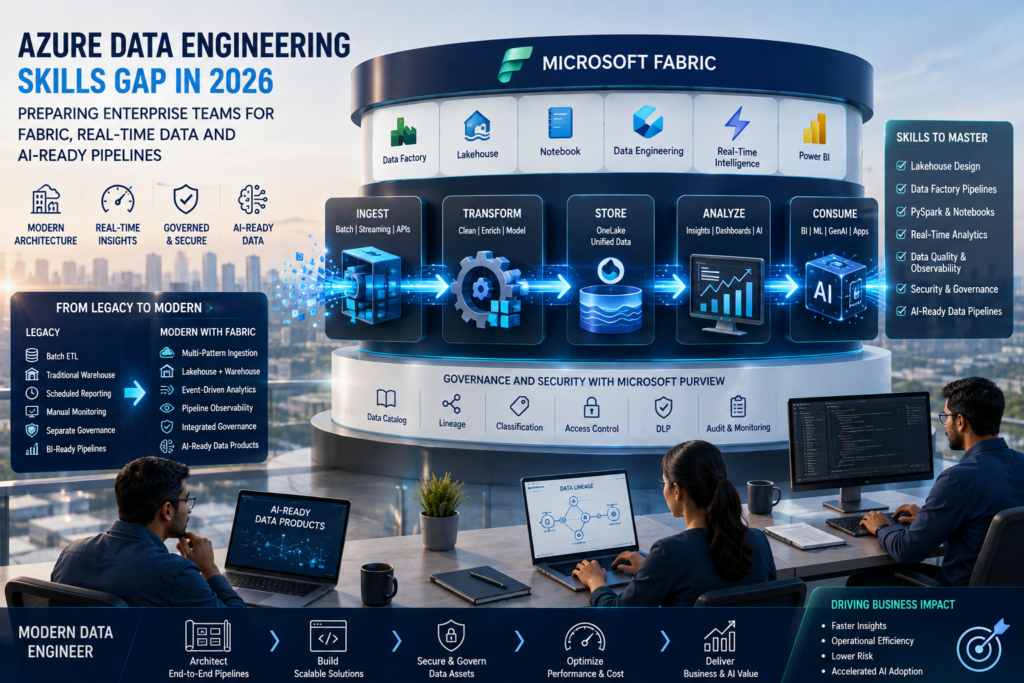
For years, being a strong Data Analyst was enough.  In 2026, that is no longer the full story. Enterprises are not just asking for reports, dashboards, and DAX. They are asking for professionals who can work across data pipelines, lakehouses, governance, real-time analytics, and Power BI inside one environment. That is why Microsoft Fabric careers 2026 are growing faster than traditional analyst pathways.  This is structural, not temporary. Microsoft Fabric is positioned by Microsoft as a unified analytics platform built on OneLake, and the current Fabric Analytics Engineer certification expects enterprise-scale analytics capability, not only reporting skill.  For most of the last decade, companies built data teams in layers. Data engineers handled movement and transformation. BI developers handled models and dashboards. Data Analysts consumed curated data and turned it into decisions. That model worked when tools were separate and responsibilities were easier to isolate.  However, platform architecture changed. Microsoft Fabric now unifies ingestion, storage, transformation, analytics, and visualization on a shared foundation in OneLake, which means one professional can influence a much larger portion of the data lifecycle than before.  That changes hiring logic. When companies can get one person who understands semantic models, warehouses, lakehouses, pipelines, governance, and Power BI together, they start valuing that profile above a reporting-only analyst.  The disruption in 2026 is not “Data Analysts are gone.”  The disruption is that analyst value is moving upstream. Microsoft’s current Fabric Analytics Engineer Associate and DP-600 study guide both describe a role responsible for enterprise-scale analytics assets such as semantic models, warehouses, and lakehouses, working across preparation, security, and management of analytics solutions.  So the hiring shift is not about rejecting analysis. It is about rewarding professionals who can execute analysis inside a unified platform architecture.  Microsoft Fabric Careers 2026 Reflect a Platform Shift, Not a Job Title Trend  The platform changed first.  Microsoft Fabric is now presented by Microsoft as a unified SaaS analytics platform using OneLake as a centralized logical data lake across workloads. That matters because hiring usually follows architecture. When enterprises adopt a platform that collapses multiple analytics layers into one environment, they start hiring people who understand that combined environment.  A traditional Data Analyst usually enters the process after data is prepared. A Fabric expert enters much earlier. They understand how data is ingested, transformed, stored, modeled, exposed, and secured before it ever appears in a report. That broader visibility gives them stronger influence in enterprise projects.  However, this does not make analyst skill irrelevant. Power BI modeling, DAX, and business understanding still matter. The difference is that those skills now deliver more value when combined with Fabric architecture knowledge rather than used in isolation.  Why Companies Are Hiring Fabric Experts Over Data Analysts  Companies want fewer handoffs.  In fragmented stacks, a business request might move from data engineering to warehousing to BI to governance teams before a useful output appears. Fabric is designed to reduce that fragmentation by keeping data on OneLake while different workloads operate on the same foundation. That reduces movement, duplicate storage, and integration overhead.  That changes who gets hired. A company trying to modernize analytics does not only want someone who can build a dashboard after the data arrives. It wants someone who can design the lakehouse, manage pipelines, shape semantic models, and still deliver executive reporting. The closer a professional is to end-to-end delivery, the more attractive they become.  However, not every organization needs a deep architect on day one. Many still hire PL-300-level talent for reporting roles. The structural shift is that the salary premium and faster career mobility now sit with professionals who move beyond reporting into Fabric execution. Microsoft’s own DP-600 role definition makes that expectation clear.  What a Fabric Expert Does That a Traditional Data Analyst Usually Does Not  Scope is the real differentiator.  A traditional Data Analyst typically focuses on preparing data for reports, building semantic models, defining measures, and communicating insights. That remains valuable. Microsoft still positions the Power BI Data Analyst Associate around modeling, visualizing, and analyzing data with business and technical requirements in mind.  A Fabric expert operates at a broader layer. The current DP-600 path expects the ability to design, create, and manage analytical assets such as lakehouses, warehouses, and semantic models, while also securing and maintaining analytics assets. That already moves beyond classic analyst expectations.  However, the strongest Fabric professionals still think like analysts. They do not abandon business context. They add platform capability to it. That is why companies prefer them. They can translate a business question into an architecture decision, not just into a chart.  Microsoft Fabric Careers 2026 Are Growing Because Demand Is Real  The hiring signal is visible.  Live job market pages show active Microsoft Fabric demand in India. Glassdoor showed hundreds of Microsoft Fabric openings in India, and Foundit also showed active Azure Microsoft Fabric vacancies across Bengaluru, Hyderabad, Pune, Chennai, Gurgaon, Mumbai, and Noida in early April 2026.  That does not mean every posting is a pure “Fabric Analytics Engineer” title. Many companies embed Fabric inside Azure data, BI, or analytics engineering roles. However, that is exactly why anxious professionals should pay attention. The skill is spreading across job descriptions faster than many role titles are changing.  The opportunity is strongest for professionals who already have reporting experience. They are not starting from zero. They already understand metrics, stakeholder requirements, and Power BI logic. Once they add Fabric workloads, pipeline awareness, and lakehouse thinking, they become much more aligned with where enterprise hiring is moving.  Salary Logic Has Shifted From Reporting Output to Platform Ownership  Companies pay more for ownership.  A reporting-focused analyst is usually compensated for insight generation, dashboard quality, and stakeholder support. A Fabric expert is often compensated for platform execution, delivery speed, governance quality, and reduced dependency across multiple teams. That is a bigger business outcome.  This is why the pay gap often widens even when years of experience are similar. A mid-level professional who can handle Fabric pipelines, semantic models, data shaping, and workspace governance can replace several coordination gaps in a project. That makes them commercially stronger than a professional limited to the visualization layer.  However, salary inflation alone should not be the reason to move. Market hype fades fast. Capability does not. The better reason to pursue Microsoft Fabric careers 2026 is that the role aligns with where enterprise analytics architecture is

AI training budget planning FY26 India webinar for CHROs and L&D leaders
blogs

How to Plan Your AI Training Budget for FY26 A Guide for CHROs & L&D Heads

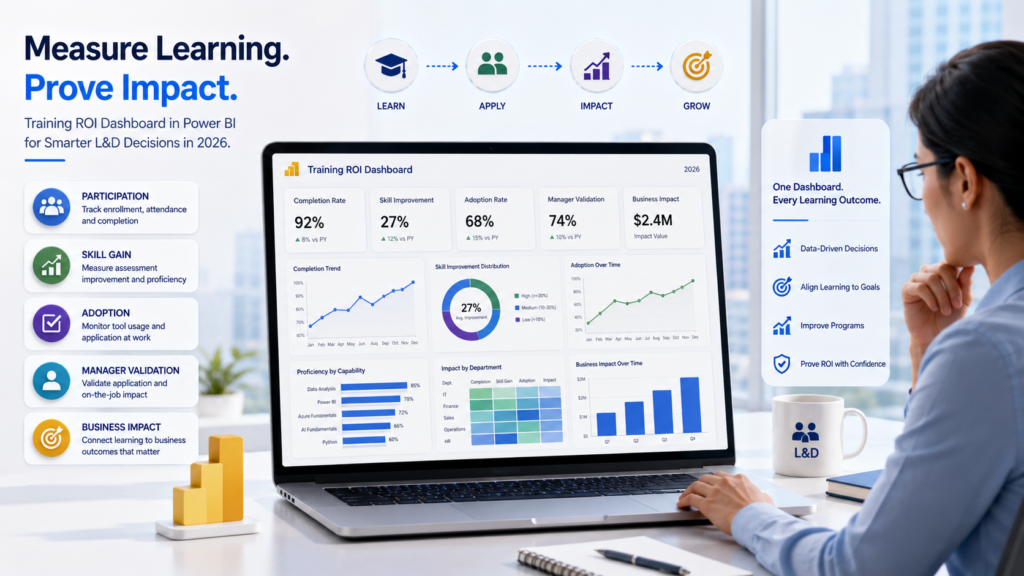
What You’ll Learn:What to fund, what to skip, and how to show ROI to leadership Duration: 45 Minutes (Live)Mode: Online (Free) Bonus: Free 20-minute AI Training Budget Review join link- https://events.teams.microsoft.com/event/c4a1ca71-79d4-4ae6-bb27-77ef76036007@8b38681f-2496-48ab-8c82-87404e17b322 What Is AI Training Budget Planning? AI training budget planning means deciding how much money to invest in training employees to use AI, and more importantly, how to spend that money correctly. It includes: Most companies only focus on tools and ignore real usage. That is where problems start. Why Most AI Training Budgets Fail Most companies follow this approach: But after that: Result: Money is spent, but there is no real business impact. This happens because companies focus more on vendor training and less on actual workflow change. Why FY26 Budget Planning Is Critical Right Now In India, most companies plan budgets between April and June. This is important because: If wrong decisions are made now, companies may waste their full yearly budget. That is why planning at the right time is very important. Common Mistakes in AI Training Budget 1. Spending Too Much on Tools Companies invest heavily in tool training like ChatGPT and Copilot, but employees don’t know how to use them in real work. 2. Ignoring Workflow Training Very little focus is given to how AI can improve actual daily tasks and processes. 3. No ROI Measurement Companies do not track: So they cannot justify the investment. 4. No Alignment with Leadership Leadership wants results, but L&D teams often provide only training reports. What Smart Companies Do Differently Successful companies follow a smarter approach. They focus on outcomes, not just tools. They train employees on: They also: Instead of asking “Which tool should we train?”, they ask “How will work improve?” Step-by-Step Framework to Plan AI Training Budget Step 1: Identify Scope Decide how many employees need training and which departments will use AI. Step 2: Define Business Goals Set clear goals like reducing manual work or improving productivity. Step 3: Allocate Budget Smartly Spend more on workflow training and less on basic tool training. Step 4: Choose the Right Training Approach Avoid generic courses. Choose customized and practical programs. Step 5: Measure Results Track: Step 6: Report to Leadership Show clear ROI using simple reports and metrics. Why L&D Leaders Struggle With ROI Many L&D leaders complete training programs successfully. But when leadership asks, “What business results did we get?”, there is no clear answer. This is not a training problem. It is a measurement and reporting problem. Who Should Attend This Webinar This webinar is designed for: Best suited for companies: What You Will Learn in This Webinar In this 45-minute session, you will learn: You will get practical knowledge, not just theory. Free Bonus: AI Training Budget Review After the webinar, you can book a free 20-minute session. In this session: Limited slots are available. Why You Should Join This Webinar This webinar helps you: FAQs What is AI training budget? It is the amount a company spends on training employees to use AI effectively in their work. Why do AI training programs fail? Because companies focus on tools instead of real work usage and do not track results. How to measure AI training ROI? By tracking time saved, productivity improvement, and employee adoption. Who should attend this webinar? CHROs, L&D Heads, and HR leaders planning AI training budgets. Final Thought Most companies do not fail because they lack budget. They fail because: This webinar will help you fix all these problems. Register Now (Free) If you want: Register now and secure your spot – https://events.teams.microsoft.com/event/c4a1ca71-79d4-4ae6-bb27-77ef76036007@8b38681f-2496-48ab-8c82-87404e17b322

Cybersecurity Is the Fastest-Growing IT Career of 2026
blogs

Cybersecurity Is the Fastest-Growing IT Career of 2026 

One Field Is Growing Faster Than Almost Any Other in IT Every day, companies get hacked. Banks lose customer data. Hospitals get their systems locked by ransomware. Governments face attacks on critical infrastructure. Small businesses lose everything overnight to a single phishing email. And every single time this happens, one thing becomes more urgent. The need for cybersecurity professionals. In 2026, there are 3.5 million unfilled cybersecurity jobs globally. That number is not shrinking. It is growing every year. Companies cannot find enough qualified people to protect their systems. This creates something rare in any career field. A situation where demand is enormous, supply is small, and salaries are very high. If you have been thinking about a career in cybersecurity, 2026 is the best time to start. This guide will show you exactly how. You will learn: Let us start simply from the very beginning. What Is Cybersecurity? (The Simple Explanation) Cybersecurity is the practice of protecting computers, networks, and data from attacks. Think of it like this. Every company has digital assets  customer records, financial data, employee information, intellectual property. Cybersecurity professionals are the people who make sure those assets stay safe. They do this by: It is both a technical field and a strategic one. Some cybersecurity professionals write code. Others analyze threats. Others design security policies. Others respond to live incidents. There is a role in cybersecurity for almost every type of thinking style. Why Cybersecurity Is Exploding in 2026 The growth of cybersecurity as a career is driven by very simple facts. Fact 1: Every business now runs on digital systems. Banks, hospitals, factories, schools, governments  all of them depend on computers and networks. Every digital system is a potential target. Fact 2: Attacks are increasing every year. Cybercrime cost the global economy over 8 trillion dollars in 2023. That figure is expected to reach 10.5 trillion dollars by 2025. The scale of the threat is growing faster than defenses can keep up. Fact 3: AI has made attacks easier. In 2026, attackers use AI to launch more sophisticated attacks at greater scale. This means defenders need to be smarter, faster, and better equipped than ever before. Fact 4: Regulations now require it. India’s Digital Personal Data Protection Act. Europe’s GDPR. US federal cybersecurity mandates. Governments around the world are now requiring organizations to have proper cybersecurity programs. Companies that do not comply face heavy penalties. These four facts together create one outcome. Every organization  big or small  needs cybersecurity professionals right now. And there are not enough trained people to fill the demand. What Do Cybersecurity Professionals Actually Do? Cybersecurity is not one job. It is a collection of specialized roles. Here are the most common ones  explained simply. Ethical Hacker (Penetration Tester) An ethical hacker is paid to break into company systems  legally. Companies hire them to find weaknesses before real attackers do. They use the same tools and techniques as hackers. But instead of stealing data, they write a report telling the company what they found and how to fix it. This is one of the most exciting and well-paid roles in cybersecurity. Security Analyst (SOC Analyst) A SOC Analyst works in a Security Operations Centre. They monitor company systems 24 hours a day, 7 days a week. They look for signs of attacks happening in real time. When they spot something suspicious, they investigate and respond. This is a great entry-level role for people new to cybersecurity. Cybersecurity Engineer A cybersecurity engineer builds the defenses that protect systems. They set up firewalls, configure security tools, design secure network architectures, and implement security policies. This role requires more technical depth than an analyst role. Cloud Security Specialist As companies move to cloud platforms like Azure and AWS, they need professionals who understand cloud security specifically. Cloud security specialists protect cloud environments configuring access controls, monitoring cloud workloads, and ensuring compliance in cloud infrastructure. This is one of the fastest-growing specializations in 2026. Cybersecurity Architect This is a senior role. Cybersecurity architects design the overall security strategy for an organization. They make big-picture decisions about how systems should be protected, how risk should be managed, and how security investments should be prioritized. This role typically requires 7 to 10 years of experience. Chief Information Security Officer (CISO) The CISO is the most senior cybersecurity role in an organization. They are responsible for the entire security posture of the company. They report directly to the CEO or board. This role combines deep technical knowledge with strong business and leadership skills. The Most Important Cybersecurity Certifications in 2026 Certifications are the fastest way to prove your skills to employers. Here are the most valued ones  organized by career level. For Beginners CompTIA Security+ (SY0-701) This is the most widely recognized entry-level cybersecurity certification in the world. It covers core security concepts, threats, attacks, and defenses. Many employers list CompTIA Security+ as a minimum requirement for entry-level security roles. It is a strong starting point for everyone. Preparation time: 6 to 8 weeks Exam fee: Approximately $392 USD CompTIA Network+ (N10-009) If you are completely new to IT, start here before Security+. Understanding networks is foundational to understanding security. Preparation time: 5 to 7 weeks Certified Cybersecurity Technician (CCT) EC-CouncilThis is EC-Council’s entry-level certification. It covers a broad range of cybersecurity skills in a practical, hands-on format. It is a strong alternative or complement to CompTIA Security+. For Intermediate Professionals Certified Ethical Hacker (CEH v13) EC-CouncilCEH is one of the most recognized certifications for penetration testing and ethical hacking. The latest version CEH v13 now includes AI-powered hacking techniques. This update makes it especially relevant for 2026 because attackers are using AI and defenders need to understand how. CEH is recognized by organizations worldwide including the US Department of Defense. In India, it consistently appears in job descriptions for penetration tester and security engineer roles. Preparation time: 8 to 10 weeks SC-200 Microsoft Security Operations AnalystThis certification covers security operations using Microsoft Sentinel and Microsoft

AWS vs Azure vs Google Cloud
blogs

AWS vs Azure vs Google Cloud: Which Cloud Certification Gets You Hired Fastest in 2026?

Every Cloud Learner Faces the Same Question First You have decided to get cloud certified. That is a smart decision. Cloud computing is one of the fastest-growing fields in IT. Every industry needs cloud professionals. Salaries are strong. Job demand is high. But then the doubt sets in. Should I go with AWS? Or is Azure better? What about Google Cloud? This question stops thousands of IT professionals and freshers every single year. They spend weeks researching, reading conflicting opinions, and still feel uncertain about which direction to take. This blog ends that uncertainty. We are going to compare AWS, Azure, and Google Cloud across every factor that actually matters for your career  job demand, salary, difficulty, exam structure, industry preference, and hiring speed. We will look at real market data. We will give clear, direct recommendations based on your background and goal. And at the end, you will know exactly which certification to pursue first. Let us get into it. First — Why Cloud Certifications Matter More Than Ever in 2026 Cloud is no longer a future technology. It is the present infrastructure of almost every major organization on earth. By 2026, over 94 percent of enterprises use at least one cloud platform. Global cloud spending has crossed 1 trillion dollars. And the demand for certified cloud professionals continues to outpace supply by a significant margin. This matters for your career in a very practical way. A cloud certification is not just a badge on your LinkedIn profile. It is a verified signal to employers that you can work on the infrastructure that runs their business. Companies are not hiring cloud professionals who say they understand cloud. They are hiring professionals who can prove it. That proof comes from certification. And the three certifications that employers recognize most are AWS, Azure, and Google Cloud. Understanding the Three Cloud Platforms Before comparing certifications, you need to understand what each platform actually is and where it is used. Amazon Web Services (AWS) AWS is the oldest major cloud platform. Amazon launched it in 2006. It has been the market leader ever since. AWS holds approximately 31 percent of global cloud market share in 2026. It is used heavily by technology startups, e-commerce companies, media organizations, and global enterprises. AWS is known for having the widest range of services. If a cloud service exists, AWS almost certainly offers it. This breadth is its biggest strength  and sometimes its biggest learning challenge. Microsoft Azure Azure is Microsoft’s cloud platform. It launched in 2010 and has grown to become the second-largest cloud provider globally. Azure holds approximately 24 percent of global cloud market share in 2026. Its biggest strength is deep integration with Microsoft’s existing enterprise products  Office 365, Teams, Active Directory, SQL Server, and the entire Windows Server ecosystem. This makes Azure the dominant choice for enterprises that already run Microsoft infrastructure. And in India specifically, a very large proportion of enterprise IT runs on Microsoft products. This has a direct impact on Azure job availability. Google Cloud Platform (GCP) Google Cloud is the youngest of the three major platforms at enterprise scale. It holds approximately 11 percent of global cloud market share in 2026. GCP is strongest in data analytics, machine learning, and AI workloads. Google’s own products  Search, YouTube, Gmail, Maps  run on this infrastructure. This gives Google Cloud genuine credibility in high-performance computing and AI. However, GCP’s smaller enterprise footprint means fewer total job openings compared to AWS and Azure in most geographies  including India. Job Market Comparison: Where Are the Most Jobs? This is the most important factor for anyone asking which certification gets you hired fastest. Let us look at what the actual job market shows in 2026. AWS Job Market AWS has the largest total number of cloud job postings globally. In the US and globally, AWS-certified professionals will find the widest pool of opportunities. In India, AWS demand is strongest in: Cities with highest AWS demand in India: Bangalore, Hyderabad, Pune, Chennai, Delhi NCR. Azure Job Market Azure has the highest job demand in India’s enterprise sector. This is the critical insight that most comparison articles miss. India has one of the world’s highest concentrations of Microsoft-ecosystem enterprises. Banks, insurance companies, manufacturing firms, IT services companies, and government organizations run on Microsoft infrastructure. When they move to cloud, they move to Azure. IT services giants  TCS, Infosys, Wipro, Accenture, Capgemini, HCL  all have massive Azure practices serving enterprise clients. These companies alone generate enormous Azure hiring volume. In India specifically, Azure has more enterprise job postings than any other cloud platform in 2026. Cities with highest Azure demand in India: Pune, Mumbai, Bangalore, Hyderabad, Delhi NCR, Chennai. Google Cloud Job Market GCP has the smallest enterprise job market of the three in India. Total GCP job postings are significantly fewer than AWS or Azure. However, the jobs that do exist tend to be specialized, well-compensated, and concentrated in organizations doing serious AI and data engineering work. GCP is the right choice if you are targeting a career specifically in AI, machine learning, or big data engineering  not general cloud infrastructure. Salary Comparison: What Each Certification Pays in 2026 Certification Role Salary India Salary US/Global AWS Cloud Practitioner Entry Cloud Role ₹4–7 LPA $60,000–$80,000 AWS Solutions Architect Associate Cloud Architect ₹10–18 LPA $110,000–$145,000 AWS Solutions Architect Professional Senior Architect ₹18–32 LPA $140,000–$175,000 Azure Fundamentals (AZ-900) Entry Cloud Role ₹3.5–6 LPA $55,000–$75,000 Azure Administrator (AZ-104) Cloud Admin ₹8–15 LPA $90,000–$125,000 Azure Solutions Architect (AZ-305) Cloud Architect ₹16–28 LPA $130,000–$165,000 GCP Associate Cloud Engineer Cloud Engineer ₹8–14 LPA $95,000–$125,000 GCP Professional Cloud Architect Senior Architect ₹15–26 LPA $130,000–$165,000 All three platforms offer strong salaries. The salary differences between platforms at equivalent experience levels are smaller than most people expect. What drives salary more than platform choice is your level within the platform Fundamentals vs Associate vs Professional  and the specific role you target. Difficulty Comparison: Which Is Easiest to Start With? This matters for one practical reason. A

Trust Us, One Call Can Make a Difference
Please enable JavaScript in your browser to complete this form.
Join As Trainer
Join As Trainer
Please enable JavaScript in your browser to complete this form.
Download Course Content
Please enable JavaScript in your browser to complete this form.
More than 5 People are attending Get On a Call with Us
Please enable JavaScript in your browser to complete this form.
More than 5 People are attending Get On a Call with Us
Scroll to Top