

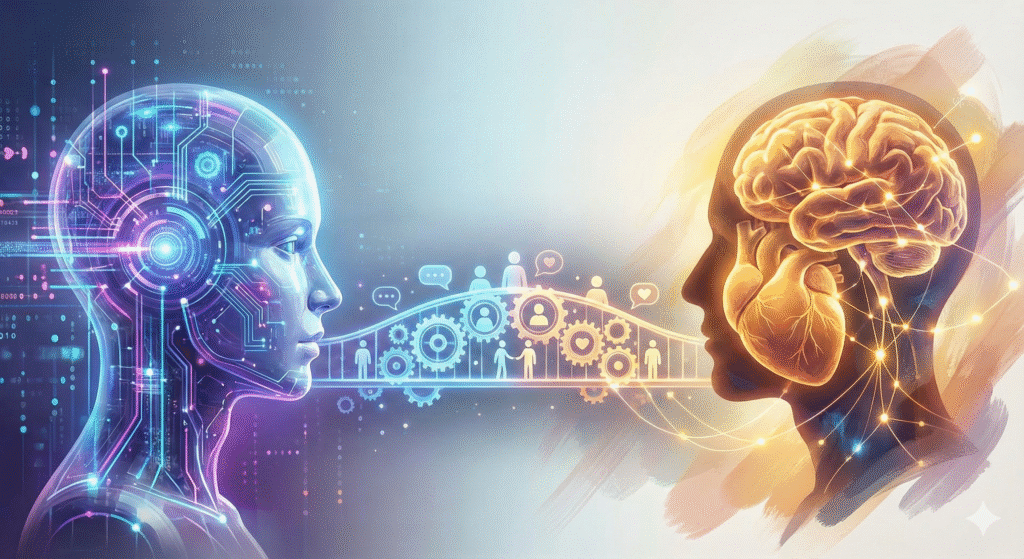
Soft Skills in the AI Era: Why Emotional Intelligence Matters More Than Ever
Last week, a manager walked into my office with a problem. His team had the best technology, the smartest AI tools, and access to every resource they needed. Yet productivity was dropping. People were quitting. Deadlines were missed. “What am I doing wrong?” he asked. The answer surprised him. He wasn’t lacking technical skills or better software. He was missing something far more powerful: emotional intelligence. In 2025, we live in a world where robots can do almost everything. They analyze data faster than any human. They write reports, create designs, and solve complex math problems in seconds. But here’s what they can’t do: they can’t feel. They can’t understand when someone is struggling. They can’t inspire a team or build trust. That’s where you come in. Your ability to connect with people, understand emotions, and lead with empathy is now the most valuable skill you can have. Let’s talk about why emotional intelligence has become the superpower of the AI era. Understanding Emotional Intelligence in Simple Terms Emotional intelligence, or EQ, is your ability to recognize and manage emotions. It’s knowing when you feel angry and choosing how to respond. It’s noticing when your teammate looks worried and asking if they need help. It’s staying calm when things go wrong instead of panicking. Think of EQ as your emotional GPS. Just like GPS helps you navigate roads, emotional intelligence helps you navigate relationships, conflicts, and stressful situations. Here’s something that will surprise you: emotional intelligence contributes to 58% of your job performance, which is more than your IQ or technical skills. People with high EQ earn an average of $29,000 more each year than those with low emotional intelligence. Even better? Workers with strong emotional intelligence perform 127% better than those with weaker emotional skills. Companies that focus on building emotional intelligence are 22 times more likely to beat their competitors. Why Machines Cannot Replace Human Connection Artificial intelligence is amazing at technical work. It can process millions of data points, predict trends, and automate boring tasks. But AI has a critical weakness: it cannot understand human emotions. When Satya Nadella took over as CEO of Microsoft, he didn’t focus on technology alone. He transformed the company by leading with empathy. He listened to employees, understood their struggles, and created a culture where people felt valued. This human-centered approach helped Microsoft become one of the world’s most successful companies. Another great example is Daniel Lubetzky, who founded KIND Snacks. He built his entire business around empathy and understanding people deeply. He discovered that connecting with others emotionally gave him a competitive advantage that technology could never provide. These leaders prove something important: in the age of AI, your humanity is your greatest strength. The Five Core Skills of Emotional Intelligence Emotional intelligence is built on five essential abilities that anyone can learn and practice: Self-Awareness This means knowing your own emotions, strengths, and weaknesses. When you understand what makes you stressed or angry, you can control your reactions better instead of letting emotions control you. Self-Regulation This is about managing your emotions wisely. It includes staying calm under pressure, controlling impulses, and handling stress in healthy ways. Social Awareness This skill helps you understand other people’s emotions and perspectives. You learn to read body language, pick up on social cues, and show genuine empathy for others. Relationship Management This involves building strong connections, resolving conflicts peacefully, and inspiring others. Leaders with high EQ create teams where people trust and support each other. Motivation This is having the inner drive to achieve goals and stay positive even when facing setbacks. Emotionally intelligent people bounce back from failures and keep moving forward. The Growing Demand for Emotional Intelligence The World Economic Forum lists emotional intelligence among the top 10 most important skills through 2025 and beyond. In fact, 71% of employers now value emotional intelligence over technical skills when evaluating leaders. Research shows that leaders with high emotional intelligence achieve 23% higher profitability and 18% greater productivity because they engage their teams better and make smarter decisions. Here’s a startling reality: only 36% of people worldwide are emotionally intelligent. This creates a massive opportunity for those who develop these skills. The demand for emotional skills is projected to grow by 26% by 2030. As AI handles more technical work, human-centered abilities become the skills that separate successful professionals from everyone else. Real Results: How Emotional Intelligence Changes Workplaces The impact of emotional intelligence isn’t just theory. Real companies see real results when they invest in EQ development. Higher Employee Engagement 76% of employees with highly empathetic leaders report being engaged at work, compared to just 32% with less empathetic leaders. More Innovation 61% of employees with empathetic leaders feel innovative at work, versus only 13% with less empathetic leadership. Better Mental Health The World Health Organization reports that promoting mental health in the workplace through emotionally intelligent leadership improves well-being and increases productivity. Stronger Teams Google’s famous Project Aristotle study found that psychological safety, created through emotional intelligence, is the top factor in high-performing teams. Increased Confidence One company saw a 92% increase in positivity and 89% increase in confidence after implementing emotional intelligence training. Practical Ways to Build Your Emotional Intelligence The best news about emotional intelligence is that you can improve it at any age, unlike IQ which stays mostly the same. Here are simple steps you can start today. Practice Active Listening When someone speaks to you, give them your complete attention. Listen to their words, notice their tone, and watch their body language. Don’t interrupt or think about your response while they’re talking. Create a Daily Reflection Habit Spend just 10 minutes each day thinking about your emotions. What made you frustrated today? Why did that comment bother you? What brought you happiness? This builds self-awareness. Learn to Manage Stress Try simple techniques like deep breathing, short walks, or meditation. When you manage your own stress well, you handle difficult situations better. Ask for Honest Feedback Talk to trusted friends or colleagues about how you come across in emotional situations. Their perspective helps you see blind spots you might miss. Consider Professional Training Many organizations now offer emotional intelligence training programs and certification courses. These structured programs teach specific techniques for developing EQ skills that you can use immediately. Your Human Advantage in an Automated World As artificial intelligence takes over more technical tasks,