
TechnoEdge

Free Master Class

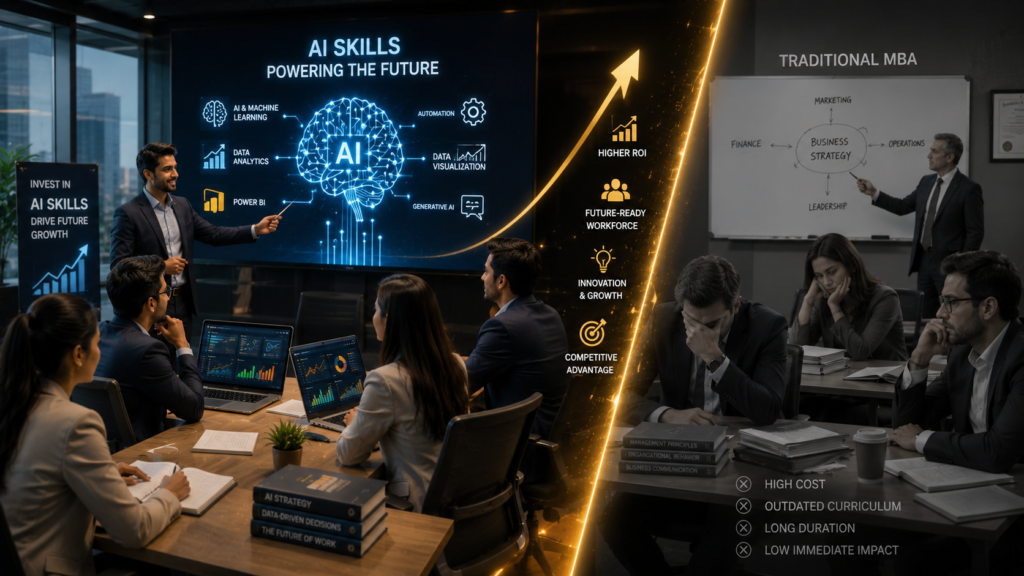
How to Plan Your AI Training Budget for FY26? (For CHROs & L&Ds)

blogs

AI training budget planning FY26 India webinar for CHROs and L&D leaders
blogs

How to Plan Your AI Training Budget for FY26 A Guide for CHROs & L&D Heads

What You’ll Learn:What to fund, what to skip, and how to show ROI to leadership Duration: 45 Minutes (Live)Mode: Online (Free) Bonus: Free 20-minute AI Training Budget Review join link- https://events.teams.microsoft.com/event/c4a1ca71-79d4-4ae6-bb27-77ef76036007@8b38681f-2496-48ab-8c82-87404e17b322 What Is AI Training Budget Planning? AI training budget planning means deciding how much money to invest in training employees to use AI, and more importantly, how to spend that money correctly. It includes: Most companies only focus on tools and ignore real usage. That is where problems start. Why Most AI Training Budgets Fail Most companies follow this approach: But after that: Result: Money is spent, but there is no real business impact. This happens because companies focus more on vendor training and less on actual workflow change. Why FY26 Budget Planning Is Critical Right Now In India, most companies plan budgets between April and June. This is important because: If wrong decisions are made now, companies may waste their full yearly budget. That is why planning at the right time is very important. Common Mistakes in AI Training Budget 1. Spending Too Much on Tools Companies invest heavily in tool training like ChatGPT and Copilot, but employees don’t know how to use them in real work. 2. Ignoring Workflow Training Very little focus is given to how AI can improve actual daily tasks and processes. 3. No ROI Measurement Companies do not track: So they cannot justify the investment. 4. No Alignment with Leadership Leadership wants results, but L&D teams often provide only training reports. What Smart Companies Do Differently Successful companies follow a smarter approach. They focus on outcomes, not just tools. They train employees on: They also: Instead of asking “Which tool should we train?”, they ask “How will work improve?” Step-by-Step Framework to Plan AI Training Budget Step 1: Identify Scope Decide how many employees need training and which departments will use AI. Step 2: Define Business Goals Set clear goals like reducing manual work or improving productivity. Step 3: Allocate Budget Smartly Spend more on workflow training and less on basic tool training. Step 4: Choose the Right Training Approach Avoid generic courses. Choose customized and practical programs. Step 5: Measure Results Track: Step 6: Report to Leadership Show clear ROI using simple reports and metrics. Why L&D Leaders Struggle With ROI Many L&D leaders complete training programs successfully. But when leadership asks, “What business results did we get?”, there is no clear answer. This is not a training problem. It is a measurement and reporting problem. Who Should Attend This Webinar This webinar is designed for: Best suited for companies: What You Will Learn in This Webinar In this 45-minute session, you will learn: You will get practical knowledge, not just theory. Free Bonus: AI Training Budget Review After the webinar, you can book a free 20-minute session. In this session: Limited slots are available. Why You Should Join This Webinar This webinar helps you: FAQs What is AI training budget? It is the amount a company spends on training employees to use AI effectively in their work. Why do AI training programs fail? Because companies focus on tools instead of real work usage and do not track results. How to measure AI training ROI? By tracking time saved, productivity improvement, and employee adoption. Who should attend this webinar? CHROs, L&D Heads, and HR leaders planning AI training budgets. Final Thought Most companies do not fail because they lack budget. They fail because: This webinar will help you fix all these problems. Register Now (Free) If you want: Register now and secure your spot – https://events.teams.microsoft.com/event/c4a1ca71-79d4-4ae6-bb27-77ef76036007@8b38681f-2496-48ab-8c82-87404e17b322

Cybersecurity Is the Fastest-Growing IT Career of 2026
blogs

Cybersecurity Is the Fastest-Growing IT Career of 2026 

One Field Is Growing Faster Than Almost Any Other in IT Every day, companies get hacked. Banks lose customer data. Hospitals get their systems locked by ransomware. Governments face attacks on critical infrastructure. Small businesses lose everything overnight to a single phishing email. And every single time this happens, one thing becomes more urgent. The need for cybersecurity professionals. In 2026, there are 3.5 million unfilled cybersecurity jobs globally. That number is not shrinking. It is growing every year. Companies cannot find enough qualified people to protect their systems. This creates something rare in any career field. A situation where demand is enormous, supply is small, and salaries are very high. If you have been thinking about a career in cybersecurity, 2026 is the best time to start. This guide will show you exactly how. You will learn: Let us start simply from the very beginning. What Is Cybersecurity? (The Simple Explanation) Cybersecurity is the practice of protecting computers, networks, and data from attacks. Think of it like this. Every company has digital assets  customer records, financial data, employee information, intellectual property. Cybersecurity professionals are the people who make sure those assets stay safe. They do this by: It is both a technical field and a strategic one. Some cybersecurity professionals write code. Others analyze threats. Others design security policies. Others respond to live incidents. There is a role in cybersecurity for almost every type of thinking style. Why Cybersecurity Is Exploding in 2026 The growth of cybersecurity as a career is driven by very simple facts. Fact 1: Every business now runs on digital systems. Banks, hospitals, factories, schools, governments  all of them depend on computers and networks. Every digital system is a potential target. Fact 2: Attacks are increasing every year. Cybercrime cost the global economy over 8 trillion dollars in 2023. That figure is expected to reach 10.5 trillion dollars by 2025. The scale of the threat is growing faster than defenses can keep up. Fact 3: AI has made attacks easier. In 2026, attackers use AI to launch more sophisticated attacks at greater scale. This means defenders need to be smarter, faster, and better equipped than ever before. Fact 4: Regulations now require it. India’s Digital Personal Data Protection Act. Europe’s GDPR. US federal cybersecurity mandates. Governments around the world are now requiring organizations to have proper cybersecurity programs. Companies that do not comply face heavy penalties. These four facts together create one outcome. Every organization  big or small  needs cybersecurity professionals right now. And there are not enough trained people to fill the demand. What Do Cybersecurity Professionals Actually Do? Cybersecurity is not one job. It is a collection of specialized roles. Here are the most common ones  explained simply. Ethical Hacker (Penetration Tester) An ethical hacker is paid to break into company systems  legally. Companies hire them to find weaknesses before real attackers do. They use the same tools and techniques as hackers. But instead of stealing data, they write a report telling the company what they found and how to fix it. This is one of the most exciting and well-paid roles in cybersecurity. Security Analyst (SOC Analyst) A SOC Analyst works in a Security Operations Centre. They monitor company systems 24 hours a day, 7 days a week. They look for signs of attacks happening in real time. When they spot something suspicious, they investigate and respond. This is a great entry-level role for people new to cybersecurity. Cybersecurity Engineer A cybersecurity engineer builds the defenses that protect systems. They set up firewalls, configure security tools, design secure network architectures, and implement security policies. This role requires more technical depth than an analyst role. Cloud Security Specialist As companies move to cloud platforms like Azure and AWS, they need professionals who understand cloud security specifically. Cloud security specialists protect cloud environments configuring access controls, monitoring cloud workloads, and ensuring compliance in cloud infrastructure. This is one of the fastest-growing specializations in 2026. Cybersecurity Architect This is a senior role. Cybersecurity architects design the overall security strategy for an organization. They make big-picture decisions about how systems should be protected, how risk should be managed, and how security investments should be prioritized. This role typically requires 7 to 10 years of experience. Chief Information Security Officer (CISO) The CISO is the most senior cybersecurity role in an organization. They are responsible for the entire security posture of the company. They report directly to the CEO or board. This role combines deep technical knowledge with strong business and leadership skills. The Most Important Cybersecurity Certifications in 2026 Certifications are the fastest way to prove your skills to employers. Here are the most valued ones  organized by career level. For Beginners CompTIA Security+ (SY0-701) This is the most widely recognized entry-level cybersecurity certification in the world. It covers core security concepts, threats, attacks, and defenses. Many employers list CompTIA Security+ as a minimum requirement for entry-level security roles. It is a strong starting point for everyone. Preparation time: 6 to 8 weeks Exam fee: Approximately $392 USD CompTIA Network+ (N10-009) If you are completely new to IT, start here before Security+. Understanding networks is foundational to understanding security. Preparation time: 5 to 7 weeks Certified Cybersecurity Technician (CCT) EC-CouncilThis is EC-Council’s entry-level certification. It covers a broad range of cybersecurity skills in a practical, hands-on format. It is a strong alternative or complement to CompTIA Security+. For Intermediate Professionals Certified Ethical Hacker (CEH v13) EC-CouncilCEH is one of the most recognized certifications for penetration testing and ethical hacking. The latest version CEH v13 now includes AI-powered hacking techniques. This update makes it especially relevant for 2026 because attackers are using AI and defenders need to understand how. CEH is recognized by organizations worldwide including the US Department of Defense. In India, it consistently appears in job descriptions for penetration tester and security engineer roles. Preparation time: 8 to 10 weeks SC-200 Microsoft Security Operations AnalystThis certification covers security operations using Microsoft Sentinel and Microsoft

AWS vs Azure vs Google Cloud
blogs

AWS vs Azure vs Google Cloud: Which Cloud Certification Gets You Hired Fastest in 2026?

Every Cloud Learner Faces the Same Question First You have decided to get cloud certified. That is a smart decision. Cloud computing is one of the fastest-growing fields in IT. Every industry needs cloud professionals. Salaries are strong. Job demand is high. But then the doubt sets in. Should I go with AWS? Or is Azure better? What about Google Cloud? This question stops thousands of IT professionals and freshers every single year. They spend weeks researching, reading conflicting opinions, and still feel uncertain about which direction to take. This blog ends that uncertainty. We are going to compare AWS, Azure, and Google Cloud across every factor that actually matters for your career  job demand, salary, difficulty, exam structure, industry preference, and hiring speed. We will look at real market data. We will give clear, direct recommendations based on your background and goal. And at the end, you will know exactly which certification to pursue first. Let us get into it. First — Why Cloud Certifications Matter More Than Ever in 2026 Cloud is no longer a future technology. It is the present infrastructure of almost every major organization on earth. By 2026, over 94 percent of enterprises use at least one cloud platform. Global cloud spending has crossed 1 trillion dollars. And the demand for certified cloud professionals continues to outpace supply by a significant margin. This matters for your career in a very practical way. A cloud certification is not just a badge on your LinkedIn profile. It is a verified signal to employers that you can work on the infrastructure that runs their business. Companies are not hiring cloud professionals who say they understand cloud. They are hiring professionals who can prove it. That proof comes from certification. And the three certifications that employers recognize most are AWS, Azure, and Google Cloud. Understanding the Three Cloud Platforms Before comparing certifications, you need to understand what each platform actually is and where it is used. Amazon Web Services (AWS) AWS is the oldest major cloud platform. Amazon launched it in 2006. It has been the market leader ever since. AWS holds approximately 31 percent of global cloud market share in 2026. It is used heavily by technology startups, e-commerce companies, media organizations, and global enterprises. AWS is known for having the widest range of services. If a cloud service exists, AWS almost certainly offers it. This breadth is its biggest strength  and sometimes its biggest learning challenge. Microsoft Azure Azure is Microsoft’s cloud platform. It launched in 2010 and has grown to become the second-largest cloud provider globally. Azure holds approximately 24 percent of global cloud market share in 2026. Its biggest strength is deep integration with Microsoft’s existing enterprise products  Office 365, Teams, Active Directory, SQL Server, and the entire Windows Server ecosystem. This makes Azure the dominant choice for enterprises that already run Microsoft infrastructure. And in India specifically, a very large proportion of enterprise IT runs on Microsoft products. This has a direct impact on Azure job availability. Google Cloud Platform (GCP) Google Cloud is the youngest of the three major platforms at enterprise scale. It holds approximately 11 percent of global cloud market share in 2026. GCP is strongest in data analytics, machine learning, and AI workloads. Google’s own products  Search, YouTube, Gmail, Maps  run on this infrastructure. This gives Google Cloud genuine credibility in high-performance computing and AI. However, GCP’s smaller enterprise footprint means fewer total job openings compared to AWS and Azure in most geographies  including India. Job Market Comparison: Where Are the Most Jobs? This is the most important factor for anyone asking which certification gets you hired fastest. Let us look at what the actual job market shows in 2026. AWS Job Market AWS has the largest total number of cloud job postings globally. In the US and globally, AWS-certified professionals will find the widest pool of opportunities. In India, AWS demand is strongest in: Cities with highest AWS demand in India: Bangalore, Hyderabad, Pune, Chennai, Delhi NCR. Azure Job Market Azure has the highest job demand in India’s enterprise sector. This is the critical insight that most comparison articles miss. India has one of the world’s highest concentrations of Microsoft-ecosystem enterprises. Banks, insurance companies, manufacturing firms, IT services companies, and government organizations run on Microsoft infrastructure. When they move to cloud, they move to Azure. IT services giants  TCS, Infosys, Wipro, Accenture, Capgemini, HCL  all have massive Azure practices serving enterprise clients. These companies alone generate enormous Azure hiring volume. In India specifically, Azure has more enterprise job postings than any other cloud platform in 2026. Cities with highest Azure demand in India: Pune, Mumbai, Bangalore, Hyderabad, Delhi NCR, Chennai. Google Cloud Job Market GCP has the smallest enterprise job market of the three in India. Total GCP job postings are significantly fewer than AWS or Azure. However, the jobs that do exist tend to be specialized, well-compensated, and concentrated in organizations doing serious AI and data engineering work. GCP is the right choice if you are targeting a career specifically in AI, machine learning, or big data engineering  not general cloud infrastructure. Salary Comparison: What Each Certification Pays in 2026 Certification Role Salary India Salary US/Global AWS Cloud Practitioner Entry Cloud Role ₹4–7 LPA $60,000–$80,000 AWS Solutions Architect Associate Cloud Architect ₹10–18 LPA $110,000–$145,000 AWS Solutions Architect Professional Senior Architect ₹18–32 LPA $140,000–$175,000 Azure Fundamentals (AZ-900) Entry Cloud Role ₹3.5–6 LPA $55,000–$75,000 Azure Administrator (AZ-104) Cloud Admin ₹8–15 LPA $90,000–$125,000 Azure Solutions Architect (AZ-305) Cloud Architect ₹16–28 LPA $130,000–$165,000 GCP Associate Cloud Engineer Cloud Engineer ₹8–14 LPA $95,000–$125,000 GCP Professional Cloud Architect Senior Architect ₹15–26 LPA $130,000–$165,000 All three platforms offer strong salaries. The salary differences between platforms at equivalent experience levels are smaller than most people expect. What drives salary more than platform choice is your level within the platform Fundamentals vs Associate vs Professional  and the specific role you target. Difficulty Comparison: Which Is Easiest to Start With? This matters for one practical reason. A

Power BI and AI
blogs

How Smart Companies Are Upskilling Their Teams in Power BI and AI

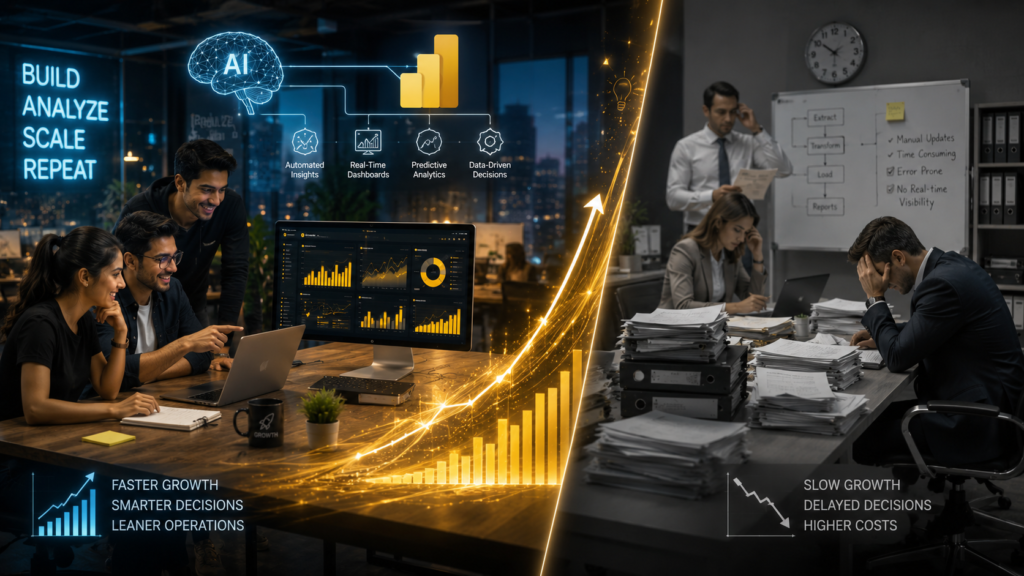
The Skill Gap Inside Your Organization Is Growing Faster Than You Think In 2026, most organizations have two realities existing side by side. The first reality is ambition. Leadership teams are committing to AI transformation, data-driven decision-making, and cloud-powered analytics. Boards are approving budgets. Strategies are being written. Roadmaps are being presented. The second reality is the gap. The workforce executing those strategies   the analysts, managers, engineers, and department heads who need to use these tools every single day  often does not have the skills to match the ambition. This gap is not the fault of the employees. It is the result of technology moving faster than training programs have historically been designed to keep up with. Power BI has become the standard business intelligence tool across thousands of enterprises. Microsoft Fabric has redefined what data architecture looks like. Generative AI is being embedded into dashboards, reports, pipelines, and decision workflows at a pace that few L&D departments anticipated. The companies that are winning in 2026 are not simply the ones that bought the best tools. They are the ones that invested in making their people genuinely capable of using those tools at an enterprise level. This guide is for HR leaders, L&D managers, CTOs, department heads, and business owners who are responsible for that investment. It covers why corporate upskilling in Power BI and AI is now a business-critical priority, how leading organizations are structuring their training programs, what measurable outcomes they are achieving, and how to build a training strategy that produces real results   not just certificates on a wall. Why 2026 Is the Year Corporate Training Cannot Be Delayed The business case for corporate training has never been stronger   or more urgent. Three forces are converging in 2026 that make workforce upskilling in Power BI and AI a strategic necessity rather than a nice-to-have. The AI Integration Deadline Is Real Microsoft has embedded Copilot into Power BI, Excel, Teams, and the entire Microsoft 365 ecosystem. Organizations that have paid for these licenses are sitting on AI capabilities that their teams do not know how to use. Every month of delayed training is a month of underutilized investment. Enterprise analytics platforms are no longer passive tools that produce outputs when configured correctly. They are intelligent systems that require human professionals who understand how to direct, validate, and govern AI-generated insights. Companies that cannot staff this capability internally are falling behind those that can. The Cost of Untrained Employees Is Measurable Research from IBM consistently shows that the cost of retraining an existing employee is significantly lower than the cost of replacing them. In 2026, the average cost of replacing a mid-level data professional in India is estimated between ₹8 to ₹15 lakhs when accounting for recruitment, onboarding, and productivity loss. A comprehensive upskilling program for that same employee costs a fraction of that figure. Beyond recruitment costs, untrained teams produce lower-quality insights, make slower decisions, and create governance risks by misusing AI tools they do not fully understand. The financial impact of these inefficiencies is real and measurable  even if it rarely appears as a line item in a budget review. The Competitive Talent Market Is Forcing Action Organizations that invest in structured learning programs retain talent at significantly higher rates. In 2026, IT professionals consistently cite lack of learning opportunities as one of the top three reasons for leaving an employer. Companies that offer structured certification pathways, paid training time, and clear skill development roadmaps attract stronger candidates and keep their best people longer. What Corporate Teams Need to Learn in 2026: Power BI and AI Explained Before building a training strategy, it is important to understand exactly what skills organizations are prioritizing   and why. Power BI at the Enterprise Level Power BI is no longer a tool that only data teams use. In 2026, it is a platform that spans departments   finance uses it for budget forecasting, operations uses it for supply chain monitoring, HR uses it for workforce analytics, and leadership uses it for strategic dashboards. This broad adoption creates a tiered training need. Not every employee needs to build complex data models and write advanced DAX formulas. But every employee who consumes Power BI reports needs to understand how to interact with them intelligently. Department heads need to know how to commission reports effectively. Data teams need enterprise-level modeling and governance skills. And at least some professionals in every organization need to understand how Power BI integrates with Microsoft Fabric and Copilot. A well-designed corporate Power BI training program addresses all three levels    consumer, intermediate, and advanced   rather than treating the entire workforce as a single audience. AI Skills for Non-Technical Business Teams This is the area where the training gap is widest and the urgency is highest. Most organizations have deployed some form of AI tool   Copilot, ChatGPT Enterprise, or AI-assisted analytics  without providing their employees with the foundational knowledge to use those tools effectively and safely. Effective AI training for business teams in 2026 is not about teaching employees to build machine learning models. It is about developing practical AI fluency   the ability to use AI tools productively, critically evaluate AI-generated outputs, understand the governance boundaries of AI usage, and apply AI to real business problems in their specific role. This distinction is critical for L&D managers designing training programs. Technical depth is important for data and engineering teams. Practical fluency is essential for the broader business workforce. How Leading Companies Are Structuring Their Upskilling Programs The most effective corporate training programs in 2026 share several structural characteristics that distinguish them from traditional one-time training events. They Are Role-Specific, Not One-Size-Fits-All The biggest mistake organizations make in corporate training is delivering the same content to everyone. A finance analyst, a supply chain manager, and a software engineer all interact with Power BI and AI tools differently. Their training needs are fundamentally different. Leading organizations in 2026 are designing learning pathways mapped to specific job functions. Finance teams receive training focused on

What Is Microsoft Fabric and Why Does It Change Everything?
blogs

Why Companies Are Hiring Microsoft Fabric Experts Instead of Data Analysts in 2026

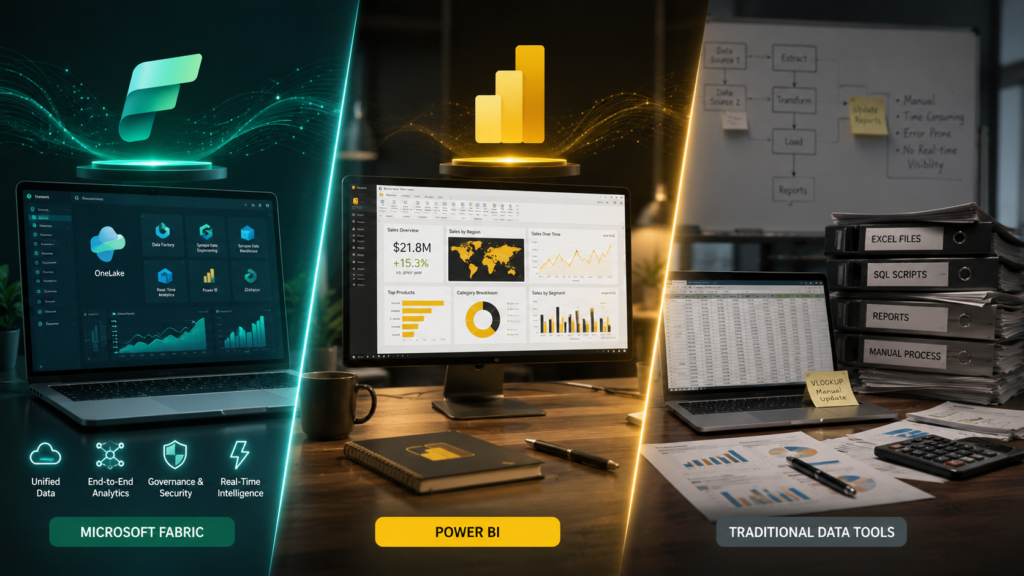
Something Has Changed in How Companies Are Hiring Data Professionals Open any major job portal in India or globally right now and search for senior data roles. You will notice something that was not there two years ago. Job descriptions that previously asked for “Power BI Data Analyst” or “Senior Business Intelligence Developer” are now asking for something different. The titles have changed. The required skills have changed. And the salary bands attached to these new roles are significantly higher than anything a traditional Data Analyst role commanded. The new requirement is Microsoft Fabric expertise. This is not a minor update to an existing job description. It is a fundamental shift in what enterprises consider a valuable data professional in 2026. Companies are not simply renaming the Data Analyst role. They are replacing a significant portion of their traditional analyst hiring with a new type of professional  one who understands unified data architecture, AI-integrated analytics, lakehouse design, and enterprise-scale data engineering. One who knows Microsoft Fabric. The question every data professional needs to answer right now is whether this shift is temporary market noise or a genuine structural change in enterprise hiring strategy. The answer  backed by enterprise adoption data, Microsoft’s product roadmap, and real hiring trends across India and globally  is unambiguous. This is structural. It is accelerating. And it is creating one of the most significant career opportunity gaps in the data profession since Power BI first displaced Excel as the dominant BI tool a decade ago. This blog explains exactly why companies are making this hiring shift, what Microsoft Fabric experts do that Data Analysts cannot, what the demand and salary landscape looks like in 2026, how to position yourself for this opportunity, and how TechnoEdge helps you get there. What Is Microsoft Fabric and Why Does It Change Everything? Before understanding why companies are hiring Fabric experts, you need to understand what Microsoft Fabric actually is  and why its existence changes the requirements for data roles fundamentally. Microsoft Fabric is a unified, end-to-end analytics platform launched by Microsoft that brings together capabilities that previously existed as separate services into a single integrated environment. Before Fabric, enterprises running a serious analytics operation needed to manage multiple disconnected tools  Azure Synapse Analytics for data warehousing, Azure Data Factory for pipelines, Azure Data Lake for storage, Power BI for visualization, and separate AI tools for machine learning integration. Each of these required separate expertise, separate licensing, separate governance, and significant integration effort to make them work together. Microsoft Fabric collapses all of this into one platform. At its core, Fabric is built around OneLake  a unified storage layer that allows enterprises to store data once and access it across all Fabric workloads without duplication or complex integration. Fabric includes data engineering tools for building pipelines, lakehouse architecture for flexible storage and querying, data warehouse capabilities for structured analytics, real-time analytics for streaming data, AI and machine learning integration, and Power BI for visualization  all within a single governed environment. This architectural unification has two direct consequences that explain the hiring shift. First, it makes the traditional data stack significantly simpler to manage  but only for professionals who understand the full Fabric ecosystem. Someone who only knows Power BI can use a fraction of what Fabric offers. Someone who understands the entire platform can transform how an enterprise manages and monetizes its data. Second, it creates a new type of professional requirement. Enterprises that adopt Fabric do not simply need someone to build dashboards. They need someone who understands the entire data architecture from ingestion through transformation through AI integration through governance through visualization. That profile is fundamentally different from a traditional Data Analyst. Why Companies Are Choosing Fabric Experts Over Traditional Data Analysts The hiring shift toward Microsoft Fabric expertise is driven by specific business needs that traditional Data Analysts are not equipped to meet. Understanding these needs explains why this is not a temporary trend but a long-term structural change. Enterprises Are Consolidating Their Data Ecosystems One of the most significant enterprise IT decisions of 2025 and 2026 is the consolidation of fragmented data infrastructure. Companies that were running separate tools for storage, engineering, analytics, and visualization are moving to unified platforms to reduce cost, complexity, and governance risk. Microsoft Fabric is the dominant choice for this consolidation among organizations already invested in the Microsoft ecosystem  and given that Microsoft Azure is the leading cloud platform in enterprise India, this covers an enormous portion of the market. When a company consolidates onto Fabric, they do not need more people who can build Power BI reports. They need people who can architect the OneLake structure, design the lakehouse, build the data pipelines, configure the AI integrations, establish governance frameworks, and then deliver insights through Power BI. That is a Fabric expert, not a Data Analyst. AI Is Now Built Into the Data Platform  And Someone Must Govern It Microsoft has embedded Copilot and AI capabilities directly into Fabric at the platform level. This means that every Fabric environment now has AI features running suggesting insights, generating summaries, automating anomaly detection, and producing narrative explanations of data trends. These AI features do not govern themselves. They require professionals who understand how AI outputs are generated, how they should be validated, how governance boundaries are set, and how they are communicated responsibly to business stakeholders. Data Analysts trained only in report building and DAX formulas are not equipped for this governance responsibility. Fabric experts are. Real-Time Analytics Has Become a Business Requirement In 2026, the window between when data is generated and when it must inform a decision has compressed dramatically. Supply chain disruptions, financial market movements, customer behavior signals, and operational anomalies all require near-real-time response. Microsoft Fabric’s real-time analytics capabilities  including event streams and KQL databases  allow enterprises to monitor and respond to data as it is generated. Designing, building, and managing real-time analytics pipelines in Fabric requires engineering skills that are simply outside the scope of traditional

Will AI Replace Analysts, Engineers, or Create New Roles?
blogs

Future of Data Jobs 2030: Will AI Replace Analysts, Engineers, or Create New Roles?

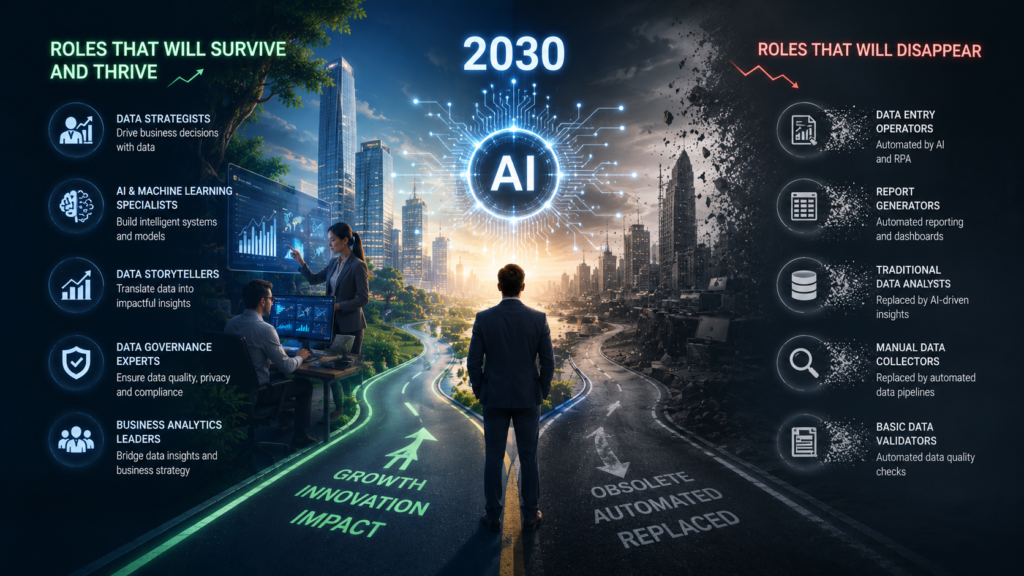
AI Is Not Just Changing Jobs  It Is Redefining Careers In the last few years, Artificial Intelligence has moved from being an advanced concept to becoming a core part of everyday business operations. From automated dashboards to AI-generated insights, companies are increasingly relying on AI to improve efficiency and decision-making. This rapid adoption has created a major concern among professionals: 👉 “Will AI replace data jobs completely?” This question is especially relevant for students, freshers, and even experienced professionals working in roles such as Data Analyst, Data Engineer, and BI Developer. However, this concern often comes from a limited understanding of how technological shifts actually work. Historically, every major technological advancement from automation to cloud computing has changed the nature of jobs but has not eliminated them entirely. Instead, it has shifted the focus of work from manual execution to higher-level thinking. AI is following the same pattern, but at a much faster pace. The real transformation is not about job loss, but about: This blog will give you a deep, structured, and realistic understanding of what data jobs will look like by 2030 and how you can prepare yourself for that future. Understanding Today’s Data Job Ecosystem (Why These Roles Exist and How They Work Together) To understand the future, it is essential to understand how the current data ecosystem is structured. Today, data-related work is divided into multiple roles because handling data involves several stages from collection to processing to analysis to decision-making. A Data Analyst focuses on interpreting data and generating insights that help businesses understand performance and trends. They typically work with dashboards, reports, and business metrics. A Data Engineer is responsible for building and maintaining the systems that collect and process data. They ensure that data flows smoothly from source to storage and is available for analysis. A BI Developer focuses on creating dashboards and reporting systems that present data in a visual and understandable format. A Data Scientist works on advanced analytics and predictive models, using machine learning to forecast outcomes and identify patterns. These roles exist because data workflows are complex and require specialization. However, AI is now entering this ecosystem and beginning to overlap with multiple responsibilities. How AI Is Transforming Data Work (From Execution to Intelligence) AI is not simply automating tasks it is changing the entire workflow of data-related work. Earlier, a large portion of a data professional’s time was spent on repetitive tasks such as cleaning data, writing queries, building dashboards, and generating reports. These tasks, while important, did not directly contribute to strategic decision-making. With AI, many of these tasks are becoming automated. AI can now: This shift reduces the need for manual effort and increases the importance of interpretation and decision-making. As a result, the role of data professionals is evolving from: 👉 “Doing the work”To:👉 “Understanding and applying the results” This transformation is increasing the value of skills such as critical thinking, business understanding, and communication. Will AI Replace Data Analysts? (Detailed Role Transformation Explained) Data Analysts are often seen as the most vulnerable role because many of their tasks are already being automated. AI tools can generate dashboards, analyze trends, and even suggest insights in seconds. However, there is a key limitation. AI can process data, but it lacks context. A human analyst understands: For example, AI might identify a decline in sales, but it cannot fully explain the business reasons behind it or recommend strategic actions with complete accuracy. By 2030, Data Analysts will not disappear. Instead, their role will evolve into: 👉 AI-powered decision-makers who focus on strategy and interpretation They will spend less time on manual analysis and more time on understanding insights and guiding business decisions. Will AI Replace Data Engineers? (Why This Role Remains Critical) Data Engineering is fundamentally different from data analysis because it involves building and maintaining the infrastructure that supports data systems. AI can assist in tasks such as writing code or optimizing queries, but it cannot fully replace the responsibilities of a Data Engineer. Data Engineers are responsible for: These tasks require deep technical expertise and problem-solving skills that AI cannot fully replicate. By 2030, Data Engineers will use AI as a tool to improve productivity, but their role will remain essential. Will AI Replace BI Developers? (From Reporting to Intelligent Systems) BI Developers focus on creating dashboards and reports that help businesses understand their data. AI tools are already capable of generating dashboards automatically, which means basic reporting tasks will become less relevant. However, this does not eliminate the role. Instead, it changes the focus from creating reports to designing intelligent systems. BI Developers will need to: This makes the role more strategic and valuable. New Data Roles Emerging by 2030 (Where the Real Opportunity Lies) While AI automates certain tasks, it also creates entirely new roles. These roles combine technical skills with business understanding and AI integration. Some of the key emerging roles include: AI Analytics Engineer, who combines data engineering and analytics with AI capabilities. Data Product Manager, who focuses on building data-driven products and delivering business value. AI Integration Specialist, who connects AI tools with existing business systems. Automation Analyst, who designs workflows using AI to improve efficiency. These roles represent the future of the data industry and offer significant career opportunities. Future-Proof Skills You Must Build for Data Careers by 2030 To succeed in the future, you need to focus on skills that cannot be easily automated. These include: Understanding how to use AI tools effectively in real scenarios. Strong data analysis and visualization skills using tools like Power BI. Knowledge of cloud platforms and modern data systems. Problem-solving ability and business thinking. Communication skills to explain insights clearly to stakeholders. These skills ensure that you remain valuable in a rapidly evolving job market. What Should You Do Today to Stay Relevant? (Practical Career Strategy) The best way to prepare for the future is to start adapting today. You should focus on learning how AI works and how it can

AI Careers | Data Analytics | Career Growth 2026
blogs

AI Analytics Engineer in 2026: Salary, Skills & Career Guide

The Data Analyst Role Is Changing  Fast For over a decade, the Data Analyst was one of the safest careers in IT. Every company needed one. Every industry hired them. Power BI dashboards, SQL reports, and Excel models were the backbone of business decisions worldwide. That demand has not disappeared. But something new is happening inside data teams in 2026  and if you work in data, you need to understand it before it changes your career path without warning. A new role is quietly taking over job boards, enterprise hiring plans, and corporate org charts. It is called the AI Analytics Engineer. And it is not just a trendy new title for the same old job. It is a fundamentally different type of professional  one who combines data analysis, data engineering, and artificial intelligence into a single, high-value skill set. In this blog you will learn: Let’s start from the beginning. What Is an AI Analytics Engineer? (Simple Definition) An AI Analytics Engineer is a professional who builds intelligent, AI-powered data systems for businesses. Unlike a traditional Data Analyst who focuses on reading data and creating reports, an AI Analytics Engineer designs the entire system that collects, processes, and analyzes data  and then connects AI to make that system intelligent. Think of it this way: This role sits at the crossroads of three fields: In 2026, enterprises want all three in one professional. That is why this role exists  and why it pays significantly more than traditional analyst roles. Why Is This Role Rising in 2026? Three major forces are driving the emergence of the AI Analytics Engineer role right now. 1. Generative AI Is Now Built Into Every Analytics Tool Microsoft Copilot is inside Power BI. Google Gemini is inside BigQuery. Amazon Q is inside AWS analytics. These AI features do not run themselves. Someone must configure them, validate their outputs, and govern how they are used. That someone is the AI Analytics Engineer. 2. Businesses Want Predictions, Not Just Reports Companies in 2026 no longer want to know only what happened. They want to know what will happen  and what action to take. Building predictive and prescriptive analytics systems requires skills that go far beyond traditional dashboards. It requires AI integration, statistical modeling, and data pipeline architecture. 3. Unified Data Platforms Changed What One Person Can Do Platforms like Microsoft Fabric, Databricks, and Snowflake now allow a single professional to manage the entire data lifecycle  from raw ingestion to AI-powered insights to executive visualization. This unified architecture created a unified role to match it. AI Analytics Engineer vs Data Analyst: The Key Differences Many professionals ask the same question: Is this just a Data Analyst with a fancier title? No. The differences are real and significant. Dimension Data Analyst AI Analytics Engineer Primary Focus Reporting and visualization Intelligent data systems Works With Structured, clean data Raw, complex, multi-source data Core Tools Power BI, SQL, Excel Python, Fabric, Spark, ML tools Deliverable Dashboard or report AI-powered analytics system AI Involvement Minimal Central Pipeline Knowledge Basic Advanced Strategic Influence Reporting level Architecture level Average Salary (India) ₹7–12 LPA (senior) ₹12–22 LPA (mid-level) The most important difference is scope of responsibility. A Data Analyst works at the output end of a pipeline. An AI Analytics Engineer builds and governs the entire pipeline   including the AI layer on top of it. This does not mean Data Analysts are becoming irrelevant. It means the professionals who evolve beyond reporting into engineering and AI will access a completely different level of career growth. Core Skills of an AI Analytics Engineer in 2026 To become an AI Analytics Engineer, you need to develop skills across four interconnected areas. Area 1 — Advanced Data Analytics Foundation This is where every AI Analytics Engineer begins. Without a strong foundation in data modeling, SQL, and business intelligence, the engineering and AI components have no context. Key skills here include: If you already work as a Data Analyst, you have this foundation. That is your single biggest advantage in this transition. Area 2 — Data Engineering and Cloud Pipeline Architecture This is the area where most Data Analysts need to invest the most effort. Understanding how data moves from source systems into analytics platforms is essential. Key skills here include: Area 3 — Applied AI and Machine Learning for Analytics This does not mean becoming a machine learning researcher. It means knowing how to use AI tools intelligently in an analytics context. Key skills here include: Area 4 — AI Governance and Data Quality Management This is the most underestimated area  and the one enterprises care most about in 2026. Key skills here include: Salary Expectations for AI Analytics Engineers in 2026 The salary premium for AI Analytics Engineers over traditional Data Analysts is significant  and it is expected to grow over the next 3 to 5 years as demand continues to outpace supply. Role Experience Salary (India) Salary (US/Global) Junior Data Analyst 0–2 years ₹3.5–6 LPA $55,000–$75,000 Senior Data Analyst 3–6 years ₹7–12 LPA $80,000–$105,000 AI Analytics Engineer 2–5 years ₹12–22 LPA $110,000–$145,000 Senior AI Analytics Engineer 5+ years ₹20–35 LPA $140,000–$180,000 Principal AI Analytics Lead 7+ years ₹30–50 LPA $160,000–$210,000 The gap between a Senior Data Analyst and a mid-level AI Analytics Engineer at similar experience levels is typically 40 to 70 percent. That gap exists because the combination of data, engineering, and AI skills in one professional is still rare  and enterprise demand is at an all-time high. Step-by-Step Career Transition Roadmap Phase 1 — Strengthen Your Analytics Foundation (Month 1–2) Make sure your Power BI, SQL, and data modeling skills are genuinely enterprise-level  not just basic. If you are a complete fresher, start here and give this phase your full attention. Strong fundamentals will make every phase after this significantly easier. Phase 2 — Build Data Engineering Fundamentals (Month 2–5) Choose one cloud platform  Microsoft Azure is the strongest choice for analytics-focused professionals in India  and learn its data engineering ecosystem. Azure Data Factory,

Enterprise AI transformation roadmap in 2026 showing Microsoft Fabric architecture, unified OneLake storage, Power BI dashboards, AI workflow integration, governance controls, and workforce reskilling phases.
blogs

Enterprise AI Transformation Roadmap in 2026: A Complete Strategy Using Microsoft Fabric, Power BI, and Unified Data Architecture

Introduction: AI Transformation Is Not About Tools It Is About Architecture and Culture In 2026, almost every enterprise says it is “doing AI.” But very few organizations are truly AI-transformed. Many companies deploy AI chatbots. Some experiment with predictive dashboards. Others integrate Copilot into Power BI. However, isolated AI adoption does not equal transformation. True enterprise AI transformation requires: Artificial Intelligence is not a feature.It is a structural shift in how organizations operate. This article provides a complete enterprise roadmap for AI transformation using modern platforms such as Microsoft Fabric and Power BI. Phase 1: Data Foundation Modernization Before AI can deliver value, data must be structured, accessible, and reliable. Many enterprises still operate in siloed environments where: AI built on fragmented data produces unreliable outcomes. The first phase of transformation is consolidating data into a unified architecture. Platforms like Microsoft Fabric enable centralized storage through OneLake and lakehouse design. During this phase, enterprises must: Without this foundation, AI adoption will create more confusion than clarity. Phase 2: Business Intelligence Modernization Once the data foundation is stable, enterprises must modernize reporting systems. Traditional static dashboards must evolve into dynamic, real-time insight platforms. Power BI integrated within Fabric allows: This phase shifts organizations from descriptive reporting to predictive awareness. The goal is to reduce decision latency and build trust in unified analytics. Phase 3: AI Integration into Core Workflows After BI modernization, enterprises begin embedding AI into operational workflows. Examples include: At this stage, AI is no longer experimental.It becomes embedded in daily operations. Microsoft Fabric supports this by integrating data pipelines, AI workloads, and reporting within a single environment. The transformation here is operational, not cosmetic. Phase 4: Governance, Compliance, and Responsible AI As AI becomes embedded in decision-making, governance becomes critical. Enterprises must establish: Ignoring governance creates reputational and legal risk. AI transformation must include ethical safeguards. Platforms like Fabric simplify governance implementation through centralized controls, but leadership accountability remains essential. Phase 5: Workforce Reskilling and Cultural Adoption Technology alone cannot transform enterprises. Employees must be trained to: Resistance to AI often stems from fear of replacement. Successful transformation communicates augmentation rather than replacement. Data analysts evolve into AI-augmented strategists.Engineers evolve into AI workflow architects. Cultural readiness defines transformation success. Phase 6: Continuous Optimization and Strategic Scaling AI transformation is not a one-time project. Enterprises must continuously: Scalability becomes the defining factor. Unified platforms reduce operational complexity and support long-term growth. Transformation becomes sustainable only when optimization is ongoing. Why Many AI Transformations Fail Many enterprises fail because they: AI transformation requires structured progression. Skipping phases creates instability. Measuring AI Transformation Success Enterprises should measure success not only by technology adoption but by business outcomes. Key indicators include: Transformation must produce measurable value. Frequently Asked Questions (Expanded and Detailed) How long does enterprise AI transformation typically take? AI transformation timelines vary significantly depending on organization size and complexity. Smaller enterprises may see early results within a year, while large enterprises may require multi-year phased strategies. The process involves architectural redesign, cultural change, and governance implementation, which cannot be rushed without risk. Is Microsoft Fabric necessary for AI transformation? Fabric is not mandatory, but unified platforms simplify transformation significantly. Fragmented environments increase integration complexity and cost. Fabric offers architectural consolidation that supports scalable AI adoption. Can enterprises adopt AI without modernizing data architecture? Technically possible, but strategically risky. AI built on fragmented or inconsistent data leads to unreliable outcomes. Foundation-first transformation is essential. What is the biggest risk during AI transformation? The biggest risk is overestimating AI capability while underestimating governance and cultural resistance. Balanced implementation is critical. Does AI transformation reduce workforce size? AI often augments roles rather than eliminating them. Repetitive tasks decrease, while strategic roles increase. Reskilling determines impact. Final Conclusion Enterprise AI transformation in 2026 is not about deploying tools. It is about redesigning how organizations think, operate, and decide. The roadmap includes: Platforms like Microsoft Fabric and Power BI enable transformation but leadership and strategy define success. Organizations that approach AI transformation structurally gain long-term competitive advantage. Professionals who understand transformation frameworks gain strategic career leverage.  Build Enterprise AI Expertise with TechnoEdgels For structured, deep insights on: Stay aligned with the future of enterprise AI and analytics strategy.

Comparison of Microsoft Fabric, Snowflake, and Databricks architectures in 2026 showing unified ecosystem, cloud-native warehousing, lakehouse model, AI capabilities, and governance layers.
blogs

Microsoft Fabric vs Snowflake vs Databricks in 2026: The Complete Enterprise Comparison for Architecture, AI, Cost, Governance, and Career Impact

Introduction: Why This Comparison Matters More in 2026 Than Ever Before In 2026, enterprise data strategy is no longer about choosing a reporting tool or selecting a storage solution. It is about selecting the backbone of digital transformation. Organizations are not simply buying technology. They are defining how data flows, how AI operates, how governance is enforced, and how decisions are made at scale. Three major platforms dominate this strategic conversation: Each platform represents a different philosophy of enterprise analytics. Microsoft Fabric promotes unified integration within a single ecosystem.Snowflake focuses on high-performance cloud-native warehousing and data sharing.Databricks emphasizes large-scale data engineering and AI-driven lakehouse architecture. For CIOs, data leaders, analytics engineers, and BI professionals, understanding the structural differences between these platforms is critical. This article provides a comprehensive, deeply detailed analysis of all three platforms across architecture, AI capabilities, governance, cost structure, enterprise adoption patterns, and long-term career implications. The Architectural Philosophy of Microsoft Fabric Microsoft Fabric is built around integration. Rather than requiring organizations to assemble multiple separate services for storage, transformation, engineering, and reporting, Fabric unifies them inside a single platform. At the center of Fabric is OneLake, which acts as a centralized enterprise data repository. Instead of duplicating datasets across multiple tools, enterprises store data once and reuse it across workloads. Fabric integrates: This architecture reduces friction between departments. In traditional environments, data engineers manage pipelines, BI teams build dashboards separately, and AI teams operate in isolated systems. Fabric collapses these silos into a unified ecosystem. For enterprises already using Azure and Power BI, Fabric feels like a natural extension. The strength of Fabric lies in architectural coherence. Snowflake’s Architectural Strength: Cloud-Native Specialization Snowflake is fundamentally a cloud-native data warehouse platform. Its architecture separates storage and compute, allowing independent scaling of each component. This flexibility enables enterprises to optimize cost and performance dynamically. Snowflake excels in: Unlike Fabric, Snowflake does not bundle reporting directly into its core architecture. It integrates with external BI tools such as Power BI or Tableau. Snowflake’s strength lies in its specialization. It is extremely strong in structured warehousing and cross-organizational data exchange. However, AI workflows often require additional integration layers. Databricks: Engineering-First and AI-Centric Architecture Databricks is built around Apache Spark and distributed processing frameworks. Its architecture emphasizes large-scale data processing and advanced machine learning workflows. Databricks pioneered the lakehouse model before it became mainstream. It combines data lake flexibility with warehouse-like performance. Key strengths include: Databricks is often preferred by enterprises with large data science teams and AI research initiatives. However, its engineering-first nature can make it less accessible to traditional BI teams. Integration vs Modularity: The Core Strategic Difference The most important difference between these platforms is philosophical. Microsoft Fabric prioritizes integration and ecosystem consolidation.Snowflake prioritizes modular, high-performance warehousing.Databricks prioritizes AI-driven engineering flexibility. If an enterprise values simplicity and centralized control, Fabric often aligns well. If an enterprise values modular flexibility and high-performance structured queries, Snowflake excels. If an enterprise prioritizes machine learning experimentation and advanced data science, Databricks stands out. There is no universal winner. Strategy determines choice. AI Capabilities: Which Platform Is Most Future-Ready? AI readiness is a decisive factor in 2026. Microsoft Fabric integrates AI directly into its analytics workflows. Copilot in Power BI enables conversational BI, automated summaries, and formula generation. Databricks offers deep support for machine learning frameworks, custom model training, and distributed AI workloads. It is highly attractive to data scientists. Snowflake supports AI workloads but often requires integration with external machine learning platforms. If an organization wants AI deeply embedded into everyday BI workflows, Fabric offers accessibility. If an organization prioritizes custom AI model development at scale, Databricks provides stronger flexibility. Governance and Security Comparison Governance in 2026 is not optional. Microsoft Fabric benefits from Azure’s mature enterprise security infrastructure. Access control, compliance monitoring, and audit logging are integrated within the ecosystem. Snowflake also offers robust security features, including encryption and fine-grained access controls. Databricks supports governance through structured catalog systems and enterprise security features, but configuration often requires deeper technical management. Organizations prioritizing governance simplicity may prefer unified ecosystems. Cost Structure and Long-Term Efficiency Cost models vary significantly. Fabric typically operates under capacity-based pricing models integrated within Azure subscriptions. Snowflake uses a consumption-based model, where storage and compute are billed separately based on usage. Databricks pricing depends heavily on compute consumption and workload complexity. While consumption models offer flexibility, they can create unpredictability if not managed carefully. Unified ecosystems may reduce integration overhead costs over time, but platform choice must align with usage patterns. Enterprise Adoption Trends in 2026 Enterprises heavily invested in Microsoft ecosystems are increasingly consolidating around Fabric. Organizations with multi-cloud strategies and strong cross-company data sharing needs continue to adopt Snowflake. Enterprises focused on AI-driven transformation and big data engineering initiatives often lean toward Databricks. Market dynamics show coexistence rather than dominance by a single platform. Career Impact: What Professionals Should Learn For professionals, platform choice influences career trajectory. Microsoft Fabric skills align closely with Power BI and Azure, making it accessible to BI professionals. Snowflake expertise is valuable in data warehousing-focused organizations. Databricks skills are highly sought after in AI-heavy and data science-driven enterprises. Professionals who understand architectural principles across platforms gain maximum flexibility. Specialization creates depth. Cross-platform understanding creates resilience. Frequently Asked Questions   Is Microsoft Fabric replacing Snowflake and Databricks? Microsoft Fabric is not universally replacing these platforms. Instead, it competes strategically in certain enterprise scenarios. Organizations deeply embedded in Microsoft ecosystems may consolidate workloads into Fabric. Others with specialized needs may continue leveraging Snowflake or Databricks depending on performance and AI requirements. Which platform is best for AI-heavy enterprises? Databricks is often preferred for organizations prioritizing advanced machine learning and AI experimentation. However, Fabric integrates AI into BI workflows more seamlessly for business users. Snowflake can support AI but typically relies on additional integration. Is Snowflake losing relevance in 2026? Snowflake remains highly relevant, particularly for structured analytics and secure data sharing across organizations. Its specialization continues to attract enterprises focused on scalable warehousing.

AI-powered business intelligence system in 2026 using Microsoft Fabric, OneLake lakehouse architecture, real-time analytics dashboards, predictive insights, and prescriptive decision recommendations.
blogs

The Future of Business Intelligence in 2026 and Beyond: AI, Microsoft Fabric, Real-Time Intelligence, and the Next Evolution of Enterprise Analytics

Introduction: Business Intelligence Is No Longer About Reports It Is About Intelligent Decision Systems For decades, business intelligence was primarily focused on reporting. Organizations built dashboards to understand historical performance. Monthly revenue charts, quarterly trend analysis, and operational KPIs were the center of BI conversations. However, in 2026, the role of business intelligence has fundamentally shifted. Enterprises are no longer satisfied with understanding what happened. They want to know: This shift represents a movement from passive reporting toward active intelligence. Modern business intelligence systems, powered by Artificial Intelligence and unified platforms like Microsoft Fabric, are evolving into intelligent decision ecosystems. These systems do not merely visualize data. They analyze, predict, recommend, and assist in execution. The future of BI is not an upgrade in visualization design.It is a transformation in enterprise thinking. The Maturity Shift: From Descriptive Analytics to Prescriptive Intelligence To understand the future, we must understand the stages of BI evolution. In the early stages, BI was descriptive. Dashboards answered simple questions: What were last month’s sales? Which region performed best? As tools improved, predictive analytics emerged. Statistical models and machine learning algorithms forecasted trends and projected revenue growth. In 2026, enterprises are entering the prescriptive era. Prescriptive BI systems go beyond prediction. They suggest actions. For example, if customer churn is predicted to increase, prescriptive BI systems can recommend targeted marketing interventions or pricing adjustments. This transformation is possible because of AI integration and scalable cloud architecture. Prescriptive intelligence reduces decision latency. Instead of waiting for analysts to interpret data manually, systems provide structured guidance. However, human validation remains essential. The future is collaborative, not automated dictatorship. Artificial Intelligence: The Core Driver of BI Transformation Artificial Intelligence is not an optional add-on in modern BI systems. It is becoming the foundation. Generative AI capabilities integrated within Power BI allow users to interact with data conversationally. Executives can ask complex business questions in natural language and receive structured responses instantly. AI algorithms analyze massive datasets to detect anomalies, identify correlations, and highlight potential risks before they escalate. Machine learning models embedded in Fabric ecosystems allow real-time forecasting based on streaming data. This dramatically reduces manual analysis workload. However, AI’s value depends on data quality and governance. Without proper architecture and oversight, AI may amplify errors. Therefore, the future of BI requires both intelligence and responsibility. Microsoft Fabric: The Architectural Backbone of Future BI Technology alone does not define the future. Architecture does. The reason Microsoft Fabric plays such a significant role in the future of BI is its unified design philosophy. Traditional analytics environments relied on separate tools for data engineering, warehousing, reporting, and AI integration. This fragmentation slowed innovation and increased complexity. Fabric unifies: This integration reduces data movement friction and ensures consistent governance. Future BI systems will likely favor unified ecosystems over disconnected tool stacks. Architectural coherence enables AI acceleration. Real-Time Intelligence: Shrinking the Gap Between Event and Decision One of the most significant changes in future BI systems is the shift toward real-time analytics. Historically, decision cycles were delayed because data had to be processed in batches. By the time reports were generated, conditions had already changed. Streaming analytics integrated into Fabric ecosystems now allow dashboards to update dynamically as new data arrives. This reduces the time between event occurrence and managerial response. For example, in supply chain management, real-time visibility into shipment delays allows immediate corrective action. In retail, real-time customer behavior analysis supports instant pricing optimization. Real-time BI transforms reactive organizations into proactive ones. Conversational and Democratized Analytics Future BI systems are becoming more accessible to non-technical users. Conversational interfaces powered by AI allow executives to interact with dashboards without deep technical knowledge. Instead of navigating filters and writing queries, leaders can ask direct questions and receive contextualized answers. This democratization expands the reach of analytics across organizations. However, democratization must be balanced with governance. Wider access increases responsibility. Embedded AI and Autonomous Analytics Looking beyond 2026, BI systems may evolve into semi-autonomous decision environments. AI could automatically: While full autonomy remains unlikely due to governance concerns, automation will increase steadily. Organizations will shift from manual data monitoring to AI-assisted operational ecosystems. Governance, Ethics, and Regulatory Alignment As BI systems become more powerful, governance becomes foundational. Future BI environments must ensure: Organizations that ignore governance risk reputational damage and regulatory penalties. The future of BI is not only intelligent. It is accountable. The Evolution of Analytics Careers The future of BI will redefine professional roles. Traditional report developers may evolve into analytics engineers who understand architecture and AI integration. Data analysts will transition into insight strategists capable of interpreting AI outputs and influencing enterprise decisions. Professionals who combine: will shape the next generation of analytics leadership. Frequently Asked Questions   Will AI completely replace traditional business intelligence roles? AI will not replace business intelligence roles entirely. Instead, it will transform them. Repetitive tasks such as manual anomaly detection and formula generation will be automated. However, strategic thinking, contextual interpretation, and governance oversight require human expertise. The future lies in human-AI collaboration rather than full automation. Is Microsoft Fabric essential for organizations planning long-term BI strategy? While not the only platform available, Microsoft Fabric represents the direction toward unified analytics ecosystems. Organizations prioritizing scalability, AI integration, and architectural simplicity are increasingly adopting such platforms. Learning Fabric concepts prepares professionals and enterprises for modern BI evolution. Will business intelligence systems become fully autonomous? Full autonomy is unlikely in the near future due to ethical, regulatory, and governance considerations. However, partial automation will increase. BI systems will provide more proactive recommendations and reduce manual monitoring workload. Human validation will remain central. How should professionals prepare for the future of BI? Professionals should strengthen technical foundations such as SQL and data modeling, expand into unified architecture platforms like Fabric, develop AI literacy, and cultivate business communication skills. Continuous learning and adaptability are critical. Is BI becoming more technical or more strategic? It is becoming both simultaneously. Technical complexity is increasing due to AI integration and architectural

Trust Us, One Call Can Make a Difference
Please enable JavaScript in your browser to complete this form.
Join As Trainer
Join As Trainer
Please enable JavaScript in your browser to complete this form.
Download Course Content
Please enable JavaScript in your browser to complete this form.
More than 5 People are attending Get On a Call with Us
Please enable JavaScript in your browser to complete this form.
More than 5 People are attending Get On a Call with Us
Scroll to Top