
TechnoEdge

Free Master Class

How to Plan Your AI Training Budget for FY26? (For CHROs & L&Ds)

blogs

Microsoft Fabric Analytics Engineer career path in 2026 showing salary growth, OneLake architecture, data pipelines, lakehouse modeling, AI integration, and enterprise analytics demand
blogs

Microsoft Fabric Analytics Engineer Salary and Job Demand in 2026: Career Growth, Market Trends, and Future Scope Explained

Introduction: Why This Role Is Becoming One of the Most In-Demand in 2026 In 2026, enterprise data environments are undergoing rapid transformation. Organizations are no longer satisfied with isolated reporting systems or disconnected data warehouses. They want unified analytics platforms that combine storage, engineering, governance, AI integration, and reporting into one seamless ecosystem. Microsoft Fabric has emerged as a major player in this transformation. As enterprises adopt Fabric to modernize their analytics infrastructure, a new hybrid role is gaining strong momentum: the Microsoft Fabric Analytics Engineer. This role sits between traditional business intelligence and advanced data engineering. It requires professionals who understand data pipelines, lakehouse architecture, Power BI modeling, AI integration, and enterprise governance. Because of this hybrid responsibility, salary levels and job demand are increasing significantly. This article explains in full detail: This is not speculation. It reflects real enterprise hiring shifts happening in 2026. Understanding the Role: What Does a Microsoft Fabric Analytics Engineer Actually Do? To understand salary and demand, we must first understand the responsibilities. A Microsoft Fabric Analytics Engineer is not just a dashboard developer. This professional works across multiple layers of the analytics stack. At the foundation level, they design and manage data ingestion pipelines. This involves bringing raw data from various sources into Microsoft Fabric’s OneLake storage system. At the transformation level, they structure and clean data using lakehouse architecture principles. They ensure data is usable, scalable, and optimized for analytics. At the modeling level, they build semantic models that support reporting and AI workloads. At the reporting level, they integrate Power BI to deliver executive insights. At the governance level, they ensure compliance, data security, and access control. This combination of engineering, analytics, and governance makes the role strategically important inside enterprises. Why Enterprises Are Increasingly Hiring Fabric Analytics Engineers Enterprises are facing several challenges in 2026: Microsoft Fabric addresses these challenges by unifying services into a single platform. However, adopting Fabric requires professionals who understand both engineering and analytics workflows. Traditional BI analysts may lack pipeline expertise. Traditional data engineers may lack business intelligence depth. Fabric Analytics Engineers bridge this gap. This hybrid nature increases demand significantly. Salary Expectations in 2026: Global Overview Salary levels vary depending on region, experience, and enterprise size. However, consistent patterns are visible. In North America, mid-level Fabric Analytics Engineers often earn significantly more than traditional BI developers because they operate closer to enterprise architecture. Senior professionals with strong engineering and governance expertise command even higher compensation. In Europe, similar trends are emerging, especially in technology-driven economies where cloud transformation is accelerating. In India and other rapidly growing tech markets, demand is increasing strongly. While salary levels may vary compared to Western markets, the percentage growth compared to traditional BI roles is notable. Across regions, professionals who combine Power BI expertise with Fabric architecture and data engineering fundamentals typically see salary increases ranging between 25% and 50% compared to standard reporting roles. Hybrid skills command premium compensation. Factors That Influence Salary Growth Not all Fabric Analytics Engineers earn the same. Compensation depends on several factors. First, depth of Power BI modeling experience matters. Strong DAX, performance tuning, and governance knowledge increase value. Second, understanding of data engineering concepts such as ETL pipelines, SQL optimization, and lakehouse design significantly influences salary. Third, familiarity with AI integration within Fabric environments adds strategic importance. Fourth, enterprise experience plays a major role. Professionals who have implemented Fabric in large organizations typically command higher compensation. Finally, certification combined with practical project experience improves credibility in hiring processes. Salary is not determined by title alone. It reflects skill depth and enterprise impact. Industry Demand Trends in 2026 Industries actively hiring Fabric Analytics Engineers include: Organizations in these industries manage large volumes of data and require scalable, secure analytics platforms. As Microsoft continues expanding Fabric capabilities, partner ecosystems and consulting firms are also increasing hiring to support enterprise migrations. The demand curve is upward. Why This Role Is Future-Proof Compared to Traditional BI Roles Traditional BI roles focused primarily on reporting. As automation and AI tools become more capable, repetitive dashboard-building tasks may become partially automated. However, system-level architecture, pipeline design, governance implementation, and AI-ready infrastructure require deeper understanding. Fabric Analytics Engineers operate at this strategic layer. This makes the role more resilient against automation and technological shifts. Future-proof roles are those closest to architecture and system design. Career Growth Path Beyond Fabric Analytics Engineer This role is not an endpoint. Professionals in this position can progress toward: Because the role touches multiple layers of the data ecosystem, it provides strong exposure to enterprise decision-making. Career growth opportunities expand beyond reporting. Skills Roadmap for Entering the Role To transition into this role, professionals must build a layered skill foundation. Strong Power BI modeling and DAX knowledge remains essential. SQL proficiency is mandatory for data transformation tasks. Understanding lakehouse concepts and Fabric architecture is crucial. Basic knowledge of Python enhances flexibility. Governance awareness and enterprise mindset improve leadership potential. The transition requires structured learning but is realistic within six to twelve months for experienced BI professionals. Frequently Asked Questions   Is Microsoft Fabric Analytics Engineer a better career option than traditional Power BI roles? This role offers broader scope and higher salary potential because it combines engineering and analytics responsibilities. However, it also requires deeper technical understanding. Professionals seeking long-term growth in enterprise environments may find this path more strategic. How difficult is it to transition into this role from a Power BI background? Transition difficulty depends on your current skill level. If you already have strong SQL and modeling skills, adding Fabric architecture knowledge is manageable. The key challenge lies in shifting mindset from reporting focus to system-level thinking. Are certifications necessary to secure high-paying Fabric roles? Certifications demonstrate commitment and structured knowledge, but practical experience implementing Fabric solutions in real environments carries greater weight. Employers value hands-on expertise. Is demand likely to continue growing beyond 2026? Enterprise data complexity is increasing, not decreasing. As more organizations adopt unified analytics platforms, demand

AI-powered Power BI dashboard in 2026 showing Generative AI insights, Microsoft Copilot assistance, anomaly detection, predictive analytics, and conversational reporting interface.
blogs

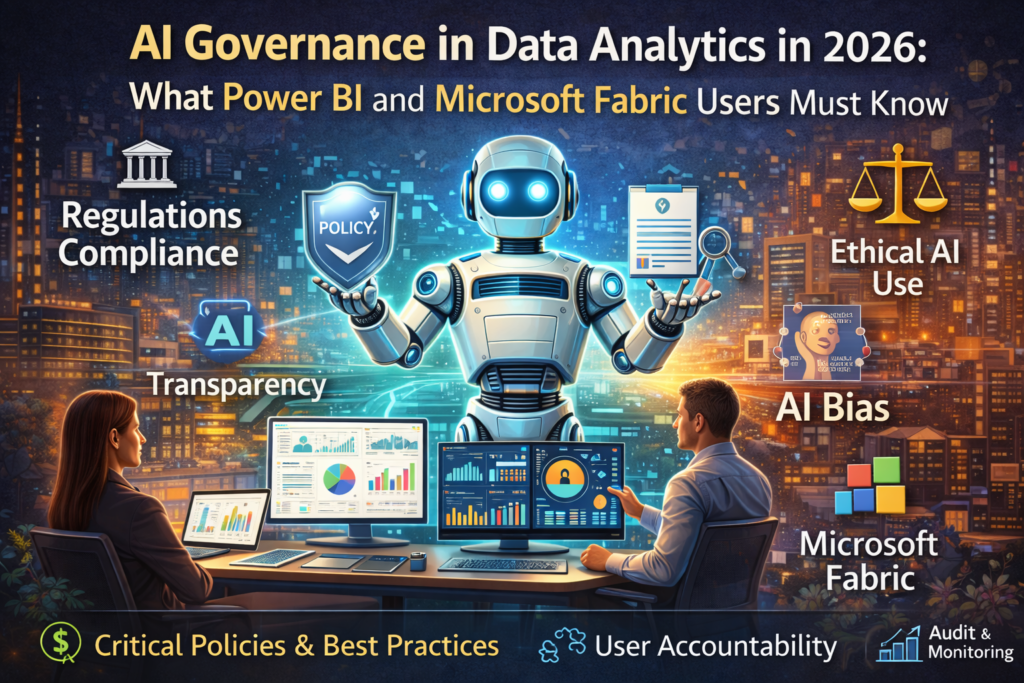
AI + Power BI in 2026: How Generative AI Is Redefining Business Intelligence, Analytics Workflows, and Data Careers

Introduction: Business Intelligence Is No Longer Just About Dashboards For many years, business intelligence meant building reports, creating visualizations, and presenting KPIs to decision-makers. Tools like Power BI became central to corporate reporting environments. Data analysts focused on modeling datasets, writing DAX formulas, optimizing performance, and designing executive dashboards. That era is not over. But it is evolving rapidly. In 2026, Artificial Intelligence  especially Generative AI  is transforming how business intelligence functions inside organizations. Power BI is no longer just a visualization tool. It is becoming an intelligent analytics assistant capable of suggesting insights, generating summaries, identifying anomalies, and interacting conversationally with users. The shift is not small. It changes: This article explains in depth how AI is integrated into Power BI, how Generative AI is reshaping workflows, how Microsoft Copilot operates inside the platform, what risks exist, and what data professionals must do to stay relevant. What AI Integration in Power BI Actually Means in 2026 When people hear “AI in Power BI,” they often imagine automatic chart suggestions or simple smart features. However, the integration is much deeper than that. AI in Power BI operates across multiple layers of the analytics lifecycle. At the interaction level, users can now communicate with reports using natural language. Instead of manually navigating filters, they can ask specific business questions and receive structured responses. At the insight level, AI algorithms analyze data patterns to detect anomalies, correlations, seasonality, and trends that may not be obvious to human analysts. At the development level, Copilot assists in writing DAX measures, creating calculated columns, generating model explanations, and even suggesting optimized visual layouts. At the executive level, AI generates narrative summaries of dashboards, translating technical metrics into business-friendly explanations. This multi-layer integration changes the role of Power BI from static reporting software into an intelligent collaboration tool between humans and machines. Understanding Generative AI in Business Intelligence Generative AI is different from traditional analytics automation. Traditional BI automation focused on rule-based triggers. For example, if revenue drops below a threshold, an alert is generated. These systems followed predefined logic. Generative AI, however, can interpret context and generate new content based on patterns in data. In Power BI, this includes generating written summaries of performance reports, suggesting possible explanations for metric changes, and even proposing additional visualizations to explore deeper insights. For instance, if quarterly sales show unexpected growth in a specific region, Generative AI may highlight that region automatically and suggest potential contributing factors based on related metrics. This does not eliminate the need for human validation. Instead, it reduces time spent manually exploring data. Generative AI acts as a data exploration accelerator. Microsoft Copilot in Power BI: Practical Impact on Daily Work Microsoft Copilot has become a significant component of Power BI in 2026. Its role is not to replace analysts, but to enhance productivity and reduce repetitive work. Copilot assists by translating plain language instructions into DAX measures. For example, instead of manually writing complex time-intelligence formulas, analysts can describe the requirement conversationally, and Copilot generates a draft formula. It also helps interpret complex data models by explaining relationships between tables, calculated measures, and filters in simple language. This is especially valuable for new team members trying to understand large enterprise models. For executives, Copilot can generate executive summaries of dashboards. Instead of reviewing dozens of charts, leaders receive structured written insights that explain performance trends. This significantly shortens analysis cycles and improves communication between technical and non-technical stakeholders. However, Copilot is not perfect. It requires human review, especially when dealing with complex models. How AI Is Reshaping the Role of Data Analysts Before AI integration, the workflow of a Power BI analyst was heavily manual. Data cleaning required constant checking. Model optimization required trial and error. Insight generation required manual exploration. Executive reporting required written explanations prepared separately. In 2026, many of these steps are partially automated. Analysts now spend less time writing repetitive formulas and more time validating AI-generated suggestions. Instead of manually scanning for anomalies, they review AI-detected insights and investigate business implications. The role shifts from technical executor to strategic validator. Analysts must now develop stronger contextual thinking skills. They must understand business processes deeply because AI tools generate possibilities, but humans decide relevance. This elevates the role rather than diminishes it. Enterprise Use Cases: Real-World Impact of AI + Power BI Large enterprises are already using AI-powered BI in several critical areas. In sales analytics, predictive models forecast revenue trends based on historical patterns and market indicators. AI highlights potential underperforming segments before they become severe problems. In supply chain management, AI monitors operational data streams and flags unusual variations in delivery timelines or inventory levels. In finance departments, anomaly detection algorithms automatically flag suspicious expense patterns or unusual cost spikes. In executive reporting, Generative AI produces summarized insights for board-level discussions, reducing preparation time dramatically. These applications demonstrate that AI in Power BI is not theoretical. It is operational. Limitations and Governance Concerns Despite the power of AI integration, there are risks. AI outputs depend entirely on the quality of input data. If data models are poorly structured or incomplete, AI-generated insights may be misleading. There is also a risk of over-reliance. Analysts must critically evaluate AI suggestions rather than accepting them blindly. Governance frameworks must be strengthened to ensure data privacy, ethical usage, and transparency in AI-generated decisions. Enterprises adopting AI-powered BI must invest in both technology and oversight. Career Implications for 2026 and Beyond Data professionals who embrace AI tools increase their productivity and strategic value. However, professionals who rely only on AI without understanding underlying logic risk becoming dependent rather than skilled. The future belongs to analysts who combine: AI is not replacing careers. It is redefining expectations. Frequently Asked Questions   Is AI in Power BI fully automated, meaning no human input is required? AI in Power BI significantly reduces manual effort, but it does not eliminate human involvement. Analysts must validate AI-generated insights, ensure data quality, and interpret business implications. AI

Comparison of Power BI and Microsoft Fabric in 2026 showing presentation layer vs full data ecosystem, including OneLake, lakehouse architecture, AI integration, and enterprise analytics.
blogs

Power BI vs Microsoft Fabric in 2026: A Complete, In-Depth Guide for Data Professionals and Enterprises

Introduction: Why This Debate Is Growing in 2026 The discussion around Power BI and Microsoft Fabric is not just a technical comparison. It reflects a major shift in how enterprises approach data analytics. For more than a decade, Power BI has been one of the most trusted business intelligence platforms in the world. Thousands of organizations built their reporting ecosystems around it. Many professionals built entire careers mastering DAX, modeling, and dashboard optimization. However, in 2026, enterprise expectations have evolved. Companies no longer want isolated reporting tools. They want unified analytics platforms that combine data storage, transformation, governance, AI integration, and reporting into a single, scalable system. This is where Microsoft Fabric changes the conversation. Many professionals are asking: Is Microsoft Fabric replacing Power BI?Should I stop learning Power BI?Is Fabric only for engineers?What will companies prefer in the future? To answer these questions properly, we must go beyond surface-level comparisons and understand architecture, enterprise strategy, career direction, and long-term data transformation trends. This blog explains everything in depth. Understanding Power BI in 2026: Its True Role Today Power BI in 2026 is far more advanced than it was a few years ago. It is not just a dashboard tool anymore. It includes AI-powered insights, Copilot assistance, enhanced security features, and enterprise-grade deployment options. At its core, Power BI specializes in turning structured data into understandable business insights. It focuses on modeling data, creating relationships, writing DAX measures, optimizing performance, and building interactive reports that executives can use for decision-making. The strength of Power BI lies in its ability to simplify complexity. It translates raw numbers into stories that business leaders can understand. However, despite its strength in reporting and modeling, Power BI does not fully manage the entire data lifecycle. It typically connects to external storage systems, data warehouses, or data lakes. It consumes data rather than controlling the infrastructure behind it. This distinction becomes important when comparing it with Microsoft Fabric. Understanding Microsoft Fabric: A Platform, Not Just a Tool Microsoft Fabric is not designed as a replacement for Power BI. It is designed as a unified analytics ecosystem. Fabric brings together multiple capabilities that were previously separated across different Microsoft services. It includes data engineering tools, data pipelines, lakehouse architecture, warehouse capabilities, real-time analytics, AI integration, and business intelligence — all within one platform. One of its most important components is OneLake, which acts as a centralized storage layer. Instead of storing data across disconnected systems, enterprises can manage everything in a unified environment. This fundamentally changes how organizations think about analytics. Instead of asking, “How do we build a dashboard?” enterprises now ask, “How do we design a complete data system that supports dashboards, AI, governance, and scalability?” Fabric operates at system level, not just visualization level. The Architectural Difference: Presentation Layer vs Full Data Ecosystem To truly understand the difference, imagine a building. Power BI is like the interior design of the building. It makes the information inside beautiful, understandable, and usable. It focuses on how insights are presented to decision-makers. Microsoft Fabric is the entire building structure. It includes the foundation, wiring, plumbing, security systems, storage rooms, and architecture. Power BI answers the question:“What insights can we see?” Microsoft Fabric answers:“How is the entire data system structured, governed, stored, processed, and delivered?” In enterprises that are growing rapidly, architecture becomes as important as presentation. Why Enterprises Are Moving Toward Fabric Enterprise data environments have become more complex. Organizations handle: Managing all this through disconnected services creates cost and inefficiency. Fabric simplifies this by unifying services into a single experience. This does not eliminate Power BI. It strengthens it by embedding it inside a larger architecture. Enterprises prefer integration over fragmentation. That is why Fabric adoption is growing. Career Impact: What This Means for Power BI Professionals For data professionals, this shift is significant. If you remain focused only on visualization and DAX modeling, your skills remain valuable. Many organizations still need strong Power BI specialists. However, professionals who expand into Fabric architecture gain broader influence. They understand: This positions them closer to decision-making and system design roles. In 2026, hybrid professionals are more competitive than specialists in isolated tools. Power BI knowledge remains the foundation. Fabric knowledge becomes the multiplier. When Power BI Alone Is Enough Not every organization requires full Fabric architecture. Small businesses and teams focused mainly on reporting may not need advanced data engineering systems. In such environments, Power BI continues to serve effectively. If your organization operates with limited data complexity, Power BI may remain sufficient. However, as companies grow and data complexity increases, system-level thinking becomes necessary. When Fabric Becomes Essential Fabric becomes critical when organizations: In these cases, Power BI alone is not enough. The broader ecosystem matters. Fabric aligns with long-term enterprise digital transformation. Is Microsoft Fabric Replacing Power BI? This is one of the most misunderstood topics. Microsoft Fabric is not replacing Power BI. It includes it. Power BI remains the reporting engine within Fabric. Your DAX skills, modeling knowledge, and visualization expertise do not become useless. Instead, they operate within a larger system. The shift is not elimination.It is integration. Professionals who understand this nuance will navigate the transition successfully. The Future of Business Intelligence in 2026 and Beyond The future of analytics is not tool-based. It is ecosystem-based. Business intelligence is evolving into integrated data intelligence. Visualization remains essential, but architecture and AI integration become equally important. Power BI continues as the visualization powerhouse.Microsoft Fabric represents the unified analytics backbone. Professionals who understand both layers will shape the future of enterprise data. Frequently Asked Questions   Is Microsoft Fabric better than Power BI? It is incorrect to say Fabric is better than Power BI. They serve different purposes. Power BI excels in reporting and data visualization. Fabric encompasses a much broader scope that includes engineering, storage, governance, and AI. Comparing them directly without context creates confusion. Fabric is an expansion of capabilities, not a superior replacement. Should I stop learning Power BI and

Career roadmap showing transition from Power BI Data Analyst to Microsoft Fabric Analytics Engineer with OneLake, Lakehouse, AI and enterprise data architecture
blogs

From Power BI Data Analyst to Microsoft Fabric Analytics Engineer: The Complete Career Roadmap for 2026

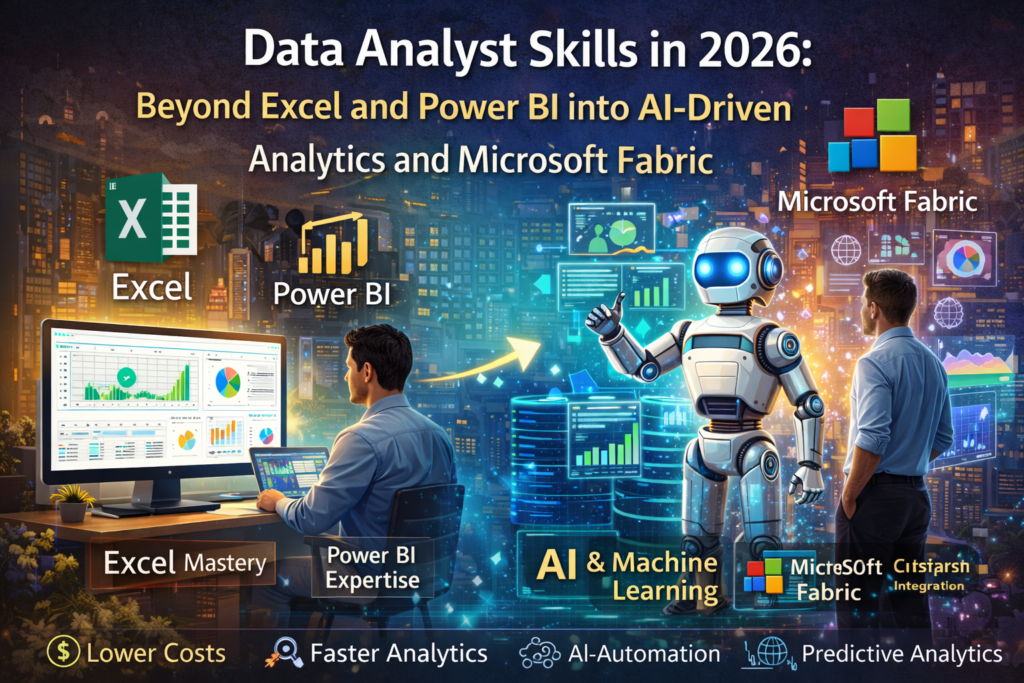
Why This Career Shift Is Happening Now The world of data analytics is not staying the same. For many years, the role of a Power BI Data Analyst was clear. You collected data, cleaned it, built models, and created dashboards. Your focus was reporting and business intelligence. But in 2026, enterprises are no longer satisfied with dashboards alone. Companies now want unified data systems. They want analytics platforms that connect data engineering, storage, transformation, AI, governance, and reporting in one environment. They do not want separate tools for every step. This is exactly why Microsoft introduced Microsoft Fabric. And because of this shift, a new role is growing rapidly: the Microsoft Fabric Analytics Engineer. If you are currently a Power BI Data Analyst, this is not a threat. It is a massive opportunity. This blog will explain in complete detail: This is not hype. This is enterprise reality. What Is Microsoft Fabric  Explained Clearly and Practically In simple words, Microsoft Fabric is a unified data analytics platform created by Microsoft. But that short definition does not explain its real impact. Before Fabric, enterprises used multiple separate services: Managing all these systems required coordination, integration, and heavy architecture planning. Microsoft Fabric combines these into a single ecosystem. It includes: This means analytics is no longer just reporting. It becomes end-to-end data lifecycle management. And that changes careers. Who Is a Microsoft Fabric Analytics Engineer? A Microsoft Fabric Analytics Engineer is not just a dashboard builder. This role sits between data engineering and business intelligence. Instead of only visualizing data, this professional: In many organizations, this role is becoming critical because enterprises want fewer tool silos and more integrated data strategy. It is a hybrid role. And hybrid roles are paid more. Why Power BI Data Analysts Must Think Beyond Dashboards Power BI remains powerful. It is not disappearing. But enterprises are asking deeper questions now: Traditional Power BI roles do not cover these areas deeply. Fabric expands the responsibility. If you stay only in dashboard development, your growth may slow. If you expand into Fabric architecture, your value increases significantly. This is evolution, not replacement. The Core Differences: Power BI Data Analyst vs Fabric Analytics Engineer A Power BI Data Analyst mainly focuses on: A Fabric Analytics Engineer focuses on: The difference is scope. Power BI focuses on output.Fabric focuses on system. Step-by-Step Career Transition Roadmap (Detailed Version) Step 1: Master Advanced Power BI Beyond Basics Before upgrading, your Power BI skills must be enterprise-level. This includes: Understanding DAX deeply, not just basic formulas.Optimizing model performance for large datasets.Designing secure row-level security systems.Implementing governance strategies for enterprise dashboards. You must move from “report developer” to “BI architect mindset.” Without this foundation, Fabric learning becomes overwhelming. Step 2: Learn Microsoft Fabric Architecture Properly Do not jump into random tutorials. First understand concepts: What is OneLake?What is Lakehouse architecture?How does Fabric unify services?How is it different from traditional Azure setups? Fabric is built around integration and scalability. You must understand how enterprise data flows from ingestion to visualization. This is system-level thinking. Step 3: Build Data Engineering Foundations You do not need to become a hardcore software engineer. But you must understand: SQL deeply.Basic Python for data manipulation.ETL and ELT concepts.Data transformation logic.Batch vs real-time processing. Fabric Analytics Engineers work across layers. Without data engineering fundamentals, growth will stop. Step 4: Understand AI Integration in Analytics In 2026, analytics is AI-supported. Fabric integrates AI tools directly. You must understand: AI-assisted reportingPredictive analyticsResponsible AI governanceHow AI interacts with structured data This makes you future-proof. Salary Expectations in 2026 The demand for hybrid analytics professionals is increasing globally. Because Fabric combines engineering and analytics, companies are willing to pay higher salaries compared to mid-level Power BI roles. In many markets, Fabric Analytics Engineers earn 25% to 45% more than traditional BI Analysts because they operate closer to enterprise architecture and digital transformation initiatives. Higher scope equals higher compensation. Real Enterprise Demand: Why Companies Prefer Fabric Professionals Enterprises want: Fabric supports all of this. Professionals who understand Fabric are aligned directly with enterprise digital transformation strategies. This is not a trend. This is long-term direction. Frequently Asked Questions   Is Microsoft Fabric replacing Power BI completely? No, Microsoft Fabric is not replacing Power BI. Instead, Power BI is becoming a core component within the Fabric ecosystem. Fabric expands Power BI’s capabilities by integrating storage, data engineering, AI, and governance in one unified platform. Power BI remains essential, but its role becomes part of a larger architecture. Can a Power BI Data Analyst transition to Fabric without strong coding skills? Yes, but some technical depth is required. You do not need to become a software developer, but you must understand SQL and data transformation logic. Fabric roles demand architectural awareness, not just visualization skills. With structured learning over 6–12 months, transition is realistic. How long does it realistically take to become a Microsoft Fabric Analytics Engineer? For someone with strong Power BI experience, it can take between six months to one year with consistent study and practice. This depends on exposure to data engineering and enterprise architecture concepts. The learning curve is manageable but requires discipline. Is certification necessary to get a Fabric role? Certification helps demonstrate credibility, but enterprise experience matters more. Building real projects using Fabric architecture, understanding lakehouse structures, and applying concepts practically increases hiring chances significantly. Is Microsoft Fabric suitable only for large enterprises? Currently, Fabric adoption is strongest among medium to large enterprises because of its scale capabilities. However, smaller companies are beginning to explore it as well. As cloud adoption increases, Fabric usage will likely expand across company sizes. Should freshers directly learn Fabric instead of Power BI? Freshers should first build strong foundations in Power BI and data modeling. Fabric builds on those concepts. Jumping directly into Fabric without understanding BI fundamentals can create confusion. Strong basics always win. Final Conclusion The role of a data professional in 2026 is expanding. Power BI Data Analysts who upgrade into Microsoft

blogs

How Corporates Use AI for Productivity, Automation, and Cost Reduction in 2026: The Real Inside Story of Smarter Work

Introduction Productivity has always been important for corporates, but in 2026, productivity is no longer about speed alone. It is about doing meaningful work without exhausting people or exploding costs. For many years, companies believed productivity could be improved by hiring more employees, extending work hours, adding layers of management, and pushing teams harder. At first, output increased. But slowly, problems appeared. Work became fragmented. Meetings increased. Emails never stopped. Employees spent more time coordinating work than actually doing it. Costs increased, but real productivity did not. Today’s corporate world is very different. Competition is global. Margins are thin. Employees expect balance, flexibility, and purpose. Simply pushing people harder no longer works. This is why Artificial Intelligence has become a structural change, not a tool. In 2026, AI is helping corporates increase productivity, automate repetitive work, and reduce costs without destroying human energy, trust, or quality. This blog explains in deep detail how corporates actually use AI in daily work, how automation really changes offices, how costs reduce without layoffs, and why companies that ignore this shift slowly lose relevance. Why the Traditional Corporate Productivity Model Failed The old productivity model was built on pressure and scale. When work increased, companies hired more people. When timelines were tight, employees worked longer hours. When complexity grew, more meetings, approvals, and reporting layers were added. Over time, this created hidden inefficiency. Employees became busy but not productive. Decision-making slowed. Errors increased because people were overloaded. Burnout became common, and attrition rose. The biggest issue was not laziness or poor talent.The issue was system design. Humans reached their natural limits. No matter how skilled an employee is, they cannot handle unlimited data, coordination, and repetition. AI entered corporates because humans needed system-level support, not because humans failed. How AI Changes the Meaning of Productivity in 2026 In 2026, productivity is no longer measured by hours worked or tasks completed. It is measured by outcomes achieved with minimum friction. AI helps corporates remove unnecessary work that adds no value. It reduces duplication, manual effort, and coordination overload. Employees focus more on thinking, solving problems, and making decisions. Productivity becomes about clarity and flow, not speed and pressure. When systems work smoothly, people naturally perform better. AI as a Daily Productivity Companion for Corporate Employees In modern corporates, AI works quietly in the background of daily tasks. Employees use AI to read long documents in minutes instead of hours, analyze spreadsheets instantly, draft reports and emails, prepare presentations, and organize priorities. AI acts like a thinking assistant that reduces cognitive load. This changes the workday experience. Employees are no longer drained by repetitive tasks. They have mental space to focus on judgment, creativity, collaboration, and strategy. AI does not make employees replaceable.It makes them more impactful. The Evolution of Automation: From Fragile Rules to Intelligent Workflows Earlier automation was rigid and fragile. Rule-based systems failed when exceptions occurred. One small change broke the entire workflow. Many corporates abandoned automation because it created more manual correction than value. In 2026, AI-powered automation behaves differently. AI understands patterns and context. It adapts when conditions change. It learns from historical data and improves continuously. Corporates now automate onboarding, approvals, procurement, compliance checks, invoice processing, system monitoring, and customer support. Processes move smoothly without constant human intervention. Automation becomes intelligent and resilient, not mechanical. How AI Reduces Costs Without Cutting People Traditional cost reduction often meant layoffs, budget freezes, or pressure tactics. These methods damage morale and long-term capability. AI-driven cost reduction works differently. AI identifies inefficiencies, predicts demand accurately, reduces overproduction, prevents downtime, and minimizes errors. Costs reduce because systems operate better, not because people are removed. This protects quality and trust. AI makes cost reduction strategic and humane. AI in Human Resources: Productivity With Humanity HR departments were overwhelmed with administration for years. In 2026, AI handles resume screening, interview scheduling, onboarding documentation, attendance analysis, and performance data consolidation. HR professionals focus on culture, leadership development, employee well-being, and retention. Hiring becomes faster and fairer. Employee experience improves. Attrition reduces. AI removes friction so HR can focus on people, not paperwork. AI in Finance: Accuracy, Speed, and Risk Reduction Finance teams deal with repetitive, high-risk tasks. AI automates invoice processing, expense validation, reconciliation, forecasting, and compliance monitoring. Financial closes become faster and more accurate. Errors reduce dramatically. AI also detects anomalies early, reducing fraud and audit risk. Finance shifts from reporting history to guiding the future. AI in Operations, Supply Chain, and Logistics Operations are expensive and sensitive to disruption. AI predicts demand, optimizes inventory, monitors suppliers, improves logistics routing, and detects issues before they escalate. Corporates reduce delays, fuel costs, and operational waste. Instead of reacting to problems, companies anticipate them. Operations become proactive, resilient, and cost-efficient. How AI Reduces the Hidden Cost of Meetings and Coordination Meetings and communication overload silently kill productivity. In 2026, AI summarizes meetings, extracts decisions, assigns action items, and tracks follow-ups automatically. Employees attend fewer meetings but stay better aligned. Mental fatigue reduces. Execution improves. Coordination becomes lighter and clearer. Why AI Automation Does Not Destroy Corporate Jobs AI removes tasks, not purpose. When repetitive work disappears, roles evolve. Employees move toward higher-value activities such as analysis, planning, communication, and leadership. Responsible corporates invest in reskilling and role evolution instead of replacement. AI pushes work up the value chain, not out of the organization. Sustainable Cost Reduction vs Short-Term Cost Cutting Short-term cost cutting damages trust and performance. AI-driven optimization improves systems permanently. Over time, savings compound without harming culture or capability. This creates long-term resilience. How AI Changes Performance Measurement and Fairness AI allows corporates to measure outcomes instead of presence. Performance becomes data-backed, transparent, and objective. Bias reduces. Accountability improves. Employees feel evaluated on contribution, not visibility. Leadership in the Era of AI Productivity Leaders in 2026 design systems, not pressure people. AI-aware leaders focus on building workflows that scale smoothly. They remove bottlenecks instead of pushing teams harder. Leadership becomes architectural rather than controlling. What AI-Driven

blogs

How AI Is Transforming Corporate Decision-Making in 2026: From Experience-Based Judgment to Intelligent Leadership

Introduction Corporate decision-making has always been the backbone of every organization. Every hiring, investment, expansion, pricing change, restructuring, or shutdown starts with a decision. For decades, these decisions were driven mainly by experience, hierarchy, meetings, intuition, and historical reports. That model worked when business environments were stable. In 2026, stability no longer exists. Markets change daily. Customer expectations evolve rapidly. Technology disrupts industries overnight. Data flows continuously from every direction. Human experience alone is no longer sufficient to see the full picture. This is why Artificial Intelligence has become deeply involved in corporate decision-making. AI is not here to replace leaders.AI is here to support human intelligence in a world too complex for humans alone. This blog explains in extreme depth how AI is transforming corporate decision-making in 2026, how leaders actually use AI in real organizations, why human judgment remains irreplaceable, and how decision-making itself is becoming a leadership skill rather than a hierarchy privilege. Why Traditional Corporate Decision-Making Reached Its Limits Traditional decision-making relied heavily on delayed and incomplete information. Data was collected manually, processed slowly, and shared in static reports. By the time leaders reviewed insights, reality had already changed. Decisions were often based on assumptions, selective data, and personal bias. Even the most experienced leaders could not process thousands of variables at once. Human brains are powerful, but they are not designed to handle modern business complexity alone. As companies expanded globally, risks multiplied. Supply chains became fragile. Customer behavior became unpredictable. Competition intensified. AI entered decision-making not because leaders failed, but because human capacity reached its natural ceiling. AI became a necessity to handle scale, speed, and complexity. How AI Changes the Way Corporates Understand Reality AI fundamentally changes decision-making by changing what leaders are able to see. In 2026, AI systems continuously analyze real-time data from markets, customers, operations, finance, HR, and competitors. Instead of static reports, leaders receive living insights that update constantly. This creates a shift from reactive thinking to situational awareness. Leaders no longer ask only what happened. They ask what is happening right now and what is likely to happen next. AI highlights patterns, anomalies, and early warning signals that humans may never notice on their own. AI does not replace thinking.It expands perception. AI and Strategic Decision-Making at the Corporate Level Corporate strategy is no longer built once a year. In 2026, strategy is dynamic. AI systems continuously track market signals, customer sentiment, competitor actions, and internal performance. Leaders adjust direction based on live intelligence rather than fixed assumptions. For example, AI can identify early demand shifts, emerging risks, or declining product relevance long before traditional reports show signs. This allows companies to act early rather than react late. Strategic decisions become adaptive, evidence-based, and future-oriented. Strategy shifts from planning to continuous sense-making. How AI Supports Financial Decisions and Capital Allocation Finance has become one of the strongest areas of AI adoption. AI systems in 2026 forecast revenue, track cash flow, identify inefficiencies, detect fraud, and simulate financial scenarios in real time. Leaders no longer rely only on historical data. They explore possible futures. AI evaluates investments, pricing strategies, mergers, cost structures, and financial risks with greater depth than manual models ever could. It shows multiple scenarios instead of single projections. However, AI does not understand ethics, brand reputation, or long-term purpose. Financial decisions still require human responsibility and vision. AI provides foresight.Humans provide accountability. AI in Risk Management and Uncertainty Navigation Risk is no longer limited to finance. Corporates face cyber risks, regulatory risks, reputational risks, operational risks, and geopolitical risks simultaneously. AI helps by monitoring signals across multiple domains continuously. AI systems simulate scenarios, identify vulnerabilities, and estimate probability before damage occurs. This allows leaders to make informed trade-offs instead of blind bets. Risk management evolves from reactive damage control to predictive resilience. How AI Transforms Operational Decision-Making Operations used to rely on manual supervision and delayed reporting. In 2026, AI continuously monitors supply chains, logistics, IT systems, customer support, and production workflows. It predicts failures, suggests optimization, and improves efficiency automatically. Managers shift from firefighting problems to improving systems. Operations become intelligent, responsive, and scalable. Why Human Judgment Remains Central and Irreplaceable One of the most dangerous misconceptions is believing AI makes decisions. AI produces insights, probabilities, and recommendations.Humans decide actions. AI cannot understand human values, ethics, culture, emotions, or long-term societal impact. It cannot take moral responsibility. The strongest decisions come from human-led, AI-supported leadership. AI sharpens thinking.Humans define meaning. AI, Bias, and the Responsibility of Leaders AI can reduce emotional bias, but it can also inherit bias from data. This makes leadership oversight essential. Corporates must audit AI systems, challenge outputs, and ensure alignment with values. AI does not remove responsibility. It increases it. Leaders remain accountable for outcomes, not algorithms. Decision Speed vs Decision Wisdom AI increases decision speed dramatically. But speed without understanding creates new risks. Mature organizations balance AI insights with human review, ethical evaluation, and cross-functional discussion. AI accelerates awareness, but humans control direction. Fast decisions must still be wise decisions. How AI Is Redefining Corporate Leadership Itself Leadership in 2026 is no longer about knowing everything. It is about interpreting intelligence. Leaders must ask the right questions, understand AI outputs, and communicate insights clearly to teams. Authority now comes from clarity, not control. AI-literate leaders build trust faster and lead more effectively. What This Shift Means for Managers and Professionals Decision influence is changing. Professionals who understand data, interpret AI insights, and explain implications gain visibility and responsibility. AI knowledge becomes a career accelerator. Those who ignore AI feel increasingly disconnected from decision processes. AI-Driven Decisions and Corporate Culture AI-supported decisions increase transparency. When decisions are data-backed, discussions become objective. Politics reduce. Accountability improves. This creates healthier corporate cultures when implemented responsibly. What This Means for TechnoEdgels Readers Whether you are a leader, manager, analyst, or aspiring professional, AI literacy allows you to participate confidently in decisions rather than react to them. Knowledge replaces fear.Understanding creates control. Frequently

Diagram of a 2026 flattened corporate structure showing AI agents integrated into departments alongside human team leads and strategy officers.
blogs

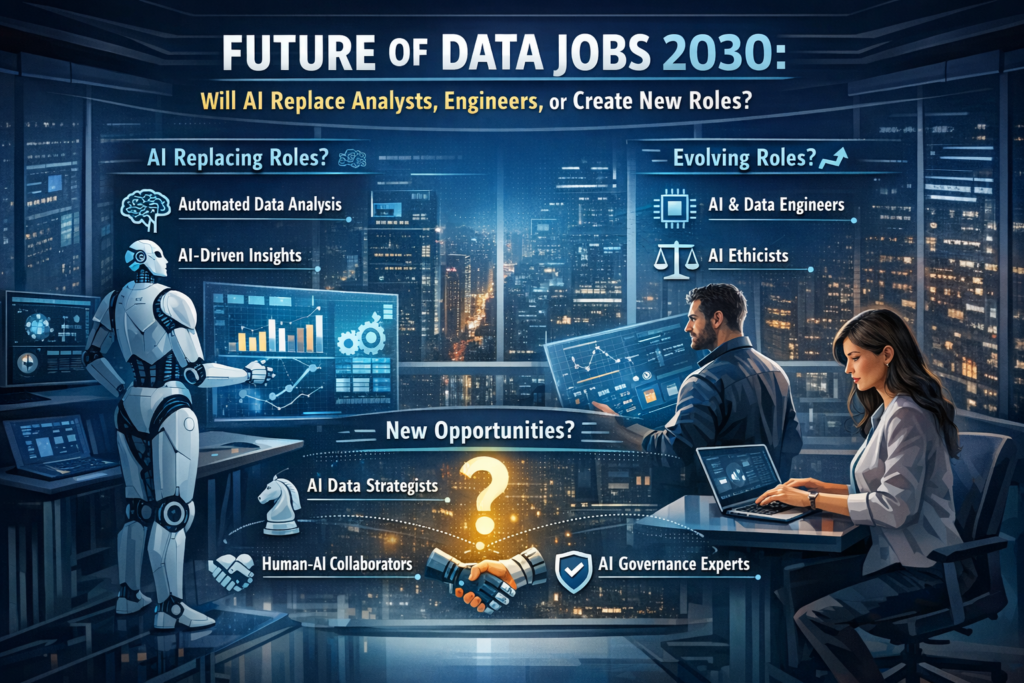
AI in Corporate Jobs 2026: How Artificial Intelligence Is Changing Roles, Careers, and the Future of Work

Introduction Artificial Intelligence is no longer something corporates are “experimenting” with.In 2026, AI has already become part of everyday corporate life. It is present in dashboards, reports, meetings, hiring systems, customer support tools, performance tracking software, and even leadership decision-making. Many corporate employees use AI daily without even realizing it. Because of this rapid adoption, one question is silently worrying professionals across industries: What will happen to my job in the AI era? This fear is understandable, but it is also incomplete. AI is not entering corporates to destroy careers.AI is entering corporates to change how work is done. This blog explains in deep detail how AI is transforming corporate jobs in 2026, which roles are growing, which roles are evolving, which roles are under pressure, and how professionals can stay relevant, confident, and valuable in this new work environment. Why Corporate Jobs Are Changing Because of AI Corporates adopt AI for practical business reasons, not emotional ones. AI helps companies work faster, reduce human errors, manage large volumes of data, and make more informed decisions. Tasks that earlier took hours or days can now be completed in minutes. In the past, many corporate roles were built around repetitive activities such as data entry, report preparation, coordination, and monitoring. AI can now handle a large part of this work efficiently. As a result, companies are redesigning job responsibilities.They are not removing humans completely, but they are removing low-value tasks. This is why corporate jobs feel different today compared to a few years ago. How AI Is Creating New Value-Oriented Corporate Roles AI does not work independently. It needs human direction, validation, and interpretation. Because of this, corporates are creating and expanding roles that focus on decision-making, strategy, oversight, and communication. Professionals who understand both business context and AI output are becoming extremely valuable. In 2026, roles related to business analysis, data interpretation, AI operations, risk management, compliance, product strategy, and organizational planning are growing rapidly. These roles exist because AI generates insights, but humans decide what to do with those insights. The more AI a company uses, the more it needs humans who can think clearly. Why Most Corporate Roles Are Evolving, Not Disappearing A common misunderstanding is that AI replaces entire job titles. In reality, AI replaces parts of jobs, not full roles. Take human resources as an example. AI now screens resumes, schedules interviews, and analyzes candidate data. But HR professionals still handle culture building, leadership development, conflict resolution, and employee well-being. The same applies to finance, marketing, operations, and management roles. AI automates repetitive tasks, while humans focus on judgment, creativity, ethics, and long-term planning. The job name stays the same, but the nature of work changes. Corporate Roles That Face the Highest Pressure from AI Roles that depend mainly on routine, rule-based, and repetitive work face the most pressure. Jobs involving basic data processing, manual reporting, simple customer queries, and repetitive monitoring are increasingly automated. AI performs these tasks faster, cheaper, and with fewer mistakes. However, this does not mean people in these roles are instantly removed. Corporates often expect employees to learn new skills and shift toward more value-driven responsibilities. The real risk is not AI itself.The real risk is staying static while work evolves. Why Human Skills Are Becoming More Important in the AI Era One of the biggest myths about AI is that it reduces the importance of humans. The truth is the opposite. AI cannot understand emotions, handle ethical dilemmas, manage people, negotiate conflicts, or take responsibility for long-term consequences. These areas still require human intelligence. In 2026, corporates value skills like critical thinking, communication, leadership, adaptability, emotional intelligence, and ethical judgment more than ever. AI handles execution.Humans handle meaning. How Corporate Professionals Can Stay Relevant and Future-Ready Staying relevant does not mean learning complex coding or becoming an AI engineer. It means understanding how AI affects your role. Corporate professionals who learn how to use AI tools responsibly, interpret AI-generated insights, and align them with business goals become indispensable. Those who ignore AI slowly fall behind, even if their job title remains unchanged. Learning to collaborate with AI is now part of professional growth, not an optional skill. Why Corporates Prefer AI-Aware Employees Corporates do not want employees who fear AI or resist change. They want employees who understand AI’s strengths and limitations and use it responsibly. AI-aware employees reduce dependency on external vendors, improve productivity, and help companies avoid legal and ethical risks. In 2026, AI awareness is becoming as basic as computer literacy once was. How AI Is Changing Corporate Career Growth Career growth is no longer based only on years of experience. It is based on learning speed and adaptability. Professionals who continuously upgrade skills and mindset grow faster. Those who rely only on past experience feel stuck. AI rewards curiosity, learning, and openness to change. What This Means for Professionals Reading TechnoEdgels For readers of https://technoedgels.com/, AI should not be a source of fear. It should be a source of clarity. Understanding how AI reshapes corporate jobs helps professionals plan careers strategically instead of reacting emotionally. Knowledge brings confidence, and confidence brings control. Frequently Asked Questions (FAQs) Will AI completely replace corporate jobs in the future? AI will not completely replace corporate jobs. It replaces repetitive tasks and supports decision-making. Jobs that require human judgment, leadership, communication, and responsibility will continue to exist and grow. The nature of work will change, but human involvement will remain essential. Which corporate professionals should be most concerned about AI? Professionals who rely only on routine, repetitive tasks and do not update their skills should be concerned. AI affects tasks, not job titles. Those who learn new responsibilities and adapt their role remain valuable. Do corporate employees need technical or coding skills to survive AI? No. Most corporate employees do not need coding skills. They need AI awareness—understanding how AI works, what it can and cannot do, and how to use its output responsibly within their role. Is AI adoption

blogs

WordPress SEO in 2026: How to Build a Website That Ranks on Google, Appears in AI Search, and Grows for Years

Introduction WordPress is still the backbone of the internet, but the way WordPress websites get traffic has changed completely. For many years, WordPress SEO felt simple. You installed an SEO plugin, added keywords, wrote blog posts, and waited for rankings. If everything looked technically correct, traffic usually followed. In 2026, this approach no longer works. Search engines are now powered by artificial intelligence. They do not only scan code or keywords. They evaluate how helpful your content is, how clearly it explains a topic, how trustworthy your website feels, and how users behave after landing on your pages. AI-driven search systems also read WordPress content to generate direct answers for users. This means WordPress SEO today is not just technical optimization.It is content strategy, structure, trust, and user experience combined. This blog explains WordPress SEO in 2026 in deep detail, so you clearly understand how to optimize your WordPress site for Google search, AI-powered search, and stable long-term growth. Why WordPress SEO Has Fundamentally Changed The biggest reason WordPress SEO has changed is the evolution of search itself. Search engines no longer act like directories that simply list pages. They now act like evaluators. They analyze whether a page genuinely helps users or just exists to rank. AI systems read WordPress pages the way humans read books, looking for clarity, logic, and completeness. In the past, a technically optimized page with average content could still rank. Today, that same page struggles because users do not stay, do not engage, and do not trust it. WordPress SEO now rewards websites that educate clearly, load fast, and feel reliable. How Google and AI Systems Read WordPress Websites Today Search engines and AI systems read WordPress websites structurally and contextually. They look at headings, paragraph flow, internal links, topic coverage, and navigation. They also track how users behave whether they scroll, stay, and interact with the content. AI systems especially value WordPress pages that explain one topic deeply instead of touching many topics superficially. Clear introductions, logical progression, and well-explained sections help AI understand and reuse content confidently. A WordPress website that feels organized and easy to read gains trust. A cluttered or confusing website loses visibility, even if it is technically optimized. Why Content Quality Is the True Core of WordPress SEO In 2026, no plugin can save weak content. Content quality is no longer about writing long text or using fancy words. It is about removing confusion. When a user lands on your WordPress page, they should understand the topic better within minutes. Search engines measure this indirectly through user behavior. AI systems measure it directly by analyzing explanation clarity. A simple, well-explained WordPress article often outperforms a technically perfect page with shallow content. This is why modern SEO supports content, not the other way around. The Role of WordPress Site Structure in Modern SEO Structure is how search engines and AI understand relationships between topics. A well-structured WordPress website feels like a well-organized book. Categories make sense, URLs are clean, internal links connect related content, and navigation is intuitive. Poor structure confuses both users and AI systems. When AI cannot understand how topics relate to each other, it avoids using the content as a reference. In 2026, structure is not decoration.It is communication. Page Speed and Performance: The Silent Power of Rankings Users are impatient, and search engines know this. If a WordPress site loads slowly, users leave. When users leave quickly, search engines see that as a negative experience. AI systems also prefer fast-loading sites because they deliver smoother experiences. Performance affects trust subconsciously. Fast websites feel professional. Slow websites feel unreliable. Optimizing WordPress performance is no longer optional. It directly affects rankings, AI visibility, and user satisfaction. Why SEO Plugins Are Support Systems, Not Magic Solutions SEO plugins are helpful, but they are misunderstood. Plugins help with titles, meta descriptions, sitemaps, and structure. They do not create expertise, trust, or clarity. Installing multiple plugins without improving content often slows websites and creates confusion. In 2026, plugins should support a clear strategy, not replace it. Good thinking beats good tools. How EEAT Shapes WordPress SEO Success Experience, Expertise, Authority, and Trust are now deeply connected to WordPress SEO. Search engines want to know who is behind the content, whether the information is reliable, and whether the website consistently helps users. AI systems rely even more on these signals to avoid spreading incorrect information. WordPress makes it easy to show EEAT through clear authorship, updated content, consistent publishing, and honest explanations. Websites that ignore EEAT slowly lose visibility. How AI Search Is Changing WordPress Optimization AI search does not rank content the way traditional search did. AI systems choose content they feel confident explaining to users. This means WordPress content must sound calm, clear, and educational not aggressive or promotional. Pages that explain concepts step by step, anticipate doubts, and answer them naturally are more likely to be reused in AI answers. WordPress content that teaches deeply becomes a trusted knowledge source. Why Long-Form WordPress Content Is More Valuable Than Ever Long-form content provides context, and context is what AI needs. Short articles may rank temporarily, but they rarely build authority. Long-form WordPress content explains not only what something is, but also why it matters and how it works. Over time, long-form content becomes evergreen. It attracts traffic steadily and protects websites from sudden algorithm changes. In 2026, long-form is not extra effort.It is strategic investment. How WordPress SEO Creates Long-Term, Stable Growth Modern WordPress SEO is about building a system, not chasing rankings. When a website focuses on clarity, trust, and depth, traffic grows slowly but steadily. Algorithm updates cause fewer shocks. AI systems continue referencing the content. This kind of growth is predictable and sustainable. Frequently Asked Questions (FAQs) Is WordPress still a good platform for SEO in 2026? Yes, WordPress is still one of the best platforms for SEO, but success depends on how it is used. WordPress provides flexibility, structure, and scalability. When combined with

Infographic comparing Traditional Google Search links vs. AI Search Generative Experience (SGE) conversational answers in 2026.
blogs

The Future of Search in 2026: How Google Search and AI Search Are Changing the Way People Find Information

Introduction Search is not disappearing, but the way people use search is changing completely. For more than twenty years, people depended on Google to find information. They typed keywords, clicked links, opened multiple websites, and slowly formed their understanding. This system created the foundation of blogging, SEO, and online businesses. In 2026, this habit is shifting. People now expect search to understand questions, not just match keywords. They want one clear explanation instead of ten links. AI-powered search tools are fulfilling this expectation by reading information across the internet and presenting it as a single, clear answer. This shift is not a small update.It is a fundamental change in how humans interact with information. This blog explains in deep detail how Google search and AI search are evolving together, what this means for websites, and how content creators can stay relevant in the future. How Google Search Built the Internet as We Know It Google search was designed to organize information, not explain it. Its job was to find relevant pages and rank them. Users were responsible for reading, comparing, and deciding what to trust. This encouraged content creation, competition, and SEO innovation. For many years, this system worked because users were willing to explore and research on their own. Websites gained traffic by ranking well, and ranking well meant business growth. However, as the internet grew, content also became repetitive, promotional, and confusing. Users began feeling overwhelmed instead of informed. Why User Expectations Are Changing So Rapidly Modern users are tired of effort-heavy searching. They do not want to open multiple tabs, read half-written articles, or deal with popups and ads. They want clarity, speed, and confidence in the answer they receive. AI search tools meet this expectation by acting more like a knowledgeable assistant than a directory. Users ask questions naturally, and AI responds in a conversational, easy-to-understand way. This change is driven by time scarcity and attention overload. People value systems that reduce mental effort. What AI Search Actually Is (Beyond the Hype) AI search is not just another search engine. It is an interpretation layer built on top of the internet. AI systems read information from multiple sources, compare perspectives, identify patterns, and then generate a clear explanation. The role of websites changes here. Websites are no longer only destinations for traffic. They are becoming raw knowledge providers for AI systems. This means visibility is no longer only about clicks.It is also about being referenced and trusted. Google Search vs AI Search: How the Purpose Has Changed Google search is about exploration.AI search is about resolution. Google offers choices. AI offers conclusions. Google expects users to read and decide. AI expects users to trust the explanation it provides. This does not mean Google is becoming irrelevant. Google is integrating AI directly into search results because it understands this change in user behavior. The future of search is not competition between Google and AI.It is Google becoming more AI-driven. Why Google Must Adapt to AI-Driven Search Google’s business depends on user trust and attention. If users feel AI tools provide clearer and faster answers, Google must match that experience or risk losing engagement. This is why Google is introducing AI summaries, conversational search, and generative results. This confirms one truth:AI-driven search is not optional. It is inevitable. Google is not abandoning search.It is rebuilding it. How Website Traffic Is Changing, Not Disappearing Many website owners fear that AI search will kill traffic. In reality, traffic is becoming more selective. Simple questions are answered directly by AI, reducing clicks. But complex topics, deep learning, comparisons, opinions, and advanced guides still require full articles. This means future traffic will be: Websites that educate deeply will receive fewer but higher-quality visitors. Why Trust and Authority Decide Visibility Now AI systems must decide which information is safe and reliable. They prefer content that is clear, consistent, honest, and well-explained. This makes EEAT more important than ever. When AI trusts a website, it uses that content more often. Over time, this builds brand recognition and indirect traffic through direct searches and referrals. Authority is becoming more powerful than rankings alone. How Content Strategy Must Change for 2026 Content can no longer be written only to rank. It must be written to teach clearly. Future-ready content explains the background of a topic, the logic behind it, and its real-world impact. It anticipates user doubts and answers them naturally. AI prefers content that feels like a good teacher, not a marketing page. Why Long-Form Content Is Becoming the Foundation of AI Search AI systems need context to generate accurate answers. Long-form content provides that context. It explains not just what something is, but why it exists and how it works. Short content lacks depth and clarity. Over time, it becomes irrelevant. Long-form, well-structured content becomes the training material for AI answers. Frequently Asked Questions (FAQs) Will AI search completely replace Google search in the future? AI search will not replace Google search entirely. Instead, Google search is evolving into an AI-powered system. Traditional search and AI-driven answers will merge into one experience. Users will still search on Google, but results will feel more conversational, explanatory, and intelligent. Will websites lose traffic because AI gives answers directly? Websites will lose low-quality, low-intent traffic, but they will gain more valuable visitors. Users who still click through will be those looking for deeper understanding, examples, or expert opinions. This traffic converts better and builds long-term loyalty. Is SEO still relevant in an AI-driven search world? SEO is still relevant, but it has changed. SEO is no longer only about keywords and rankings. It is now about clarity, intent matching, trust, and depth. Websites that focus on modern SEO principles will continue to grow. Can small websites compete with big brands in AI search? Yes. AI systems care more about explanation quality than brand size. A small website that explains a topic clearly and honestly can outperform a big brand that publishes shallow content. Understanding beats reputation.

Professional using a multi-agent AI dashboard to manage cross-sector business workflows in a modern 2026 office setting.
blogs

AI Tools for Different Sectors in 2026: How People Use AI to Work Smarter, Grow Faster, and Build Long-Term Trust

Introduction Artificial Intelligence is no longer something only big tech companies use.In 2026, AI tools are part of daily life for bloggers, business owners, marketers, students, developers, and creators. Earlier, people worked manually and spent hours on tasks like research, writing, planning, editing, and analysis. Today, AI tools help reduce that effort and allow people to focus on thinking, strategy, and creativity. However, many people still make one big mistake. They either use AI blindly or avoid it completely. Both approaches are wrong. The real power of AI comes when you understand which AI tools are used in which sector and why. This blog explains AI usage sector by sector, with real tool names, deep explanations, and a clear understanding of how AI supports growth without replacing human intelligence. How Bloggers and Writers Use AI Tools in 2026 Blogging today is not just about writing words. It is about explaining topics clearly, publishing consistently, and building trust with readers and search engines. Bloggers use tools like ChatGPT, Claude, and Gemini to understand topics deeply, expand ideas, and improve the structure of long articles. These tools help bloggers think faster by organizing information logically, but the final explanation still comes from the blogger. For SEO and search intent alignment, bloggers use tools such as Surfer SEO, NeuronWriter, and Frase. These tools analyze top-performing content and show how deeply a topic should be explained to satisfy users and AI-based search systems. Editing tools like Grammarly and Hemingway Editor help bloggers simplify language, remove confusion, and improve readability especially important for Tier 2 and Tier 3 audiences. AI does not replace blogging skills.It strengthens clarity, consistency, and discipline. How Digital Marketers Use AI Tools to Scale Faster Digital marketing today involves content creation, SEO, ads, analytics, and social media. Managing all this manually is difficult. Tools like Jasper AI and Copy.ai help marketers write ad copies, emails, and landing page text faster. AI speeds up execution, while strategy still comes from humans. SEO and competitor analysis tools like Semrush, Ahrefs, and Moz use AI to analyze keywords, trends, and gaps. This allows marketers to make data-driven decisions instead of guessing. Social media tools like Predis.ai, Hootsuite AI, and Buffer AI help generate captions, analyze engagement, and schedule content efficiently. AI allows marketers to focus more on growth strategy and less on repetitive work. How Business Owners and Entrepreneurs Use AI Tools Small business owners often do not have large teams. AI tools help them operate efficiently. Tools like Notion AI and ClickUp AI help with planning, documentation, and workflow organization. Ideas become structured plans quickly. Customer support tools like Tidio, Zendesk AI, and Intercom AI answer common customer questions automatically, improving response time and customer satisfaction. For reports, proposals, and presentations, tools like Gamma AI and Beautiful.ai help create professional content without design skills. AI helps small businesses grow without increasing costs. How Developers and Tech Professionals Use AI Tools Developers use AI to reduce repetitive work and improve focus. Tools like GitHub Copilot and Codeium suggest code, complete functions, and reduce debugging time. Developers still design systems and logic, but AI saves mental energy. Documentation and security tools like Mintlify and Snyk AI help maintain quality and safety in codebases. AI does not replace developers.It improves productivity and reduces burnout. How Designers and Content Creators Use AI Tools Designers and creators use AI to speed up creative workflows. Tools like Midjourney, DALL·E, and Adobe Firefly help generate images, thumbnails, and visual concepts. Designers refine and customize outputs to maintain originality. Video tools like Runway ML, Pictory, and Descript help with editing, subtitles, and script improvement. AI helps creators move from idea to execution faster without losing creative control. How Students and Educators Use AI Tools In education, AI supports learning, not cheating. Students use ChatGPT, Perplexity AI, and Notion AI to understand difficult topics, summarize notes, and practice explanations. Educators use Canva AI, Quizizz AI, and Gradescope to create teaching materials, quizzes, and assessments more efficiently. When used ethically, AI improves understanding and saves time. AI Tools, Trust, and EEAT AI tools do not automatically create trust. Trust comes from how AI is used.When AI helps improve clarity, accuracy, and consistency, it supports Experience, Expertise, Authority, and Trust (EEAT). When AI output is copied blindly, trust is lost. Human responsibility is still the most important factor. Frequently Asked Questions (FAQs) Are AI tools really safe to use across different sectors? Yes, AI tools are safe across all sectors when used responsibly. Search engines, platforms, and users do not judge whether AI was used. They judge content quality, accuracy, and trust. If AI helps improve understanding and clarity, it is safe. Problems occur only when AI output is used without review or fact-checking. Can beginners use AI tools without harming quality? Yes, beginners benefit the most from AI tools. AI helps beginners structure content, understand topics, and avoid common mistakes. However, beginners must still read, understand, and edit AI output. AI should assist learning, not replace thinking. Do AI tools reduce originality and creativity? No. AI does not remove originality. Originality comes from human experience, explanation style, and perspective. AI only provides support. Content becomes generic only when humans stop adding context and insight. How do AI tools support EEAT instead of harming it? AI tools support EEAT by improving clarity, reducing errors, and helping maintain consistency. When humans control final decisions and explanations, AI strengthens expertise and trust rather than damaging it. Is AI-generated content safe for SEO and AI search? Yes, AI-assisted content is safe for SEO and AI search if it is helpful, accurate, and original. Search systems reward value, not the writing method. Low-quality content is penalized, not AI usage. Is WordPress suitable for AI-assisted workflows? Yes. WordPress works very well with AI-assisted blogging and SEO workflows. It supports clean structure, easy editing, and optimization, which aligns perfectly with AI-powered content creation. Final Conclusion AI tools are no longer optional in 2026.They are essential assistants across every sector.

Trust Us, One Call Can Make a Difference
Please enable JavaScript in your browser to complete this form.
Join As Trainer
Join As Trainer
Please enable JavaScript in your browser to complete this form.
Download Course Content
Please enable JavaScript in your browser to complete this form.
More than 5 People are attending Get On a Call with Us
Please enable JavaScript in your browser to complete this form.
More than 5 People are attending Get On a Call with Us
Scroll to Top